
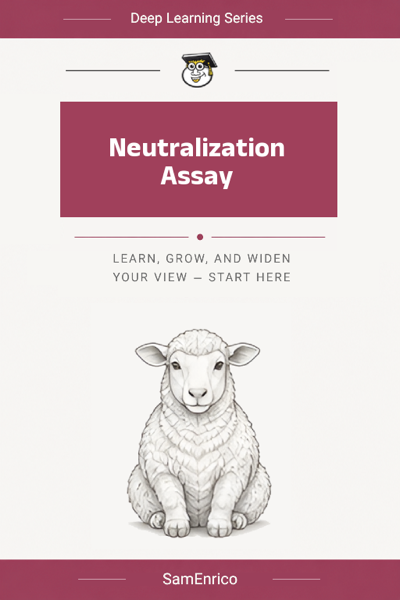
Non-FictionInformativeEducational
Neutralization Assay eBook
A Coursebook on Neutralization Assay
by Benoit Jolyn
A Coursebook on Neutralization Assay
Formats
Free sample
Chapter 1: The Invisible Shield--In the winter of 1891, a dying child lay in a Berlin hospital ward, her throat closing against the grayish membrane of diphtheria. The attending physicians had done everything in their power—which is to say, they had done almost nothing of use. They had applied leeches. They had administered mustard plasters. They had attempted tracheotomy.
The child, whose name history did not bother to record, was expected to die before morning, as thousands of children had died before her, their deaths attributed vaguely to "croup" or "malignant angina."But on that particular night, something unprecedented occurred. A young physician named Emil Behring, working under the legendary Robert Koch, had brought a small glass syringe containing a fluid so novel, so unproven, and so conceptually radical that its administration bordered on medical heresy. The fluid was serum drawn from a horse—not an ordinary horse, but one that had been deliberately infected with diphtheria toxin, allowed to survive, and then bled. Behring believed, against the skepticism of nearly every established authority, that the horse's blood contained something invisible yet potent: a neutralizing substance that could render diphtheria toxin harmless.He injected the serum into the child's thin arm.Within twenty-four hours, the gray membrane began to recede. Within forty-eight hours, the child was sitting up, demanding food.
The "Berlin diphtheria miracle," as the newspapers would call it, did not save every child—Behring's early serum lots were inconsistent and variably potent—but it saved enough to ignite a revolution. For the first time in human history, a physician had successfully neutralized a lethal biological toxin using nothing more than the immune system's own secreted products, transferred from one individual to another.The child lived. And with that single injection, the field of neutralization assays was born.The Oldest Serologic Test You Have Never Heard Of The story of the Berlin child is not merely a historical curiosity. It is the foundational moment for a family of laboratory techniques that would, over the ensuing 130 years, become the silent workhorses of virology, vaccinology, and diagnostic medicine. The neutralization assay—the method by which scientists measure the ability of antibodies to block the infectivity of a virus or the activity of a toxin—predates the polymerase chain reaction by nearly a century.
It predates monoclonal antibodies, recombinant DNA technology, and even the discovery of the structure of DNA itself. It is the oldest functional serologic test in existence, and despite the rise of faster, cheaper, and more automated methods, it remains irreplaceable.Why does an assay invented in the age of horse-drawn carriages still matter in the age of CRISPR and m RNA vaccines? The answer lies in a distinction that most laypeople—and even some scientists—fail to appreciate: the difference between binding and function.An enzyme-linked immunosorbent assay, or ELISA, can tell you whether a person has antibodies that stick to a virus. This is useful information. It tells you that exposure has occurred, that the immune system has noticed the invader.
But an ELISA cannot tell you whether those antibodies actually work. It cannot distinguish between a powerful neutralizing antibody that blocks infection entirely and a useless antibody that binds to an irrelevant part of the virus, waving its arms in the air while the virus marches past it into the cell.The neutralization assay answers the only question that ultimately matters in immunity: Can your blood stop the virus?This is not an academic distinction. In the early days of the COVID-19 pandemic, as researchers raced to understand whether recovered patients were protected from reinfection, they quickly discovered that binding antibody levels (measured by ELISA) correlated only loosely with protection. Some individuals with high binding titers had negligible neutralizing activity. Others with modest binding titers were potent neutralizers.
The difference, as we will explore in Chapter 2, comes down to the specific epitopes recognized by the antibodies, their affinity, their avidity, and their stoichiometric relationship to viral surface proteins.The neutralization assay cut through this confusion. It provided a direct functional readout: dilute the serum, mix it with live SARS-Co V-2 (or, more commonly in high-throughput settings, with a pseudovirus bearing the spike protein), add it to susceptible cells, and ask a simple question: At what dilution does the serum prevent infection by 50 percent? That number—the NT50 titer—became the gold standard for convalescent plasma therapy eligibility, for vaccine efficacy trials, and for regulatory decisions about booster doses.But the COVID-19 pandemic was merely the most recent chapter in a much longer story.From Antitoxins to Antivirals: The Conceptual Leap Behring's diphtheria antitoxin worked through a mechanism that would not be fully understood for decades. We now know that diphtheria toxin is a single polypeptide chain that binds to host cell receptors, undergoes proteolytic cleavage, and translocates a catalytic domain into the cytosol, where it ADP-ribosylates elongation factor EF-2, halting protein synthesis and killing the cell. The neutralizing antibodies generated by Behring's horses bound to the toxin's receptor-binding domain, physically preventing the toxin from attaching to cells.
No attachment, no entry. No entry, no ADP-ribosylation. No ADP-ribosylation, no cell death.The principle—block the initial step of a pathogenic cascade—translated directly from toxins to viruses. In fact, the first viral neutralization experiments were performed within a decade of Behring's breakthrough. In 1898, the Dutch microbiologist Martinus Beijerinck, who coined the term "virus" (from the Latin for "poison" or "slimy liquid"), demonstrated that the agent causing tobacco mosaic disease could be neutralized by antibodies from previously infected plants.
(Plant virology, it should be noted, was decades ahead of animal virology in this regard, because plant viruses could be handled more safely and assayed more easily on leaf lesions.)The critical conceptual advance came from understanding that viruses, unlike toxins, are replicating entities. A toxin molecule causes damage once; a single virus particle can produce thousands of progeny, each capable of infecting new cells. This distinction has profound implications for neutralization assays. To neutralize a toxin, you need to block the activity of the molecules already present. To neutralize a virus, you need to block the initial infection event and prevent all subsequent rounds of replication.
This is why viral neutralization assays typically measure the prevention of cytopathic effect (cell death) over several days, rather than an immediate biochemical readout.The early viral neutralization assays were gruesome by modern standards. To determine whether a serum contained neutralizing antibodies against rabies, researchers would mix serum with live rabies virus, inject the mixture into the brains of mice, and wait for the animals to develop paralysis or die. The rabies neutralization test, in its original form, was a death assay: the endpoint was the prevention of mortality. The same approach was used for yellow fever, poliovirus, and most of the major viral pathogens of the early twentieth century. These assays were scientifically effective but ethically problematic and logistically nightmarish.
A single experiment could require hundreds of mice, weeks of observation, and a dedicated animal facility.The revolution came in 1949, when John Enders, Thomas Weller, and Frederick Robbins discovered that poliovirus could be grown in cultured human embryonic cells—not just in nervous tissue. This discovery, which would earn the three researchers a…
This is the end of the free sample. Get the eBook to keep going. Buy now
About this book
Details
- Author
- Benoit Jolyn
- Publisher
- SamEnrico
- Language
- English
- Genre
- Non-Fiction, Informative, Educational
- Released
- 2026-06-02
- Pages (approx.)
- 157
- Available as
- eBook, Audiobook

Read better in the ZLOADR app
Your eBooks on your phone or tablet. Sign in with your SamEnrico account and start reading.
More by Benoit Jolyn
 Francis Knight ConversionBenoit Jolyn$11.99
 Delegation for FreelancersBenoit Jolyn$11.99
 Instagram Comparison DetoxBenoit Jolyn$11.99
 Sulfasalazine Side EffectsBenoit Jolyn$11.99
 Silent Bargain: The Unseen Negotiation of the 1975 Swedish Embassy SiegeBenoit Jolyn$11.99
 How to Become a High RiggerBenoit Jolyn$11.99
 Recurring Price Increase Without FearBenoit Jolyn$12.99Recurring Price Increase Without FearBenoit Jolyn$12.99
 How to Produce Cat Litter Box MatsBenoit Jolyn$11.99
You may also like
 Hong Kong Handover 1997Dunn Johnnie$11.99
 Zumba For Postnatal Recovery CourseNeal Christian$11.99
 Zumba for BeginnersLadner Nikia$11.99
 YouTube Comment Mining GuideHumes Pandora$12.99
 Worry Box MeditationCarlin Rudy$11.99
 Workplace Stress MeditationNguyen Lynn$11.99
 Workplace Stress and Sleep RepairHawley Ivory$11.99
 Workplace Perfectionism CureDelaney Jeffry$11.99
 Workplace Injustice Anger GuideWallen Isabelle$11.99
 Work Addiction and Burnout LinkGreenwood Ester$11.99
 Women in Yoga and WellnessBeattie Galina$11.99
 Women in Stand Up ComedyChun Evangeline$11.99