
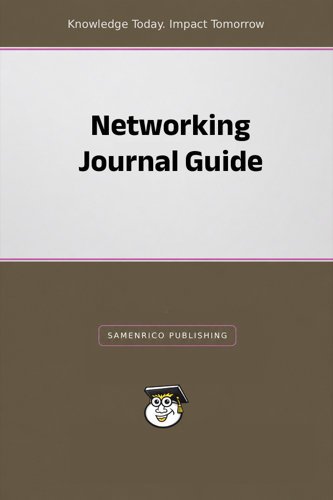
Non-FictionSelf-HelpJournaling
Networking Journal Guide eBook
Daily log for tracking contacts, follow ups, and r
Daily log for tracking contacts, follow ups, and relationship health.
Formats
Free sample
Chapter 1: The Card Collector’s Funeral--–- Sarah had 3,147 Linked In connections. She had attended nineteen networking events in the past twelve months. Her business card binder—a thick leather volume she carried to every conference—held over eight hundred cards organized by date and venue. She was, by every external metric, a “great networker.”And yet, when she was laid off from her software sales role on a Tuesday morning in March, she sat in her home office and realized she could not name a single person among those 3,147 who would return her call within twenty-four hours. Not one.
She had collected connections like stamps. She had never built relationships.This book exists because of Sarah—and because of the thousands of professionals like her who mistake accumulation for connection, volume for value, and busyness for impact. You may not have 3,147 Linked In connections. But if you have ever scrolled through your phone contacts looking for someone to grab coffee with and felt a strange emptiness, or if you have ever sent a follow-up email that went unanswered and wondered why, or if you have ever left a networking event with a pocket full of business cards and a hollow feeling in your chest—then this chapter is for you.The problem is not that networking doesn’t work. The problem is that most people have been taught a version of networking that is fundamentally broken.The Myth of More The central myth of modern networking is simple and seductive: More contacts equal more opportunities.
This myth is perpetuated by Linked In’s connection count, by conference organizers who celebrate attendance numbers, by sales gurus who boast about “touching” thousands of prospects. It feels logical. If you have a hundred friends, you have a hundred times more opportunities than someone with one friend, right?Wrong. And the research on this is devastatingly clear.The British anthropologist Robin Dunbar famously observed that the human brain’s neocortex size limits the number of stable social relationships a person can maintain. That number—known as Dunbar’s number—is approximately 150.
Beyond that, relationships become functionally impossible to maintain with any real depth. You can have 3,000 Linked In connections, but you cannot have 3,000 meaningful relationships. Your brain literally will not allow it.What the “more is better” myth creates is what we call transactional networking—a shallow, high-volume approach where every interaction is a potential transaction. You meet someone. You exchange cards.
You send a generic follow-up. You ask for something. You move on. This is not networking. This is a low-grade form of social mining, and it leaves everyone involved feeling used.The alternative—the system this entire book exists to teach—is relational networking.
Relational networking is not about how many people you know. It is about how well you know the right people, and how well they know you. It is about trust capital, not business cards. It is about depth, not width.And it starts with a hard truth: Most of your current network is probably dead.The Relationship Audit: Facing the Graveyard Before you can build anything new, you must understand what you already have. The Relationship Audit is the single most important exercise in this entire book.
It is uncomfortable. It may even be painful. But it is the only way to stop wasting energy on relationships that are already gone.Here is what you are going to do. Take out a blank notebook or open a new spreadsheet. You are going to list every single person you have interacted with professionally in the past twelve months.
Not just people you like. Everyone. Coffee chats, email exchanges, conference small talk, Linked In DMs, client meetings, vendor calls, former colleagues you still text, mentors you have not spoken to in six months. Every single one.Do not filter. Do not judge.
Just list.When you are done, you will likely have between fifty and two hundred names. This is normal. If you have more than two hundred, you have probably included people you met once and never spoke to again. That is fine for now. We will filter shortly.Now, for each name, answer three questions:When was the last time we had a meaningful interaction?
(Not a like on Linked In. Not a “happy birthday” comment. A real conversation—voice, video, or in person—where value was exchanged in both directions.)Who initiated that interaction? (You, them, or was it mutual/coincidental?)How did that interaction leave me feeling? (Energized, neutral, drained, or conflicted?)Do not skip this.
Do not approximate. Go name by name. This will take time. That is the point.When you finish, you will notice something uncomfortable. A large percentage of your contacts—often 60 to 80 percent—will have no meaningful interaction in the past six months.
Many will have none in the past year. These are not relationships. These are artifacts. They are business cards in a drawer, digital ghosts in your phone, names you could delete and never notice.We call this collection the Dormant Network. It is not worthless, but it is not active.
And the single biggest mistake most professionals make is pretending that dormant connections are still alive. They are not. A seed that has not been watered in a year is not a plant. It is a seed. And seeds do not open doors for you.The Active Network: Your True Perimeter From your full list, you will now extract a much smaller group: everyone with whom you have had a meaningful, reciprocal interaction in the past ninety days.
Not ninety days since you met. Ninety days since you last exchanged value. A conversation where you gave something (information, an introduction, support, a resource) and they gave something back (gratitude, insight, a question, a lead).This group is your Active Network. For most people, it contains between twenty and fifty people. If you have more than fifty active relationships, you are either a professional networker (rare) or you are counting interactions that were not truly reciprocal (common).
If you have fewer than twenty, you are likely under-investing in relationship maintenance—a problem we will solve in later chapters.Your Active Network is your true perimeter. These are the people who would likely respond to a text message within twenty-four hours. These are the people who know what you are working on, roughly. These are the people whose names you would think of if you needed advice, a referral, or a sounding board.Everyone else—the dormant majority—is not an enemy. They are simply not a current asset.
And pretending they are only wastes your limited time and attention.The Traffic Light System: Red, Yellow, Green Now that you have your Active Network list, you need to assess the health of each relationship. We use a simple three-color system because complexity kills consistency. If a system takes more than five seconds to apply, you will not use it.Green: Healthy Relationships A green relationship is one where the following are true:You have interacted meaningfully in the past thirty days.The interaction was mutually initiated (or the initiation has been roughly balanced over time).You feel energized, respected, or supported after interacting.You could…
This is the end of the free sample. Get the eBook to keep going. Buy now
About this book
Details
- Author
- Ashford Cherri
- Publisher
- SamEnrico
- Language
- English
- Genre
- Non-Fiction, Self-Help, Journaling
- Released
- 2026-06-07
- Pages (approx.)
- 136
- Available as
- eBook, Audiobook

Read better in the ZLOADR app
Your eBooks on your phone or tablet. Sign in with your SamEnrico account and start reading.
More by Ashford Cherri
 Parent Child Eating Disorder GuideAshford Cherri$11.99
 Lumet Acting DirectorAshford Cherri$11.99
 Fallout 76 Compulsion GuideAshford Cherri$11.99
 Aging and Memory Loss Self Worth GuideAshford Cherri$11.99
 Gold Rush: The Great Depression's Hidden HeistAshford Cherri$11.99
 Understanding Mental Retardation OsteosclerosisAshford Cherri$17.99
 Ultimate Handbook Guide to Xichang : (China) Travel GuideAshford Cherri$11.99
 UN Human Resources Specialist GuideAshford Cherri$12.99
 Promotion Business Case For Individual ContributorsAshford Cherri$12.99
 Shelf Bracket Installation (Stud Finder Use)Ashford Cherri$11.99
You may also like
 Hong Kong Handover 1997Dunn Johnnie$11.99
 Zumba For Postnatal Recovery CourseNeal Christian$11.99
 Zumba for BeginnersLadner Nikia$11.99
 YouTube Comment Mining GuideHumes Pandora$12.99
 Worry Box MeditationCarlin Rudy$11.99
 Workplace Stress MeditationNguyen Lynn$11.99
 Workplace Stress and Sleep RepairHawley Ivory$11.99
 Workplace Perfectionism CureDelaney Jeffry$11.99
 Workplace Injustice Anger GuideWallen Isabelle$11.99
 Work Addiction and Burnout LinkGreenwood Ester$11.99
 Women in Yoga and WellnessBeattie Galina$11.99
 Women in Stand Up ComedyChun Evangeline$11.99