
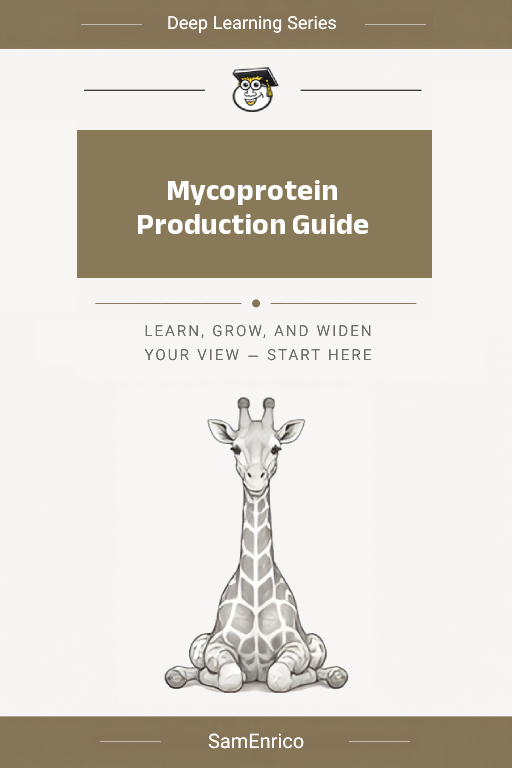
Mycoprotein Production Guide
Learn fermentation technology turning fungi into p
Learn fermentation technology turning fungi into protein-rich food ingredients for meat alternatives.
Formats
About this book
Free sample
Chapter 1: The Protein Apocalypse--The year is 2032. A prolonged drought has scorched the American Midwest for the third consecutive season. Soybean yields have collapsed by 40 percent. In Brazil, the Cerrado—the world's most productive soybean region—has been hit by an unprecedented combination of deforestation backlash and crop disease. Global soy protein concentrate, the backbone of the plant-based meat industry, has tripled in price.
Beyond Meat and Impossible Foods are scrambling to reformulate. Small meat-alternative startups are going bankrupt. And consumers, already reeling from inflation, are paying nine dollars for a package of four plant-based burgers that used to cost five.Meanwhile, in a converted warehouse outside Rotterdam, a team of seven people operates a different kind of protein facility. They do not grow soybeans. They do not harvest peas.
They do not depend on rainfall patterns or geopolitically sensitive supply chains. Instead, they fill a stainless steel vessel with potato peels collected from a nearby crisp factory, add a splash of ammonia, and introduce a handful of fungal spores. Forty-eight hours later, they harvest twenty kilograms of pure protein—white, neutral-tasting, fibrous—that texturally mimics chicken breast. Their cost per kilogram is less than half of what the soybean traders are currently asking. They are not affected by the drought.
They do not care about the Cerrado. They are making meat from mold, and they are profitable.This is not science fiction. This facility exists, albeit at pilot scale. The technology—fermenting filamentous fungi into protein-rich food ingredients—has been proven for nearly four decades by Quorn, which sells hundreds of millions of dollars worth of mycoprotein products annually. But Quorn has been nearly alone, held back by outdated processes, narrow strain choices, and a market that was not yet ready.
That market is now ready. The plant-based meat sector, after a decade of hype and growth, is facing a fundamental crisis of texture, nutrition, and cost. And mycoprotein—fungal protein—sits at the exact intersection where those three crises meet.This chapter establishes the commercial, environmental, and nutritional rationale for mycoprotein production. It answers the question that every entrepreneur, investor, and food…
This is the end of the free sample. Get the eBook to keep going. Buy now
Contents
- Chapter 1
- Chapter 2
- Chapter 3
- Chapter 4
- Chapter 5
- Chapter 6
- Chapter 7
- Chapter 8
- Chapter 9
- Chapter 10
- Chapter 11
- Chapter 12
Details
- Author
- Marlowe Miguelina
- Publisher
- SamEnrico
- Language
- English
- Genre
- Non-Fiction, Forecast & Outlook, Fermentation
- Released
- 2026-05-29
- Pages (approx.)
- 153
- Available as
- eBook, Audiobook

Read better in the ZLOADR app
Your eBooks on your phone or tablet. Sign in with your SamEnrico account and start reading.
More by Marlowe Miguelina
 Operation Car Wash Forensic AccountingMarlowe Miguelina$11.99
 Filmbooth Localized Video GuideMarlowe Miguelina$11.99
 Cocaine Family Intervention GuideMarlowe Miguelina$11.99
 OKRs for Retirement PreparationMarlowe Miguelina$11.99
 The Recovery Friendly Employer HandbookMarlowe Miguelina$11.99
 The Asura's Last Stand: Ravana's Fall from GraceMarlowe Miguelina$11.99
 Steatite (Talc) MiningMarlowe Miguelina$11.99
 Global HSE Alignment ManualMarlowe Miguelina$12.99
 Ultimate Handbook Guide to Tskhinvali : (South Ossetia) Travel GuideMarlowe Miguelina$11.99
 Understanding Imaizumi–kuroki SyndromeMarlowe Miguelina$17.99