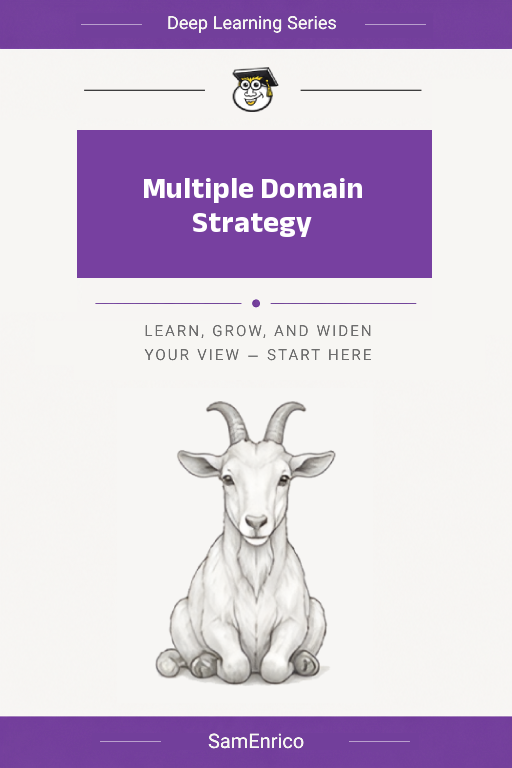
Multiple Domain Strategy eBook
Registers .africa, .us, and .eu domains together w
Registers .africa, .us, and .eu domains together with forwarding to protect brand across multiple geographic markets.
Formats
Free sample
Chapter 1: The Trust Decay--–- Every day, your brand loses value without you noticing. Not because of a competitor’s superior product or a viral scandal or a supply chain failure. The loss is slower, quieter, and more insidious. It happens each time a potential customer types your brand name into a browser, adds the wrong extension out of habit, and lands on a parked page, an error message, or worse—a competitor’s site. It happens each time a European consumer sees your .com and wonders whether you comply with their privacy laws.
It happens each time an African buyer clicks away because your domain feels foreign, distant, and untrustworthy.This is trust decay. It is the gradual erosion of consumer confidence caused by misaligned digital geography. And it is the single most overlooked risk in modern brand management.For the past twenty-five years, the received wisdom of domain strategy has been painfully simple: buy the .com, defend the .com, and ignore everything else. That wisdom emerged from a specific historical moment—the late 1990s, when the internet was predominantly English-speaking, predominantly American, and predominantly desktop-based. In that world, a single global domain made sense.
Consumers had few alternatives. Search engines were primitive. E-commerce was novel.That world no longer exists.The internet today is fragmented by language, culture, regulation, and trust preference. A consumer in Lagos navigates the web differently than a consumer in Lyon or Los Angeles. Payment methods differ.
Shipping expectations differ. Legal recourse differs. And the domain extension—the first thing a user sees before any content loads—has become the primary shortcut for assessing whether a business belongs to their world.This chapter establishes the foundational crisis that the rest of the book solves. It explains why generic top-level domains are losing their universal appeal, why country-code domains are gaining trust premium, and why the specific combination of .us, .eu, and .africa represents the most efficient defensive portfolio for global brands. By the end of this chapter, you will understand the economic logic of trust decay and be prepared to act against it.The Illusion of the Global Village In the early days of commercial internet, technologists and futurists promised a borderless world.
Geography would become irrelevant. A business in Bangalore could serve a customer in Boston as easily as one in Bangalore itself. The global village would erase distance, culture, and regulation.This promise was always an illusion.What actually emerged was not a single global village but thousands of local villages connected by shared infrastructure but separated by everything that matters: language, law, payment systems, delivery logistics, and consumer trust. An American buying from a European website faces currency conversion fees, customs delays, and difficulty returning defective goods. A European buying from an American website faces different privacy standards and limited legal recourse.
An African buying from either faces even greater friction.The domain extension became the first signal of which village a business belongs to. A .fr domain signals France. A .jp domain signals Japan. A .com domain signals nothing except that the registrant paid a small fee to a US-based registrar. That ambiguity was acceptable when the internet was small.
It is unacceptable now.Consider the data. In a 2021 survey conducted by the domain registry operator Central Nic, consumers across fifteen countries were asked: “When shopping online, does the domain extension affect your trust in the website?” In Germany, 78 percent said yes. In France, 74 percent. In the United States, 58 percent. Even in the country most associated with .com dominance, a majority of consumers admitted to using the extension as a trust signal.The same survey asked which extensions consumers trusted most.
For domestic transactions, the local cc TLD ranked highest in every country except the United States, where .com narrowly beat .us. For international transactions, .com ranked highest but with significantly lower trust scores than domestic cc TLDs.The implication is clear. Consumers prefer local when available, tolerate global when necessary, and punish brands that signal the wrong geography. A .com does not signal global sophistication. It signals geographic ambiguity.
And in an era of rampant phishing, identity theft, and cross-border fraud, ambiguity is the enemy of trust.The Economics of Trust Decay Trust decay has measurable economic consequences. Every percentage point of lost trust converts directly into lost revenue.The mechanism is straightforward. A consumer who does not trust a website will abandon their cart, refuse to enter payment information, or leave without clicking any link. The domain extension is not the only factor in this decision, but it is the first factor. It loads before the logo, before the hero image, before the value proposition.
By the time the consumer reads a single word of copy, the extension has already primed them for trust or suspicion.Quantifying trust decay requires estimating traffic leakage. Traffic leakage is the percentage of potential visitors who type your brand name plus an extension you do not own. If you own brand.com but not brand.us, and 3 percent of your US audience habitually types brand.us, you are losing 3 percent of your direct navigation traffic. If your annual direct navigation revenue is 10million,thatis10 million, that is 10million,thatis300,000 in leakage.But direct navigation is only the beginning. Search engine optimization compounds the loss.
Google’s algorithm treats cc TLDs as strong geographic signals. A .us domain with quality content will outrank a .com domain for searches performed in the United States, all else being equal. By not owning .us, you are ceding search real estate to competitors—or to no one, which is almost worse because it leaves a vacuum that fraudsters fill.The fraud angle is the most urgent. The Anti-Phishing Working Group tracks millions of phishing attacks annually. A growing percentage use cc TLDs that the victim brand does not own.
A scammer registers yourbrand.us, copies your website design, and sends an email to your customers claiming a security breach. The customers see the .us extension, associate it with US legitimacy, and enter their credentials. By the time you discover the attack, thousands of accounts are compromised.The cost of recovery—legal fees, customer notification, credit monitoring, brand remediation—averages over one million dollars per incident, according to the Ponemon Institute’s annual cost of cybercrime study. The cost of preventing the attack by registering the .us domain yourself is under twenty dollars per year.Trust decay is not theoretical. It is a line item on your profit and loss statement, hiding in plain sight.The Three Signals Why do consumers trust local domains more than global ones?
The answer lies in three signals that every cc TLD transmits automatically and every generic domain obscures.The Proximity Signal. A .us domain tells the consumer: this business is subject to US law, operates within US jurisdiction, and can be held accountable in US courts. For a consumer who has been burned by non-delivery from an overseas seller, proximity is a powerful reassurance. It implies faster shipping, easier returns, and customer service during local business hours.The Regulatory Signal. A .eu domain tells the consumer: this business complies with the General Data Protection Regulation, the most stringent privacy law in the world.…
This is the end of the free sample. Get the eBook to keep going. Buy now
About this book
Details
- Author
- Renteria Anamaria
- Publisher
- SamEnrico
- Language
- English
- Genre
- Non-Fiction, First 30 Days, Portfolio
- Released
- 2026-06-01
- Pages (approx.)
- 140
- Available as
- eBook, Audiobook

Read better in the ZLOADR app
Your eBooks on your phone or tablet. Sign in with your SamEnrico account and start reading.
More by Renteria Anamaria
 Born Standing Up MemoirRenteria Anamaria$11.99
 Cognitive Restructuring MDDRenteria Anamaria$11.99
 Foster Care Therapy CouchRenteria Anamaria$11.99
 Failure Resilience for TeensRenteria Anamaria$11.99
 The Gender App Preference StudyRenteria Anamaria$11.99
 Arachne's Web: The Weaver Who Defied the GodsRenteria Anamaria$11.99
 Interim CTO GuideRenteria Anamaria$12.99
 The Breeder's Guide to Romeldale SheepRenteria Anamaria$11.99
 Park InterpreterRenteria Anamaria$11.99
 How to Become a Oven OperatorRenteria Anamaria$11.99