
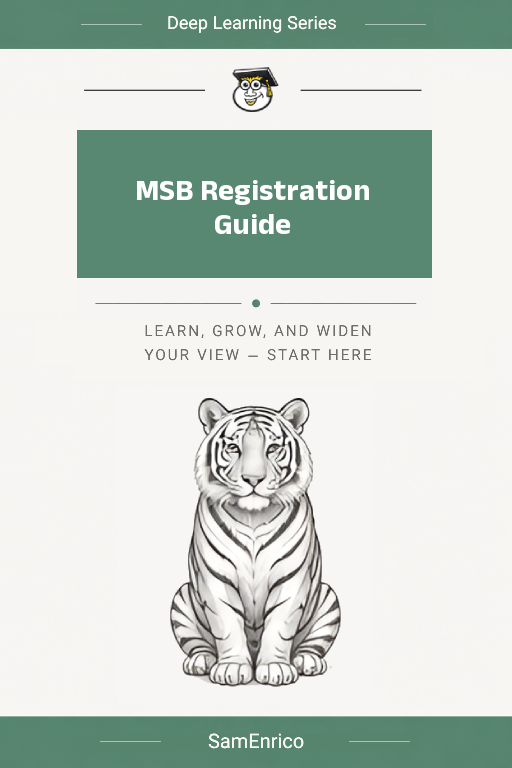
Non-FictionAnnual CheckupFintechMSB
MSB Registration Guide eBook
Register as money services business with FinCEN in
Register as money services business with FinCEN including state licensing requirements for fintech startups.
Formats
Free sample
Chapter 1: The Threshold Trap--–- Jordan paused mid-scroll, his finger hovering over the “Launch” button on his payment app’s production environment. His co-founder, Priya, had just sent him a celebratory text: “We’re live in 10 minutes! 🚀” They had 247 beta users waiting, a waiting list of 3,000 more, and a seed round that closed at 2.2milliontwoweeksago.Theappwasbeautiful.The UXwasbutterysmooth.Theyhadsolvedarealproblem:allowingfreelancersinthe Philippinestogetpaidinstantlyby USclientswithoutthe5−day ACHdelay.Jordan,aformerproductmanagerata Saa Scompany,haddoneeverythingright—incorporation,termsofservice,evenabasic KYCcheckusingathird−party API.Butinhishastetoship,hehadskippedonequestion.Aquestionhedidn’tevenknowhewassupposedtoask.Ashewatchedthedeploymentdashboardturngreen,asmallnotificationpoppedupfromhislegalcounsel:“Didyoufile Fin CENForm107?Callmeurgently.”Thatcallwouldchangeeverything.Bytheendoftheweek,Jordanlearnedthatmoving2.2 million two weeks ago. The app was beautiful. The UX was buttery smooth.
They had solved a real problem: allowing freelancers in the Philippines to get paid instantly by US clients without the 5-day ACH delay. Jordan, a former product manager at a Saa S company, had done everything right—incorporation, terms of service, even a basic KYC check using a third-party API. But in his haste to ship, he had skipped one question. A question he didn’t even know he was supposed to ask. As he watched the deployment dashboard turn green, a small notification popped up from his legal counsel: “Did you file Fin CEN Form 107?
Call me urgently.” That call would change everything. By the end of the week, Jordan learned that moving 2.2milliontwoweeksago.Theappwasbeautiful.The UXwasbutterysmooth.Theyhadsolvedarealproblem:allowingfreelancersinthe Philippinestogetpaidinstantlyby USclientswithoutthe5−day ACHdelay.Jordan,aformerproductmanagerata Saa Scompany,haddoneeverythingright—incorporation,termsofservice,evenabasic KYCcheckusingathird−party API.Butinhishastetoship,hehadskippedonequestion.Aquestionhedidn’tevenknowhewassupposedtoask.Ashewatchedthedeploymentdashboardturngreen,asmallnotificationpoppedupfromhislegalcounsel:“Didyoufile Fin CENForm107?Callmeurgently.”Thatcallwouldchangeeverything.Bytheendoftheweek,Jordanlearnedthatmoving247 in test transactions from a US client to a Filipino freelancer had, in the eyes of the federal government, potentially turned his shiny new fintech into an unlicensed Money Services Business. The penalty for operating without registration? Up to $5,000 per day and, under 18 U.S.C. §1960, the real possibility of criminal charges.
Jordan’s story is not an exception; it is the rule. And it is why this chapter may be the most important one you will read in this entire book.The Critical Mistake Most Founders Make First Before we dive into the definitions, thresholds, and exceptions, let us name the single most destructive assumption in fintech. It is the belief that because you are not a bank, because you are “just software,” or because you are “facilitating payments, not holding them,” you are somehow exempt from financial regulation. This is the Threshold Trap. Founders look at the $1,000 per day threshold for check cashers and assume that money transmission has a similar floor.
It does not. Founders look at the “Agent of the Payee” exception and assume that if their payment processor sends money to a merchant on behalf of a customer, they are automatically an agent. They are often wrong. And founders assume that because they incorporated in Delaware, use a Cayman Islands holding company, or serve customers exclusively through a mobile app, they can sidestep US federal jurisdiction. That assumption can land you in federal court.This chapter exists to answer one foundational question with surgical precision: Am I a Money Services Business (MSB) as defined by the Financial Crimes Enforcement Network (Fin CEN)?
If the answer is yes, the clock starts ticking on a 180-day registration deadline, and you must read the rest of this book urgently. If the answer is no, you still need to understand why you are exempt, because the burden of proof lies with you, not the government.The Bank Secrecy Act and Fin CEN’s Authority To understand whether you are an MSB, you must first understand who gets to decide. The Bank Secrecy Act (BSA) of 1970, as amended by the USA PATRIOT Act of 2001, gives the US Department of the Treasury broad authority to regulate financial institutions. Within Treasury, Fin CEN is the designated sheriff for money launderers, terrorist financiers, and sanctions evaders. Under 31 CFR §1010.100(ff), Fin CEN defines an MSB as any person doing business as a money transmitter, issuer of traveler’s checks or money orders, seller or redeemer of those instruments, currency dealer or exchanger (including crypto), or check casher.
The key is not your business model’s marketing description. It is the functional activity. If you accept currency, funds, or value from one person and transmit it to another person or location, you are likely a money transmitter. There is no de minimis exemption for “small” transmission. There is no startup grace period.
And ignorance of the rule is, famously, not a defense.The Two Activities That Trigger MSB Status For most fintech founders, the MSB analysis narrows down to two specific activities. First, money transmission. Second, currency dealing or exchange, which today includes virtual currency. Let us examine each.Money Transmission: Fin CEN defines money transmission as “the acceptance of currency, funds, or other value that substitutes for currency from one person and the transmission of currency, funds, or other value that substitutes for currency to another location or person by any means.” That phrase “by any means” is doing enormous legal work. It includes wire transfers, ACH, debit card loads, prepaid access, and—as we will discuss—cryptocurrency.
The moment a customer gives you 100withinstructionstosend100 with instructions to send 100withinstructionstosend95 to a recipient (keeping $5 as a fee), you have accepted and transmitted funds. The threshold is zero dollars. One cent triggers the definition.Currency Exchange: If you convert US dollars to euros, yen, or bitcoin, and you do so for the public as a business (not for your own account incidentally), you are a currency dealer or exchanger. This includes Bitcoin ATMs, over-the-counter crypto desks, and centralized exchanges like Coinbase or Binance.US. For crypto specifically, Fin CEN issued interpretive guidance in 2013 (FIN-2013-G001) and again in 2019 (FIN-2019-R001) clarifying that administrators of convertible virtual currency and exchangers are money transmitters.
Stablecoins pegged to the dollar? Yes, they count. Wrapped Bitcoin? Yes. Any token that represents monetary value and is transferable is captured.The $1,000 Threshold (and Why It Does Not Apply to You)One of the most persistent myths in fintech is the belief that MSB registration only applies if you process more than 1,000perpersonperday.Thatmythcomesfromamisreadingof31CFR§1010.100(ff)(5).Theregulationstatesthatapersonisan MSBiftheyengagein∗checkcashing∗ofmorethan1,000 per person per day.
That myth comes from a misreading of 31 CFR §1010.100(ff)(5). The regulation states that a person is an MSB if they engage in *check cashing* of more than 1,000perpersonperday.Thatmythcomesfromamisreadingof31CFR§1010.100(ff)(5).Theregulationstatesthatapersonisan MSBiftheyengagein∗checkcashing∗ofmorethan1,000 in currency or non-cash proceeds for any person on any day. That is a specific carve-out for check cashers. It has nothing to do with money transmission. If you run a check cashing storefront and your average check is 500,youcanservetwocustomersadaybeforehitting500, you can serve two customers a day before hitting 500,youcanservetwocustomersadaybeforehitting1,001 and triggering MSB status.
But if you run a payment app that sends $20 from a parent to a college student, you have already triggered money transmission status. The threshold is zero. Repeat this to yourself: For money transmission, there is no threshold.Callout Box: Reporting Thresholds vs. MSB Status Thresholds Throughout this book, you will encounter dollar thresholds for Currency Transaction Reports (10,000)and Suspicious Activity Reports(10,000) and Suspicious Activity Reports (10,000)and Suspicious Activity Reports(2,000 or more). These are reporting thresholds for transactions after you are already an MSB.
They have nothing to do with whether you qualify as an MSB in the first place. A 5moneytransfermakesyouan MSB;a5 money…
This is the end of the free sample. Get the eBook to keep going. Buy now
About this book
Details
- Author
- Pressley Gene
- Publisher
- SamEnrico
- Language
- English
- Genre
- Non-Fiction, Annual Checkup, Fintech, MSB
- Released
- 2026-06-01
- Pages (approx.)
- 140
- Available as
- eBook, Audiobook

Read better in the ZLOADR app
Your eBooks on your phone or tablet. Sign in with your SamEnrico account and start reading.
More by Pressley Gene
 Event Planning PrioritizationPressley Gene$11.99
 Parental Anger And Child DisabilityPressley Gene$11.99
 Mindfulness for Postpartum BeginnersPressley Gene$11.99
 New Parent Stress Relationship PlanPressley Gene$11.99
 First Time Gym User GuidePressley Gene$11.99
 The Last Stand of the Great Bear: How a Tiny Island Saved a SpeciesPressley Gene$11.99
 The Last Laugh: The Man Who Survived a Freefall from SpacePressley Gene$11.99
 How to Become a Jet-dyeing-machine TenderPressley Gene$11.99
 Understanding Degenerative Optic MyopathyPressley Gene$17.99
 Affordable Turkish UniversitiesPressley Gene$12.99
 Mail Service CourierPressley Gene$11.99
You may also like
 Hong Kong Handover 1997Dunn Johnnie$11.99
 Zumba For Postnatal Recovery CourseNeal Christian$11.99
 Zumba for BeginnersLadner Nikia$11.99
 YouTube Comment Mining GuideHumes Pandora$12.99
 Worry Box MeditationCarlin Rudy$11.99
 Workplace Stress MeditationNguyen Lynn$11.99
 Workplace Stress and Sleep RepairHawley Ivory$11.99
 Workplace Perfectionism CureDelaney Jeffry$11.99
 Workplace Injustice Anger GuideWallen Isabelle$11.99
 Work Addiction and Burnout LinkGreenwood Ester$11.99
 Women in Yoga and WellnessBeattie Galina$11.99
 Women in Stand Up ComedyChun Evangeline$11.99