
Non-FictionCrisis ManagementCloud Security
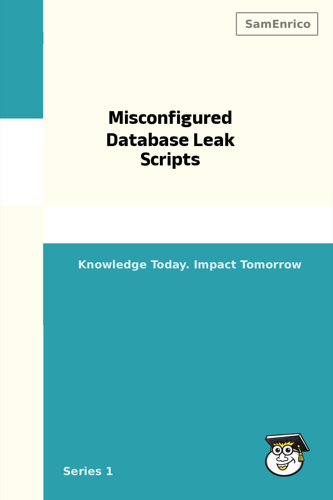
Misconfigured Database Leak Scripts eBook
Notify customers after an exposed cloud database l
Notify customers after an exposed cloud database leak using these technical incident notification templates.
Formats
Free sample
Chapter 1: The 3AM Slack...–- The notification came in at 3:14 AM on a Tuesday. Not from the company’s sophisticated security information and event management (SIEM) system, not from their cloud provider’s threat detection service, and certainly not from the automated incident response playbook they had spent six months building. The alert arrived via a Twitter DM from a stranger who had attached a screenshot. The screenshot showed a public S3 bucket. Inside the bucket were 1.2 million customer records, including names, email addresses, hashed passwords, and—most painfully—the company’s own internal database backup script, which contained hardcoded AWS credentials.
The stranger’s message contained exactly four words: “Fix your open bucket.”This is not a hypothetical scenario. It is a composite drawn from five real cloud misconfiguration incidents that occurred between 2021 and 2024, anonymized to protect the identities of companies that learned the hardest lesson in modern cloud security: you rarely discover your own misconfiguration first. According to the 2024 Cloud Security Alliance report, 67% of cloud data breaches are discovered by external parties—security researchers, customers, journalists, or opportunistic attackers. Only 33% are found by the company’s own internal tools or staff. The asymmetry is brutal.
Your customers will know about your mistake before your CISO does.The Myth of the Sophisticated Attacker The popular imagination, fueled by Hollywood and cybersecurity vendor marketing, pictures data breaches as dramatic affairs. A hooded figure in a dark room types furiously while green code cascades down multiple monitors. Firewalls crumble. Encryption cracks. Zero-day exploits pierce the impregnable fortress.
The attacker is a genius; the defender is outmatched.The reality is far more mundane and far more embarrassing. The overwhelming majority of cloud data leaks do not involve any hacking whatsoever. There is no code execution. There is no privilege escalation. There is no brute-force password cracking.
There is simply a checkbox that someone clicked—or failed to click—in a cloud console.Consider the data. Amazon Web Services (AWS) publishes an annual summary of root causes for reported S3 bucket misconfigurations. Over a three-year period, 89% of publicly exposed buckets were the result of a single setting: the bucket’s access control list (ACL) being set to “public” or “authenticated users” rather than “private.” That is not a security vulnerability in any traditional sense. It is a configuration choice, often made by well-meaning engineers who temporarily opened access for testing and forgot to close it. Google Cloud reports similar figures for misconfigured Cloud Storage buckets, with 84% of exposures traced to a single “uniform bucket-level access” setting left disabled.
Microsoft Azure’s Blob Storage defaults to private, but internal telemetry shows that 42% of Azure storage accounts are modified to allow public access within 90 days of creation—and never reverted.The implications are staggering. If you secure your cloud environment against every zero-day vulnerability known to humanity but leave a single S3 bucket public, you have lost. The attacker does not need to be sophisticated. They need only a web browser and the patience to run a simple tool like aws s3 ls s3://bucket-name --no-sign-request. That command lists every object in a public bucket.
No authentication. No credentials. No exploit. Just a configuration mistake.Why Traditional Incident Response Fails for Misconfigurations Most organizations have incident response (IR) plans. These plans typically assume a breach follows a recognizable pattern: an intrusion detection alert, a failed login spike, a malware signature match, or a user reporting suspicious activity.
The IR playbook assigns roles, defines escalation paths, and prescribes containment steps. It is a battle-tested framework—for attacks.Misconfigurations do not fit this mold. They generate no intrusion alerts because there was no intrusion. They create no failed login spikes because no login is required. They trigger no malware signatures because no malware is present.
And most users do not report suspicious activity when they stumble upon a public database; they download a copy first and decide later whether to be a hero or a villain.This creates what security researchers call the Silent Exposure Gap. Your cloud provider will not automatically notify you when a bucket becomes public. AWS Trusted Advisor will flag public buckets, but only if you pay for Business Support and only on a periodic scan schedule. Google Cloud’s Public Bucket Alert is opt-in and requires configuring a logging sink. Microsoft Azure’s Security Center includes public blob detection but only in the Azure Defender tier.
In other words, the very companies that host your data sell you the ability to detect your own mistakes as an upsell, not a baseline feature.Even when detection occurs, the response is anything but straightforward. Traditional IR assumes you know what data was taken because you have logs of unauthorized access. But for public S3 buckets, anonymous GET requests are often not logged at all. The Server Access Logging feature for S3 must be explicitly enabled on a per-bucket basis, and it does not retroactively capture requests that occurred before logging was turned on. Similarly, Cloud Trail data events for S3 are an optional, paid feature.
A 2023 analysis of 150 public cloud breach disclosures found that in 61% of cases, the affected company could not determine whether anyone had actually downloaded the exposed data. They knew the bucket was public. They did not know if it had been read.This uncertainty is paralyzing. Without logs, you cannot calculate the exposure window. Without logs, you cannot identify affected individuals.
Without logs, you cannot tell regulators whether the breach was a “potential exposure” or a “confirmed data exfiltration.” Yet the clock is already ticking. Under the General Data Protection Regulation (GDPR), you have 72 hours from the moment you become aware of a breach to notify the relevant supervisory authority. The California Consumer Privacy Act (CCPA) imposes penalties for unreasonable delay, interpreted by courts as anything beyond 45 days for breaches affecting more than 500 residents.The result is a nightmare scenario: you know you have a problem, you do not know how bad it is, and you must decide within hours whether to notify millions of customers based on incomplete information. This is the territory where careers end and companies collapse.The Shared Responsibility Model: What the Cloud Provider Will Not Tell You Every cloud provider publishes a Shared Responsibility Model diagram. In these diagrams, the provider draws a line through the stack.
Below the line, the provider is responsible: physical security, network infrastructure, hypervisor isolation. Above the line, you are responsible: operating system configuration, network security groups, identity and access management, and—critically—data classification and access controls.The diagram is technically accurate. It is also dangerously misleading.In practice, cloud providers design their default configurations to favor ease of use over security. Amazon S3 buckets created through the AWS Management Console have historically defaulted to private, but buckets created through the AWS Command Line Interface (CLI), SDKs, or third-party tools may default to public depending on the account-level settings and the credentials used. A single misconfigured IAM role or a missing block_public_acls setting can override the bucket-level private default.
Microsoft Azure’s Blob Storage allows anonymous public access at three different levels: storage account, container, and blob. If any of these three is misconfigured, public access is granted.…
This is the end of the free sample. Get the eBook to keep going. Buy now
About this book
Details
- Author
- Laporte Emerson
- Publisher
- SamEnrico
- Language
- English
- Genre
- Non-Fiction, Crisis Management, Cloud Security
- Released
- 2026-06-06
- Pages (approx.)
- 160
- Available as
- eBook, Audiobook

Read better in the ZLOADR app
Your eBooks on your phone or tablet. Sign in with your SamEnrico account and start reading.
More by Laporte Emerson
 TM History Maharishi GuideLaporte Emerson$11.99
 The Governor's MotorcadeLaporte Emerson$11.99
 The Funnel for RoofersLaporte Emerson$11.99
 IBS Romberg Test GuideLaporte Emerson$11.99
 The Last Broadcast: The Day the World Held Its BreathLaporte Emerson$11.99
 The Phantom Gold: The 1968 Mexico City Marathon MysteryLaporte Emerson$11.99
 Renovation HelperLaporte Emerson$11.99
 Production Run OptimizationLaporte Emerson$12.99
 Business Plan Language TranslationLaporte Emerson$12.99
 Understanding Cleft Lip Palate Oligodontia Syndactyly Pili TortiLaporte Emerson$17.99
 How to Become a Chalk-extruding-machine OperatorLaporte Emerson$11.99
You may also like
 Hong Kong Handover 1997Dunn Johnnie$11.99
 Zumba For Postnatal Recovery CourseNeal Christian$11.99
 Zumba for BeginnersLadner Nikia$11.99
 YouTube Comment Mining GuideHumes Pandora$12.99
 Worry Box MeditationCarlin Rudy$11.99
 Workplace Stress MeditationNguyen Lynn$11.99
 Workplace Stress and Sleep RepairHawley Ivory$11.99
 Workplace Perfectionism CureDelaney Jeffry$11.99
 Workplace Injustice Anger GuideWallen Isabelle$11.99
 Work Addiction and Burnout LinkGreenwood Ester$11.99
 Women in Yoga and WellnessBeattie Galina$11.99
 Women in Stand Up ComedyChun Evangeline$11.99