
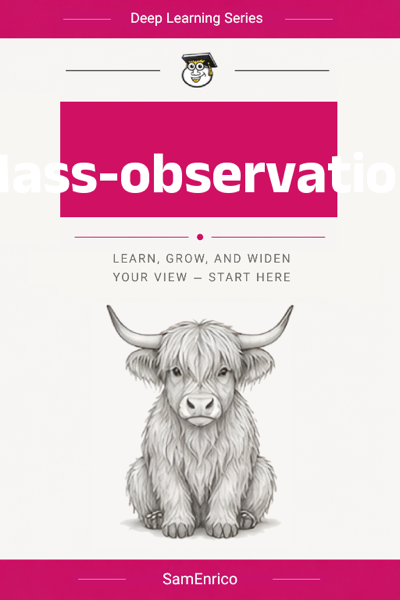
Non-FictionInformativeEducational
Mass-observation eBook
A Coursebook on Mass-observation
A Coursebook on Mass-observation
Formats
Free sample
Chapter 1: The Madmen Who Watched Britain...--It begins, as so many absurd and world-changing things do, with a man standing barefoot in the mud of northern England, watching other men stuff pigeons into sacks.The year is 1937, though the story really starts earlier. Tom Harrisson – thirty years old, unemployable by any conventional measure, and already infamous in academic circles for having lived with headhunters in Borneo – has returned to his native Britain and declared it more baffling than any jungle tribe he ever studied. He has spent the past several years in Bolton, Lancashire, a grim industrial town of cotton mills and terraced houses, where the rain falls sideways and the men speak a dialect so thick that outsiders cannot follow it. Harrisson has embedded himself in the working-class life of the town with the fervor of a missionary and the eccentricity of a mad scientist. He has drunk in every pub, attended every funeral he could find, and developed a strange specialty: counting the precise number of pigeons stuffed into sacks at local competitive shoots.
(The answer, for those keeping score, is more than anyone expected and less than Harrisson would have liked.)But Harrisson is not alone. He has acquired two collaborators, each as improbable as himself. Charles Madge is a poet and journalist, a darling of the surrealist movement who once wrote lines about umbrellas and sewing machines that no one could quite explain but everyone admired. Madge is interested in the inner life – dreams, superstitions, the secret architecture of the mind. He believes that the most important truths about a society are not found in parliamentary debates or newspaper editorials but in the things people mutter to themselves when they think no one is listening.
And Humphrey Jennings is a filmmaker, a surrealist in his own right, who has learned to see the ordinary as extraordinary: a factory gate at dawn, a queue outside a fish-and-chip shop, the way light falls on a wet cobblestone street. Jennings will later become famous for his documentary Fires Were Started, a portrait of firemen during the Blitz that contains no narration, no heroic music, no politics – just men making tea, telling jokes, and then, quietly, going to die in burning buildings.Together, these three men will launch one of the strangest and most important social experiments of the twentieth century. They will call it Mass-Observation. And they will ask hundreds of ordinary Britons to do something that has never been done before: to spy on themselves.The Year Everything Changed To understand why Mass-Observation was necessary – and why it seemed, at the time, either brilliant or completely insane – we have to understand Britain in the 1930s. This is not the Britain of Churchillian speeches and stiff upper lips.
This is a country coming apart at the seams.The Great Depression has hit the north of England with the force of a natural disaster. In Jarrow, in Sunderland, in Liverpool and Manchester and Glasgow, unemployment rates hover around seventy percent. Men who have worked in shipyards and coal mines since they were fourteen now stand in dole queues for hours, hoping for a few shillings to feed their families. Hunger marches – long, ragged processions of unemployed workers walking to London to demand relief – have become a regular feature of British life. In 1932, the government crushed the march of the unemployed from the north with batons and horses.
In 1936, three hundred men from Jarrow walked three hundred miles to Parliament with a petition; they were sent home with nothing.At the same time, fascism is rising across Europe. Mussolini has been in power in Italy for over a decade. Hitler became Chancellor of Germany in 1933. In Britain, Oswald Mosley – a former Labour minister who broke with his party to found the British Union of Fascists – is holding rallies in London’s East End, where his black-shirted thugs beat Jewish residents and break windows. The Battle of Cable Street in 1936 saw tens of thousands of anti-fascists block the streets to prevent Mosley’s march from passing through a Jewish neighborhood.
The police, it should be noted, protected the fascists and arrested the anti-fascists.And then there is the abdication crisis. In December 1936, King Edward VIII – who had been on the throne for less than a year – gave it all up to marry Wallis Simpson, an American divorcee. The British establishment was horrified. The Church refused to countenance the marriage. The Prime Minister, Stanley Baldwin, gave the King an ultimatum: the throne or the woman.
Edward chose the woman. For ten days, the country was consumed by the drama. People took sides. They wrote angry letters to the newspapers. They argued in pubs and at kitchen tables.
What did it mean to be British, if the King himself could abandon his duty for love? What was the point of the monarchy, anyway?It is into this chaos – economic collapse, political violence, constitutional crisis – that Mass-Observation will be born. But here is the crucial insight that Harrisson, Madge, and Jennings share: no one actually knows what ordinary people think about any of this.The Problem with Polling This may seem like a strange claim. After all, the 1930s saw the rise of scientific polling. The British Institute of Public Opinion – the Gallup poll – was founded in 1937, the same year Mass-Observation launched.
Pollsters could tell you, with a margin of error of a few percentage points, how many Britons supported the government’s policy on rearmament, or how many approved of the abdication, or whether people thought Mosley should be banned.But Harrisson, Madge, and Jennings were united in their contempt for polling. Their critique was simple and devastating: counting opinions tells you almost nothing about what people actually think, feel, or do.Consider a poll question from 1937: “Do you approve of the government’s handling of unemployment?” A respondent could answer yes or no. But what does that yes mean? Does it mean “I think the government is doing a good job and I voted for them in the last election”? Or does it mean “I think the government is doing a terrible job but I’m afraid to say so because my neighbor is a policeman and I don’t trust anyone”?
Or does it mean “I have no idea what the government is doing about unemployment, but I’m a patriotic person and ‘approve’ sounds like the right thing to say”?The poll cannot tell you. It cannot tell you about the texture of the respondent’s life – the anxiety that wakes them at 3 AM, the joke they told their spouse about the Prime Minister, the superstition they carry about finding work. It cannot tell you about the silences: the topics people refuse to discuss, the opinions they hold but will not voice, the questions they have never been asked before.Mass-Observation was designed to capture all of that. Its founders proposed an “anthropology at home” – the same techniques that anthropologists used to study “exotic” tribes in Africa and the South Pacific, turned inward on British society. You do not ask a tribesman in Borneo whether he approves of the chieftain’s policies; you live with him.
You eat his food. You listen to his stories. You record his songs. You attend his funerals and his weddings.…
This is the end of the free sample. Get the eBook to keep going. Buy now
About this book
Details
- Author
- Belton Aundrea
- Publisher
- SamEnrico
- Language
- English
- Genre
- Non-Fiction, Informative, Educational
- Released
- 2026-05-23
- Pages (approx.)
- 151
- Available as
- eBook, Audiobook

Read better in the ZLOADR app
Your eBooks on your phone or tablet. Sign in with your SamEnrico account and start reading.
More by Belton Aundrea
 The Emotional Shutdown FixBelton Aundrea$11.99
 Remote Retreats Agenda DesignBelton Aundrea$11.99
 Accessory Dwelling Unit Retirement BriefBelton Aundrea$11.99
 Syphilis History Mercury TreatmentBelton Aundrea$11.99
 Etsy Digital Planner Video MarketingBelton Aundrea$11.99
 The Secret of the Sands: Al-Maghribi’s Lost Library of AlexandriaBelton Aundrea$11.99
 Echoes of the Cosmic Dawn: The Voyager Golden Record's Secret LegacyBelton Aundrea$11.99
 Department Budget Planning HandbookBelton Aundrea$12.99
 Chronic Illness Mental BoardBelton Aundrea$12.99
 How to Become a Cake DecoratorBelton Aundrea$11.99
 Understanding Chondrodysplasia Lethal RecessiveBelton Aundrea$17.99
You may also like
 Hong Kong Handover 1997Dunn Johnnie$11.99
 Zumba For Postnatal Recovery CourseNeal Christian$11.99
 Zumba for BeginnersLadner Nikia$11.99
 YouTube Comment Mining GuideHumes Pandora$12.99
 Worry Box MeditationCarlin Rudy$11.99
 Workplace Stress MeditationNguyen Lynn$11.99
 Workplace Stress and Sleep RepairHawley Ivory$11.99
 Workplace Perfectionism CureDelaney Jeffry$11.99
 Workplace Injustice Anger GuideWallen Isabelle$11.99
 Work Addiction and Burnout LinkGreenwood Ester$11.99
 Women in Yoga and WellnessBeattie Galina$11.99
 Women in Stand Up ComedyChun Evangeline$11.99