
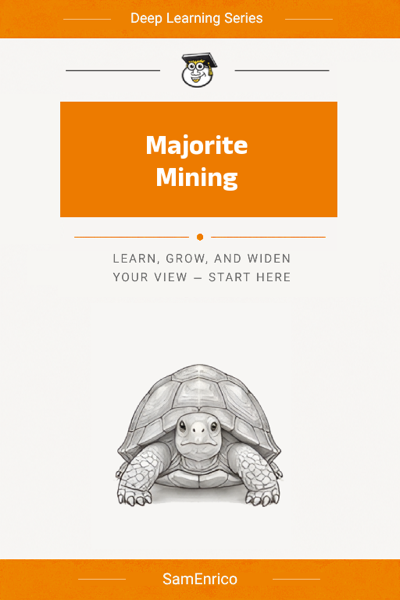
Majorite Mining eBook
A Coursebook on Majorite Mining
A Coursebook on Majorite Mining
Formats
Free sample
Chapter 1: The Thousand-Dollar Rock...--The first Majorite specimen ever sold to a private buyer changed hands not in a gleaming auction house or a high-security commodities exchange, but in the back room of a pawnshop in Thunder Bay, Ontario, at 2:17 AM on a freezing November night in 2018. The seller was a geologist named Viktor Petrenko, formerly of the Russian Academy of Sciences' Kola Deep Drilling Unit, who had walked away from his post eighteen months earlier and had been carrying the rock across three continents in a lead-lined briefcase handcuffed to his wrist. The buyer was a representative of Nyrstar Deep Earth who never gave his real name, paid in untraceable bearer bonds, and left through a fire exit without making eye contact with anyone. The price: $847,000 for a stone smaller than a human thumbnail.What Viktor sold that night was not a gemstone in any conventional sense. It was dark purple, almost black, with an internal structure that refracted light in ways that did not appear in any mineralogical database.
Under magnification, it showed no crystal habit that matched known silicates. X-ray fluorescence conducted later—on a chip that broke off during transport—revealed a chemical composition that should have been impossible for a mineral stable at surface conditions: a high-pressure garnet phase with tightly bound ferric iron and a unit cell compressed by 12% below theoretical minimum. In simpler terms, Viktor had brought up a piece of the deep Earth that had no business existing at sea level, and it had not shattered on the way up.The story of how Viktor Petrenko came to possess that rock—and how that rock came to launch a global resource rush—is the story of this chapter. But to understand the value of that thumbnail-sized stone, and the multi-billion-dollar industry that has grown up around its larger cousins, we must first understand what Majorite actually is, where it comes from, and why it has become the most coveted mineral of the twenty-first century.The Mineral That Should Not Exist Majorite is a silicate mineral belonging to the garnet group, with the general formula (Mg,Fe)₃(Al,Si)₂Si₃O₁₂. First synthesized in laboratory experiments in the 1970s and later identified in nature at the Coorara meteorite crater in Western Australia, Majorite was long considered a rare curiosity—a phase that formed only under extreme conditions and reverted to lower-density minerals when brought to the surface.
For decades, the consensus among mineralogists was that Majorite could not exist in recoverable quantities anywhere in the Earth's crust because the pressure-temperature conditions required for its formation existed only in the transition zone (410–660 kilometers depth) or during the microseconds of a meteorite impact. Neither environment seemed amenable to commercial extraction.That consensus collapsed in 2015, when a joint Norwegian-Russian deep-drilling project in the Baltic Shield recovered a continuous core sample from 11.7 kilometers depth that contained more than 400 grams of intact Majorite crystals, some exceeding 2 millimeters in diameter. The discovery was accidental—the drilling target had been a deep geothermal reservoir—but the implications were immediate and staggering. Majorite had not reverted to lower-density phases because the core had been brought to surface under controlled cooling conditions, preserved by a quirk of the drilling fluid chemistry that had been optimized for a different purpose. Someone, somewhere, had stumbled upon the secret to metastable preservation.Within months, every major mining company with deep-drilling capability had redirected exploration budgets toward identifying similar environments.
The question was no longer whether Majorite could be mined, but where it occurred and how much was down there.Formation Mechanisms: Crustal Versus Impact Modern understanding recognizes two distinct formation mechanisms for natural Majorite, each producing crystals with different characteristics and requiring different recovery strategies.Crustal Majorite forms slowly, over millions of years, in deep continental shear zones where tectonic plates grind past one another at depths between 10 and 25 kilometers. In these environments, pressures reach 1.0 to 2.5 gigapascals and temperatures range from 500 to 800 degrees Celsius—conditions that transform precursor minerals (pyroxene, spinel, and ordinary garnet) into the more compact Majorite structure through solid-state recrystallization. The process is analogous to the formation of diamond in kimberlite pipes, but slower and over larger areas. Crustal Majorite crystals tend to be relatively large (0.5 to 5 millimeters), well-ordered, and compositionally homogeneous, making them suitable for electronic and gemological applications after appropriate purification.The distribution of crustal Majorite is controlled by plate tectonics. The most prospective regions are ancient collision zones where continental plates have been sutured together—the Baltic Shield, the Canadian Shield, the Siberian Traps, and the Himalayas.
Within these regions, Majorite occurs not as a continuous seam but as pods and lenses within eclogite and garnet peridotite, surrounded by lower-grade metamorphic rocks that serve as indicators for exploration.Impact Majorite forms almost instantaneously when a meteorite strikes the Earth's surface with sufficient velocity to generate shock pressures exceeding 30 gigapascals. Unlike the slow, equilibrium growth of crustal Majorite, impact Majorite crystallizes from a superheated vapor plume in microseconds, producing polycrystalline aggregates with high dislocation densities and distinctive trace element signatures (elevated iridium, osmium, and other siderophile elements from the impacting body). Impact Majorite crystals are typically smaller (0.05 to 0.5 millimeters) and more fractured than their crustal counterparts, making them less suitable for gemological use but entirely adequate for industrial applications.The world's known impact-related Majorite occurrences are all associated with large craters: Sudbury (Canada), Vredefort (South Africa), Popigai (Russia), and Chesapeake Bay (United States). In each case, the Majorite is not uniformly distributed but concentrated in specific shock facies—typically the "impact melt sheet" and "breccia lenses" where cooling rates were rapid enough to preserve the high-pressure phase.The Metastability Question The single most important scientific concept for understanding Majorite mining is metastability. A mineral is metastable when it persists in an environment where it is not thermodynamically stable, like a ball perched on a hilltop rather than resting in the valley.
Majorite at the Earth's surface is profoundly metastable—its equilibrium state under surface conditions is a mixture of pyroxene, spinel, and quartz. The fact that it does not instantly transform is due to kinetic barriers: the atoms cannot rearrange themselves fast enough to reach the lower-energy configuration.This metastability is both a blessing and a curse. It is a blessing because it allows Majorite to be mined at all—without kinetic barriers, every crystal would shatter into useless powder during ascent. It is a curse because those same barriers make Majorite unpredictable: a crystal that survives ascent may nonetheless transform if heated, shocked, or even just left on a shelf for long enough.The preservation of Majorite depends on three factors: cooling rate, decompression rate, and chemical environment. Cooling must be slow enough to avoid thermal shock fracturing (less than 5 degrees Celsius per minute is ideal) but fast enough to prevent diffusion-controlled transformation (more than 1 degree per minute is required).
Decompression must be gradual, over hours or days rather than seconds, to allow the crystal lattice to relax without catastrophic failure. And the chemical environment must be reducing (oxygen-poor) to prevent oxidation of ferrous iron, which triggers transformation.Viktor Petrenko's thumbnail-sized specimen survived because the drilling fluid used at the Kraken-1 borehole contained a reducing agent (sodium sulfite) and the…
This is the end of the free sample. Get the eBook to keep going. Buy now
About this book
Details
- Author
- Strand Merlyn
- Publisher
- SamEnrico
- Language
- English
- Genre
- Non-Fiction, Informative, Educational
- Released
- 2026-05-11
- Pages (approx.)
- 138
- Available as
- eBook, Audiobook

Read better in the ZLOADR app
Your eBooks on your phone or tablet. Sign in with your SamEnrico account and start reading.
More by Strand Merlyn
 Teacher Stress Survival GuideStrand Merlyn$11.99
 Dreams And Psychosis TraumaStrand Merlyn$11.99
 The Dyslexic Student GuideStrand Merlyn$11.99
 The Syndication Minimum Investment GuideStrand Merlyn$11.99
 DBT For Adoption JourneyStrand Merlyn$11.99
 The Lady of the Silver Veil: Merlin’s Forgotten ApprenticeStrand Merlyn$11.99
 Understanding Teeth Noneruption of With Maxillary Hypoplasia and Genu ValgumStrand Merlyn$17.99
 Southeast Asia Green IncentivesStrand Merlyn$12.99
 Pop Up Case Study LagosStrand Merlyn$12.99
 How to Become a Conservation TechnicianStrand Merlyn$11.99