
Non-FictionSelf-HelpEnergy Matching
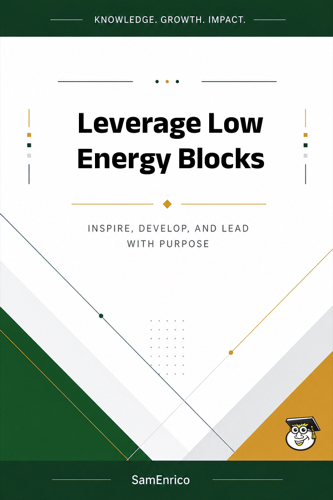
Leverage Low Energy Blocks eBook
Schedules admin, email, and routine during slumps.
by Upton Kiera
Schedules admin, email, and routine during slumps.
Formats
Free sample
Chapter 1: The 2:30 PM Graveyard--–- The fluorescent lights hummed overhead. Sarah, a senior marketing manager, stared at her computer screen. Her inbox showed 47 unread messages. A spreadsheet with quarterly projections sat half-finished. Three Slack notifications blinked in the corner of her screen.
It was 2:30 PM on a Tuesday. She had been working since 7:30 AM, but she could not remember a single meaningful thing she had accomplished in the last four hours. She felt tired, fuzzy, and vaguely guilty. She clicked on an email. Then another.
Then she opened a new browser tab to check the news. Then back to email. Then she rearranged the icons on her desktop. Then back to email again. By 3:15 PM, she had replied to twelve low-priority messages, deleted eight newsletters, and moved three files into the wrong folder.
The spreadsheet remained untouched. Her energy was gone. And she still had three hours of the workday left.This is not a story about laziness. This is not a story about poor work ethic. This is a story about biology, psychology, and the invisible architecture of modern knowledge work.
Sarah is not broken. She is not unmotivated. She is experiencing something predictable, measurable, and—most importantly—manageable. She is in a slump.If you are reading this book, you have been Sarah. You have felt the 2:30 PM fog descend like a heavy blanket.
You have watched your productivity evaporate while your to-do list grew. You have told yourself to "power through," only to find yourself checking social media or reorganizing your desktop for the third time. You have ended the day exhausted, guilty, and no closer to finishing what matters.Here is the truth that the productivity industry does not want you to hear: You cannot eliminate low energy. But you can leverage it.This chapter is the foundation of everything that follows. Before you can leverage your slumps, you must understand what they are, why they happen, and—most critically—that not all slumps are the same.
A 2:30 PM biological dip requires a completely different response than a Thursday afternoon decision fatigue crash or a post-holiday seasonal slowdown. Treating them the same way is like taking cough medicine for a broken leg. You might feel like you are doing something, but you are not solving the real problem.By the end of this chapter, you will:Understand the three distinct types of low-energy states and how to identify which one you are experiencing Complete a Time-Energy Audit that reveals your personal slump patterns Know exactly which chapters of this book to turn to for each type of slump Let us begin by burying a dangerous myth.The Myth of the Flat Energy Curve Most productivity systems assume something that is not true. They assume that your energy is constant throughout the day, or at least that it should be. The Pomodoro Technique assumes you can focus for 25 minutes, rest for 5, and repeat indefinitely.
The Eisenhower Matrix assumes you have the cognitive capacity to distinguish urgent from important at any hour. Getting Things Done assumes you can process your inbox with the same clarity at 8:00 AM and 3:00 PM.These systems are not wrong. They are incomplete. They were designed by people who either did not understand human biology or assumed that willpower could override it. But willpower is not an infinite resource.
It is a finite fuel that depletes with use, just like the gasoline in a car. And unlike a car, you cannot simply refill at a station. Your cognitive energy follows predictable rhythms that have been shaped by millions of years of evolution.Your body runs on a circadian rhythm—an internal clock that regulates sleep, wakefulness, body temperature, hormone release, and cognitive performance. This rhythm does not care about your deadlines. It does not care about your inbox.
It does not care that your boss expects a report by 5:00 PM. It follows a pattern that is baked into your biology.For most people, cognitive performance peaks in the late morning (roughly 9:00 AM to 11:30 AM), dips significantly in the early to mid-afternoon (1:00 PM to 4:00 PM), rises again in the late afternoon (4:00 PM to 6:00 PM), and then declines toward bedtime. This is not a theory. It has been measured in dozens of studies across multiple decades. The afternoon dip is not a character flaw.
It is a biological fact.But the afternoon dip is only one type of low-energy state. It is the one we feel most acutely because it happens like clockwork every day. However, there are two other types that are just as real and just as disruptive: decision fatigue crashes and seasonal slowdowns. Understanding the difference between these three is the single most important step you will take in this book.The Three Slump Types: A Diagnostic Framework Let us define each slump type clearly, with its duration, cause, symptoms, and the specific chapters of this book that will help you leverage it.Slump Type 1: The Afternoon Dip (Circadian Trough)Duration: 30 to 120 minutes, typically between 1:00 PM and 4:00 PM.Cause: Your body's internal clock triggers a drop in core body temperature and a slight increase in melatonin (the sleep hormone). This is biological, not psychological.
It happens regardless of how much sleep you got, what you ate for lunch, or how motivated you are. You cannot willpower your way out of it any more than you can willpower your way out of needing to sleep.Symptoms: Heavy eyelids, difficulty concentrating, a sense of mental "fog," increased distractibility, a tendency to switch tasks frequently, and a preference for easy, low-cognition activities like checking email or scrolling social media. You might find yourself reading the same sentence three times without understanding it.What does NOT work: Trying to do deep work. Fighting the fog. Drinking a third cup of coffee (which will only delay the crash and make it worse).
Feeling guilty about being "lazy."What DOES work (see future chapters): Micro-recovery (Chapter 9), Slump Slots (Chapter 6), and slump-friendly email processing (Chapter 4). You will learn to schedule rote, administrative tasks during this window and to take 15-minute physical or cognitive resets before you start.Who experiences it: Everyone with a functioning circadian rhythm. Night owls may experience their dip later (3:00 PM to 6:00 PM), but the dip itself is universal.Slump Type 2: The Decision Fatigue Crash Duration: 1 to 3 hours, typically late afternoon or early evening (4:00 PM to 7:00 PM), but can occur earlier if you have made an unusually high number of decisions.Cause: Your brain's executive function—the part responsible for making choices, resisting impulses, and planning—depletes like a muscle with use. Every decision you make, no matter how small, consumes a tiny amount of this resource. What to wear.
What to eat for breakfast. Which email to answer first. Whether to attend a meeting. How to phrase a sentence. By late afternoon, you have made hundreds or even thousands of micro-decisions.
Your executive function is exhausted. This is called decision fatigue.Symptoms: Impulsivity (saying yes to things you should decline), avoidance (procrastinating on important tasks), irritability (snapping at colleagues or family), difficulty making even trivial choices (what to eat for dinner becomes overwhelming), and a tendency to default to the easiest option (which is often checking email…
This is the end of the free sample. Get the eBook to keep going. Buy now
About this book
Details
- Author
- Upton Kiera
- Publisher
- SamEnrico
- Language
- English
- Genre
- Non-Fiction, Self-Help, Energy Matching
- Released
- 2026-06-05
- Pages (approx.)
- 123
- Available as
- eBook, Audiobook

Read better in the ZLOADR app
Your eBooks on your phone or tablet. Sign in with your SamEnrico account and start reading.
More by Upton Kiera
 Scepter Dream MeaningUpton Kiera$11.99
 Road Rage and Construction ZonesUpton Kiera$11.99
 Mid Quarter Convention DepreciationUpton Kiera$11.99
 Nap for Truck DriversUpton Kiera$11.99
 Loving Kindness for a Long Distance PartnerUpton Kiera$11.99
 Exercise for MemoryUpton Kiera$11.99
 NVC For BossesUpton Kiera$11.99
 Immigrant B Corp Social EnterpriseUpton Kiera$11.99
 Firestorm: The Night the Sky Turned RedUpton Kiera$11.99
 The Titan’s Last Stand: Atlas and the Weight of the HeavensUpton Kiera$11.99
 The Celestial Engineers of Axum: How Africa Built the Obelisks of the CosmosUpton Kiera$11.99
 Ultimate Handbook Guide to Nicosia : (Northern Cyprus) Travel GuideUpton Kiera$11.99
You may also like
 Hong Kong Handover 1997Dunn Johnnie$11.99
 Zumba For Postnatal Recovery CourseNeal Christian$11.99
 Zumba for BeginnersLadner Nikia$11.99
 YouTube Comment Mining GuideHumes Pandora$12.99
 Worry Box MeditationCarlin Rudy$11.99
 Workplace Stress MeditationNguyen Lynn$11.99
 Workplace Stress and Sleep RepairHawley Ivory$11.99
 Workplace Perfectionism CureDelaney Jeffry$11.99
 Workplace Injustice Anger GuideWallen Isabelle$11.99
 Work Addiction and Burnout LinkGreenwood Ester$11.99
 Women in Yoga and WellnessBeattie Galina$11.99
 Women in Stand Up ComedyChun Evangeline$11.99