
Non-FictionTrue CrimeMastermind Profile
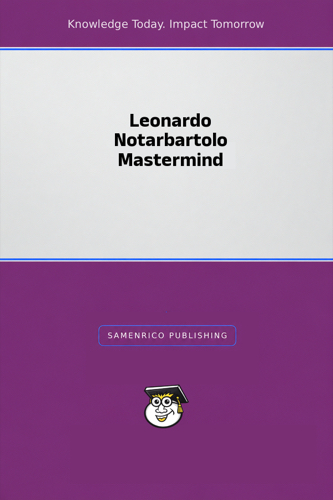
Leonardo Notarbartolo Mastermind eBook
Profile the Italian thief who planned the heist fo
by Polk Russell
Profile the Italian thief who planned the heist for eighteen months.
Formats
Free sample
Chapter 1: The Turin Method...--The man who would steal the impossible was not a locksmith, a safecracker, or even particularly good with his hands. He could not disable an alarm system through electronic wizardry, could not pick a pin-and-tumbler lock in under a minute, and had never written a line of code in his life. What Leonardo Notarbartolo possessed instead was something far more dangerous: patience so profound that it looked like laziness, charm so disarming that it looked like innocence, and an understanding of human nature so cynical that it looked like wisdom. He was, by his own admission, a mediocre thief. But he was a genius at recruitment, observation, and the slow, invisible art of becoming part of the furniture.The Antwerp diamond heist, which would later be called the largest robbery of the twentieth century, was not a crime of opportunity.
It was not a sudden inspiration born of desperation or greed. It was the result of eighteen months of methodical preparation, during which Notarbartolo did something so audacious that it still strains belief: he rented an office inside the very vault he planned to rob. For a year and a half, he walked past the guards, rode the elevators with the security directors, and ate lunch in the same cafeteria as the men who would later be tasked with hunting him. They knew his face. They knew his name—or at least the name he gave them.
They trusted him because he was boring, because he was familiar, because he belonged there.This chapter does not begin with the heist. It does not begin with the drilling, the hairspray, or the forty-five-minute window that would define Notarbartolo's legacy. It begins instead with a place: Turin, Italy, a city better known for Fiat automobiles and the Shroud of Turin than for criminal masterminds. But beneath the surface of this elegant, industrial northern Italian city lay a hidden tradition that would shape Notarbartolo's thinking and provide the blueprint for the most sophisticated heist in modern history.The School of Shadows Turin in the 1970s and 1980s was not Rome or Naples. It did not have the Mafia's theatrical violence or the Camorra's chaotic sprawl.
What Turin had instead was engineering. The city was home to Italy's most advanced manufacturing, its most precise toolmaking, and a class of criminals who approached theft the way aerospace engineers approached building a jet engine: with blueprints, tolerances, and a fanatical attention to detail. This underground network became known as La Scuola di Torino—the School of Turin.Unlike traditional organized crime, the School of Turin was not a hierarchical family or a territorial syndicate. It was something closer to a guild: a loose, cell-based collective of specialists who collaborated on specific jobs and then dissolved back into anonymity. There were no bosses giving orders, no soldiers shaking down shopkeepers, no violent enforcement of territory.
The School of Turin existed for one purpose only: to defeat physical security systems through meticulous preparation rather than brute force.The philosophy of the School was simple and ruthless. Violence was not just immoral; it was inefficient. Violence drew attention, left forensic evidence, and created witnesses who could testify. A truly elegant crime, the School taught, left no trace because it had never been seen in the first place. The goal was not to break in.
The goal was to walk in, take what you came for, and walk out—with no one the wiser until long after you were gone.This philosophy required a particular kind of criminal. The School did not recruit hotheads, drug addicts, or men with gambling debts. It recruited craftsmen: watchmakers who understood gears, electricians who understood circuits, locksmiths who could feel a pin tumbler's resistance through gloved fingertips. It recruited men who could sit in a car for twelve hours without moving, who could memorize a floor plan from a single photograph, who could practice the same motion five hundred times until it became muscle memory. In the School of Turin, boredom was not a weakness.
Boredom was the test.The Conductor's Background Leonardo Notarbartolo was born in 1959 in Turin, though he would later obscure his early life with the practiced vagueness of a man who had learned that the past is a dangerous thing to leave lying around. What is known is that he came from a family of modest means, that he showed an early aptitude for sales and persuasion, and that he drifted into petty crime not out of desperation but out of boredom. He was too smart for honest work, too lazy for hard work, and too charming for either to matter.By his early thirties, Notarbartolo had graduated from petty theft to more sophisticated frauds. He ran small cons, sold stolen goods, and cultivated a network of contacts that stretched from Turin to Milan to Brussels. But he was not a major player.
He was, by his own admission, a middling criminal with a good smile and a better memory for faces. What set him apart was not his skills but his ability to recognize skills in others. He could walk into a room and within five minutes identify the man who could pick a lock, the man who could drive a getaway car, the man who could keep his mouth shut under interrogation. He was not a soloist. He was a conductor.The heist that would make him famous began not with a plan but with a question.
In 2001, a man known only as "The King of Keys" approached Notarbartolo with a proposition. The King of Keys was a legend within the School of Turin—a locksmith and forger so talented that his real name was known to perhaps five people in the world. He had spent decades studying the security industry, not as a criminal but as a kind of obsessive hobbyist. He collected lock catalogues the way other men collected stamps. He could look at a key and tell you not just its manufacturer but the tolerances of the machine that cut it.
And he had become fascinated with a particular challenge: the vault beneath the Antwerp Diamond Centre.The Target The Antwerp Diamond Centre was not merely a building. It was a fortress, a monument to the idea that money could buy safety. Located in the heart of Antwerp's diamond district—a square mile of shops, offices, and workshops that handled eighty percent of the world's rough diamonds—the Centre was designed to be impregnable. Its vault was buried underground, behind a steel door that weighed three tons. The door was protected by ten separate security layers, including magnetic fields, seismic sensors, Doppler radar motion detectors, infrared heat sensors, and a combination lock with one hundred million possible codes.
The building itself was watched by closed-circuit cameras, patrolled by guards, and monitored by motion sensors in every hallway.The merchants who rented safe deposit boxes in the vault were not banks or corporations. They were individual diamond dealers, many of them Orthodox Jewish families who had been in the trade for generations. They kept their entire inventory in those boxes: uncut stones, polished gems, gold bars, cash, bearer bonds, and jewelry. Some boxes…
This is the end of the free sample. Get the eBook to keep going. Buy now
About this book
Details
- Author
- Polk Russell
- Publisher
- SamEnrico
- Language
- English
- Genre
- Non-Fiction, True Crime, Mastermind Profile
- Released
- 2026-06-09
- Pages (approx.)
- 121
- Available as
- eBook, Audiobook

Read better in the ZLOADR app
Your eBooks on your phone or tablet. Sign in with your SamEnrico account and start reading.
More by Polk Russell
 Addictive Design of PinterestPolk Russell$11.99
 The Shame After Suicide LossPolk Russell$11.99
 Networking Nonverbal ConfidencePolk Russell$11.99
 Remote Work PodcastsPolk Russell$11.99
 Post Divorce Financial StressPolk Russell$11.99
 RLS Master GuidePolk Russell$11.99
 Alphabet Peg System GuidePolk Russell$11.99
 Rampage in the Royal Menagerie: The Beast of VersaillesPolk Russell$11.99
 How to Produce 100% Polypropylene FabricPolk Russell$11.99
 How to Become a RooferPolk Russell$11.99
 AI for Financial Ratio Trend AnalysisPolk Russell$12.99
 Brazil Dropshipping Product BansPolk Russell$12.99
You may also like
 Hong Kong Handover 1997Dunn Johnnie$11.99
 Zumba For Postnatal Recovery CourseNeal Christian$11.99
 Zumba for BeginnersLadner Nikia$11.99
 YouTube Comment Mining GuideHumes Pandora$12.99
 Worry Box MeditationCarlin Rudy$11.99
 Workplace Stress MeditationNguyen Lynn$11.99
 Workplace Stress and Sleep RepairHawley Ivory$11.99
 Workplace Perfectionism CureDelaney Jeffry$11.99
 Workplace Injustice Anger GuideWallen Isabelle$11.99
 Work Addiction and Burnout LinkGreenwood Ester$11.99
 Women in Yoga and WellnessBeattie Galina$11.99
 Women in Stand Up ComedyChun Evangeline$11.99