
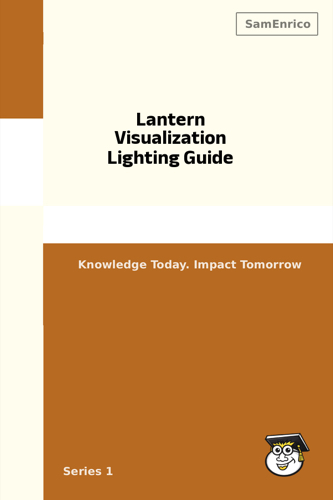
Lantern Visualization Lighting Guide eBook
Light an imagined lantern, watching the flame disp
by Meeks Danilo
Light an imagined lantern, watching the flame dispel dark thoughts, leaving only light.
Formats
Free sample
Chapter 1: The Sticky Darkness--–- You are not broken because you cannot stop a thought. You are human because you cannot stop a thought. This is the first and most important sentence you will read in this book, and I want you to sit with it for a moment before we go any further. Place your hand on your chest if that helps. Breathe once.
Now read it again: you are not broken because you cannot stop a thought. You are human because you cannot stop a thought.The multi-billion-dollar self-help industry has spent decades implying the opposite. It whispers that with enough discipline, enough journaling, enough positive affirmations, enough gratitude lists, you should be able to think your way out of dark thoughts. And when you cannot – when the same anxious loop plays for the third hour, when the shame narrative returns before your feet hit the floor, when the critical inner voice has commentary on everything from your career to your coffee order – the industry has a quiet, cruel answer ready: you are not trying hard enough.That answer is wrong. It is not only wrong; it is actively harmful.
And this book exists because that answer has caused enough suffering.What you are about to learn is not another technique for fighting your mind. It is not a promise that you will never feel fear, sadness, or self-doubt again – because those feelings are not the enemy. What you will learn is something far more practical and far more ancient: how to change your relationship to the thoughts that stick, the ones that loop, the ones that feel like they have taken up permanent residence in the back of your skull. You will learn to light a lantern. Not to destroy the darkness.
Not to pretend the darkness isn't there. But to see it clearly – and in that seeing, to watch it lose its grip.This is Chapter 1. Before we get anywhere near the lantern, we need to understand what we are dealing with. We need to name the enemy correctly, because most of us have been naming it wrong. The enemy is not negative thoughts.
The enemy is not sadness or fear or even self-criticism. The enemy is the specific kind of thought that sticks, repeats, and shrinks your life. And before we can light anything, we need to know exactly what we are illuminating.What Is a Dark Thought? (And What Is Not)Let us draw a line immediately, because fuzzy boundaries create confusion and confusion creates shame. Not every unpleasant mental event qualifies as a "dark thought" in the way this book uses that term.
This distinction matters enormously, because one of the quiet harms of the wellness industry has been to pathologize normal human emotional responses. If every moment of sadness becomes a "negative thought" to be eliminated, you will spend your entire life fighting your own humanity.Here is the definition we will use throughout this book:A dark thought is a repetitive, stuck, or harmful mental event that causes distress without serving a current protective function.Let me break that down into its three necessary components.First, repetitive or stuck. A dark thought is not a passing mood or a single worry that arises and then dissolves. It is a thought that returns. It loops.
It plays on a reel. It shows up at the same time of day, or in the same situations, with the same words and the same emotional charge. You have had this thought before. You will probably have it again. That is not a failure on your part – it is the very definition of a dark thought in this framework.Second, harmful.
The thought causes distress. It might trigger anxiety in your chest, shame in your stomach, tension in your shoulders. It might interrupt your sleep, your concentration, your ability to be present with people you love. It might lead you to cancel plans, avoid opportunities, or speak harshly to yourself. If a thought leaves you smaller than you were before it arrived, it qualifies as harmful.Third – and this is where most definitions go wrong – without serving a current protective function.
Some negative thoughts are actually useful. Fear before a dangerous situation keeps you alert. Guilt after harming someone motivates repair. Sadness after loss signals that something mattered. These are not dark thoughts in the pathological sense.
They are signals. The problem is not that they exist; the problem is when they outlast their usefulness or arrive with no protective purpose at all.So let me give you some examples to make this concrete.These ARE dark thoughts (by our definition):"I'm such a failure" – looping every time you make a minor mistake, even when objective evidence shows you are competent"Something terrible is going to happen" – arriving with no specific threat, just a generalized dread that keeps you from leaving the house"Nobody actually likes me" – repeating after every social interaction, regardless of how warm people were"I should be further along by now" – comparing yourself to an invisible timeline that moves every time you get close These are NOT dark thoughts (by our definition):Fear before a job interview for a position you genuinely want – that is your nervous system mobilizing energy Sadness after a breakup – that is your heart processing loss Guilt after snapping at your child – that is your conscience inviting repair Anxiety before walking alone in an unsafe neighborhood – that is your survival instinct working correctly The difference is not in the feeling itself. The difference is in the stickiness, the harm, and the absence of current usefulness. A grieving person should feel sad. A person about to give a presentation should feel some nervousness.
These are not problems to be solved. They are responses to be honored.This distinction matters because one of the most common reasons people abandon visualization practices is that they try to use them on everything. They light the lantern on normal sadness and then feel frustrated when the sadness doesn't vanish. Of course it doesn't vanish. It shouldn't.
Sadness is not a dark thought. Grief is not a dark thought. Appropriate fear is not a dark thought. The lantern is not a tool for erasing your humanity. It is a tool for releasing the thoughts that have overstayed their welcome – the ones that arrived uninvited and refuse to leave.If you take nothing else from this chapter, take this: you get to keep your normal negative emotions.
They are not the enemy. The enemy is the loop, the stuckness, the thought that plays on repeat long after it has stopped being useful.Why Dark Thoughts Feel Sticky: The Neurobiology of Looping Now that we know what we are dealing with, we need to understand why these thoughts feel so impossible to shake. Because if you have ever tried to stop thinking about something – a worry, a regret, an embarrassment, a fear – you have discovered the maddening paradox: the more you try not to think about something, the more you think about it.This is not a character flaw. This is not a lack of discipline. This is your brain working exactly as evolution designed it…
This is the end of the free sample. Get the eBook to keep going. Buy now
About this book
Details
- Author
- Meeks Danilo
- Publisher
- SamEnrico
- Language
- English
- Genre
- Non-Fiction, Self-Help, Light Imagery
- Released
- 2026-06-08
- Pages (approx.)
- 137
- Available as
- eBook, Audiobook

Read better in the ZLOADR app
Your eBooks on your phone or tablet. Sign in with your SamEnrico account and start reading.
More by Meeks Danilo
 MBSR For Imposter Syndrome CourseMeeks Danilo$11.99
 Hyperarousal Trauma Response FixMeeks Danilo$11.99
 Persuasive Storytelling TechniquesMeeks Danilo$11.99
 The Lioness of the Savannah: The Untold Splendor of Queen Amina of ZazzauMeeks Danilo$11.99
 How to Become a Twitchell OperatorMeeks Danilo$11.99
 Private Tutoring vs Platform TutoringMeeks Danilo$12.99
 Course Platform Terms GuideMeeks Danilo$12.99
 German Grammar DeconstructedMeeks Danilo$11.99