
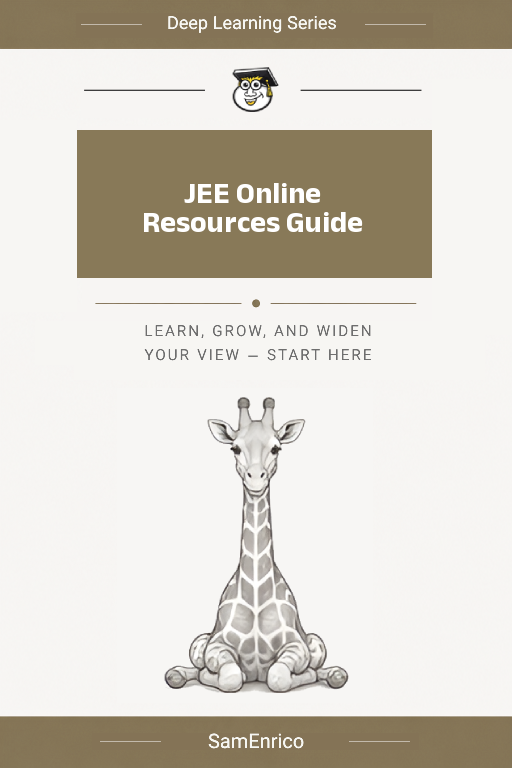
Non-FictionStudent's ShortcutDigital Resources
JEE Online Resources Guide eBook
Recommends best YouTube channels, websites, apps,
Recommends best YouTube channels, websites, apps, and online test series for JEE preparation with usage strategies.
Formats
Free sample
Chapter 1: The Digital Twin Method--–- Rohan’s alarm screamed at 6:00 AM on a Monday morning in April. He was a sincere JEE aspirant, the kind who had solved two-thirds of HC Verma by the end of Class 11. His parents had spent ₹1,80,000 on a reputed coaching institute in Kota, complete with hostel fees and study material. By all external measures, Rohan was doing everything right.But there was a problem Rohan couldn’t articulate. Every evening, after returning from coaching, he would open You Tube on his phone “just to revise a concept.” Three hours would vanish.
He would watch four different teachers explain the same derivation of projectile motion. He would save seventeen videos to his “JEE 2026” playlist. He would feel exhausted, even proud, of how much content he had consumed. Then he would open a problem set and realize he couldn’t solve a single variation of the problem he had just watched for ninety minutes.Rohan had fallen into the most expensive trap in JEE preparation: the illusion of productivity through passive watching. He was not alone.
Across India, thousands of students were doing exactly the same thing—confusing the feeling of watching with the act of learning, mistaking motion for progress.The data from India’s largest test series providers tells a brutal story. Among students who watch more than twenty hours of You Tube lectures per week, the average JEE Main score is actually lower than among students who watch fewer than five hours. More consumption does not equal more learning. In fact, beyond a certain point, it correlates with worse outcomes. The reason is simple: You Tube is not designed for learning.
You Tube is designed for watching. And watching without solving is entertainment, not education.This chapter introduces a completely different way of using digital resources. It is called the Digital Twin Method, and it has one purpose: to ensure that every minute you spend on a screen translates directly into a problem you can solve on paper. By the end of this chapter, you will no longer suffer from watch-time addiction. You will have a system that tells you exactly what to watch, when to watch it, how long to watch, and most importantly, when to stop watching and start doing.The Real Problem No One Talks About Let me tell you what is actually happening inside your brain when you watch a You Tube lecture.
Your brain releases a small amount of dopamine when the teacher makes a clever point or solves a difficult problem effortlessly. This feels good. You feel like you are learning. The problem is that this feeling is identical to the feeling you get when watching a magician perform a trick. You are impressed, but you cannot do the trick yourself.Learning is not watching someone else solve problems.
Learning is the uncomfortable, frustrating, slow process of struggling through a problem yourself, making mistakes, backtracking, and finally arriving at a solution. That process does not feel good in the moment. It feels like failure. But it is the only process that builds lasting neural pathways.Here is the hard truth that no coaching center will tell you: The students who crack JEE Advanced are not the ones who watched the most lectures. They are the ones who solved the most problems independently.
Digital resources are tools, not teachers. A hammer does not build a house. You build the house. The hammer just helps.The Three Screens Lie Before we build your Digital Twin, we need to dismantle a dangerous myth. You have probably seen study motivation videos on You Tube that show a student with three screens—laptop, tablet, phone—all displaying different things simultaneously.
This is not productivity. This is fragmentation.Your brain cannot multitask. What we call multitasking is actually rapid task-switching, and each switch costs you up to twenty minutes of focus recovery time. If you check a notification while watching a lecture, you have effectively lost the next twenty minutes of learning. If you do this ten times a day, you have lost three hours.The 3-Screen Discipline introduced in this book is the opposite of multitasking.
It is about assigning one job to each screen and never deviating.Your laptop is for lectures only. You will not log into social media on your laptop. You will not check email on your laptop. You will not have any browser bookmarks except your five to seven trusted You Tube channels and your test series portal. Your laptop is a single-purpose machine during study hours.
If you cannot resist the temptation to open Instagram, you will install the browser extensions described in Chapter 8. But for now, simply make a rule: laptop equals lectures.Your tablet is for PDFs and digital notes. You will not watch videos on your tablet. You will not play games on your tablet. You will open textbooks, highlight them, annotate them, and export your highlights.
That is all. The tablet replaces your physical books and your notebook. It does not replace your television.Your phone is for exactly two things: doubt-solving using a single app (Doubtnut or Cracku) and mock tests using your chosen test series apps. That is it. You will not watch lectures on your phone.
You will not scroll through You Tube on your phone. You will not use your phone as a timer or a calculator. Your phone is a tool for specific, time-bound tasks.This discipline is not optional. Every student who has ever successfully transitioned from passive watching to active learning has implemented some version of this separation. The screens themselves are not the enemy.
The confusion between their purposes is the enemy.The Navigator Pedagogy Translated to Digital Arihant’s JEE Navigator series is one of the most successful book series in JEE history. Its structure is elegant: Concept Maps → JEE Main Drill → Advanced Voyage. First, you understand the conceptual landscape. Then you practice problems at the JEE Main level. Then you push yourself to JEE Advanced.The Digital Twin Method is simply this same structure translated into the digital world.
For every physical chapter in your syllabus, you will assign a Digital Twin—a specific You Tube playlist for concepts, a specific app for drills, and a specific test series for advanced practice.Here is what that looks like in practice. Suppose you are studying Mechanics, specifically the chapter on Projectile Motion. Your Digital Twin would be:Concept phase (You Tube): Watch NV Sir’s two-hour lecture on Projectile Motion from his Mechanics playlist. Not the one-hour version. Not the forty-minute version.
The full two-hour lecture that derives every formula and solves every variation.Drill phase (App): Open Marks App or Exam Goal. Filter for Projectile Motion questions at JEE Main difficulty. Solve twenty MCQs with a timer. Do not move to the next step until you score at least 80 percent on this drill.Advanced phase (Test series): Open your paid test series app (PW Rankers, Embibe, or Allen Digital). Attempt the Advanced-level questions on Projectile Motion.
These will include multiple-correct questions, integer-type questions, and problems that combine Projectile Motion with other chapters.This is your ecosystem map. It is a flowchart that answers…
This is the end of the free sample. Get the eBook to keep going. Buy now
About this book
Details
- Author
- Ludwig Cheryle
- Publisher
- SamEnrico
- Language
- English
- Genre
- Non-Fiction, Student's Shortcut, Digital Resources
- Released
- 2026-06-01
- Pages (approx.)
- 123
- Available as
- eBook, Audiobook

Read better in the ZLOADR app
Your eBooks on your phone or tablet. Sign in with your SamEnrico account and start reading.
More by Ludwig Cheryle
 Dawn Sky WatchingLudwig Cheryle$11.99
 Resource Restriction RenaissanceLudwig Cheryle$11.99
 Divorce and Intimacy FearsLudwig Cheryle$11.99
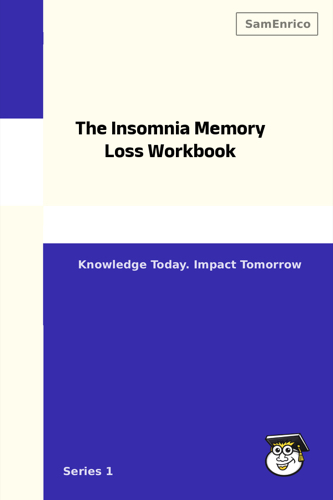 The Insomnia Memory Loss WorkbookLudwig Cheryle$11.99
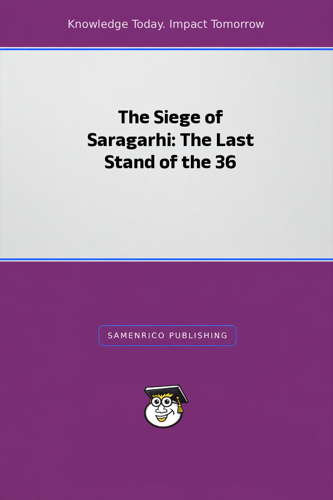 The Siege of Saragarhi: The Last Stand of the 36Ludwig Cheryle$11.99
 Understanding PinealomaLudwig Cheryle$17.99
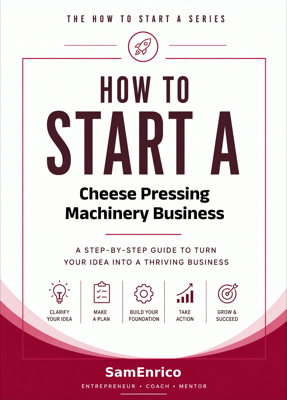 How to Start a Cheese Pressing Machinery Business (Beginners Guide)Ludwig Cheryle$11.99
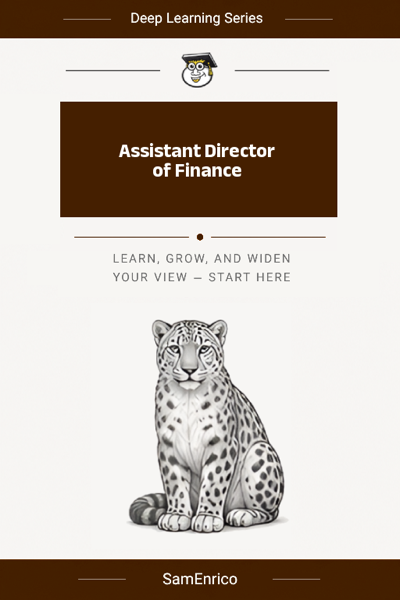 Assistant Director of FinanceLudwig Cheryle$11.99
 Wave Bank Sync ConfigurationLudwig Cheryle$12.99
You may also like
 Hong Kong Handover 1997Dunn Johnnie$11.99
 Zumba For Postnatal Recovery CourseNeal Christian$11.99
 Zumba for BeginnersLadner Nikia$11.99
 YouTube Comment Mining GuideHumes Pandora$12.99
 Worry Box MeditationCarlin Rudy$11.99
 Workplace Stress MeditationNguyen Lynn$11.99
 Workplace Stress and Sleep RepairHawley Ivory$11.99
 Workplace Perfectionism CureDelaney Jeffry$11.99
 Workplace Injustice Anger GuideWallen Isabelle$11.99
 Work Addiction and Burnout LinkGreenwood Ester$11.99
 Women in Yoga and WellnessBeattie Galina$11.99
 Women in Stand Up ComedyChun Evangeline$11.99