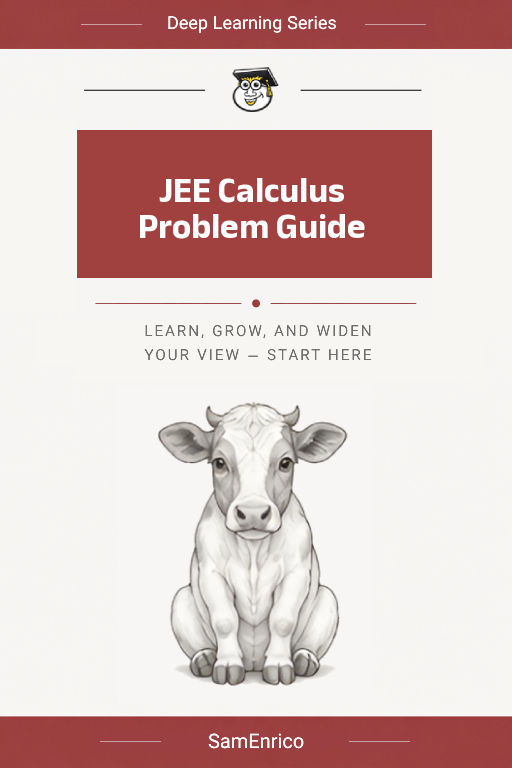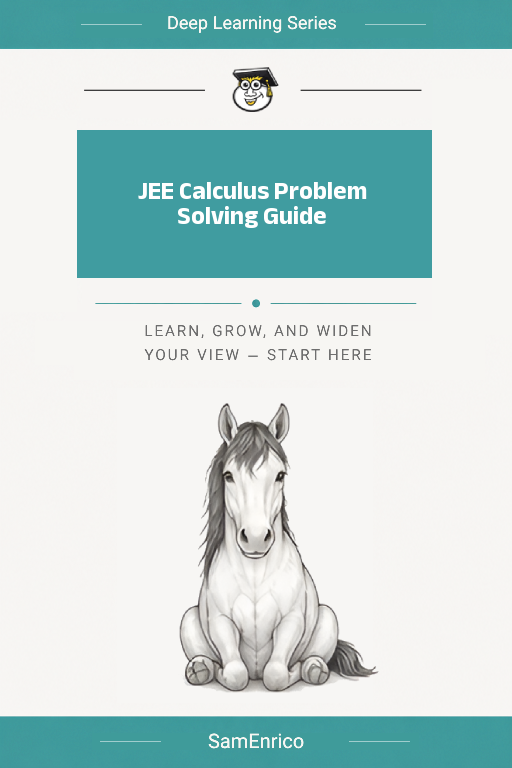
JEE Calculus Problem Solving Guide Audiobook
Tackle limits, differentiation, integration, and d
Tackle limits, differentiation, integration, and differential equations with proven approaches.
Formats
Free sample
Chapter 1: The Calculus Code...--–- Most JEE aspirants believe calculus is about memorizing formulas. They fill notebooks with derivatives of inverse trigonometric functions, integration shortcuts, and the 47 variations of L’Hospital’s Rule. Then they sit for the exam, read a problem, and freeze. The formula they memorized doesn’t fit neatly. The problem looks similar to something they’ve solved before, but different enough to create doubt.
Panic sets in. Time slips away. They score poorly and conclude, “I’m just not good at calculus.”That conclusion is wrong. You are not bad at calculus. You have been trained to memorize answers rather than recognize patterns.
This chapter rewires that approach.Calculus is not a collection of formulas. It is a language for describing change and accumulation. Derivatives tell you how fast something changes at an instant. Integrals tell you how much accumulates over time. Differential equations tell you how a quantity evolves based on its own rate of change.
When you understand calculus as a language rather than a formula sheet, problems stop being obstacles and start being conversations.The single biggest difference between a 90-percentile student and a 99-percentile student is not speed. It is recognition. The topper reads a problem and within seconds knows its family, its traps, and its fastest solution path. The average student reads the same problem and immediately reaches for a pen, hoping the algebra will reveal the answer.This chapter introduces the C.O.D.E. Framework, a four-step mental model that will appear in every subsequent chapter of this book.
You will apply it to limits, derivatives, integrals, areas, and differential equations. By the time you finish this book, C.O.D.E. will be automatic. You will not think about the steps. You will simply solve.Let us begin.The Myth of the Calculus Genius Every year, thousands of JEE aspirants tell themselves a story: “Some people are just born with a calculus brain.
I am not one of them.”This is a lie.The students who excel at calculus are not genetically gifted. They have simply built better mental models. Neuroscience research on expertise shows that top performers in any domain—chess, music, medicine, mathematics—do not think faster than novices. They think differently. They have stored patterns in long-term memory that allow them to recognize problem types instantly, bypassing slow analytical reasoning.Consider two students solving the limit problem:limx→0sin3xx\lim_{x \to 0}…
This is the end of the free sample. Get the Audiobook to keep going. Buy now
About this book
Details
- Author
- Huddleston Laticia
- Publisher
- SamEnrico
- Language
- English
- Genre
- Non-Fiction, Student's Shortcut, Calculus
- Released
- 2026-05-28
- Pages (approx.)
- 156
- Available as
- eBook, Audiobook

Listen in the VoxFlicks app
Audiobooks and audio dramas wherever you go. Sign in with your SamEnrico account and press play.
More by Huddleston Laticia
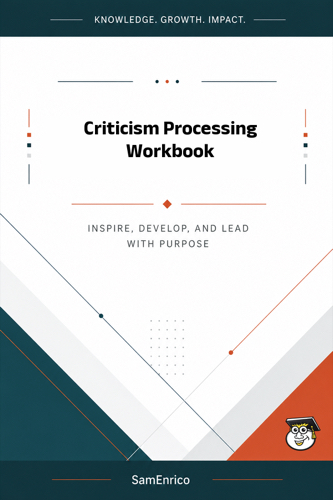 Criticism Processing WorkbookHuddleston Laticia$11.99
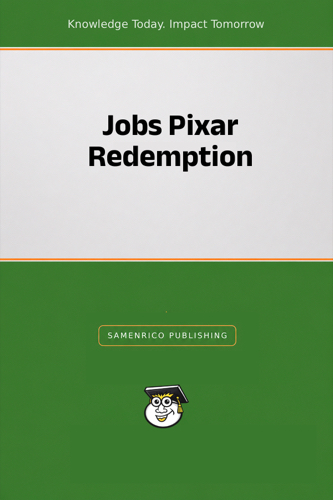 Jobs Pixar RedemptionHuddleston Laticia$11.99
 Personal Brand DifferentiationHuddleston Laticia$11.99
 Holocaust Refugee Camp LiberatorHuddleston Laticia$11.99
 Melatonin for Rhythm DisordersHuddleston Laticia$11.99
 Emotional Literacy GuideHuddleston Laticia$11.99
 Fluid Intelligence TrainingHuddleston Laticia$11.99
 Construction Insurance GuideHuddleston Laticia$11.99
 The Red and Black Revolution: How a Dance Troupe Became a Global PhenomenonHuddleston Laticia$11.99
 Empress Theodora: The Byzantine PhoenixHuddleston Laticia$11.99
 How to Trade PropaneHuddleston Laticia$11.99
 A Collector's Handbook to the Aston Martin 98 LongHuddleston Laticia$11.99