
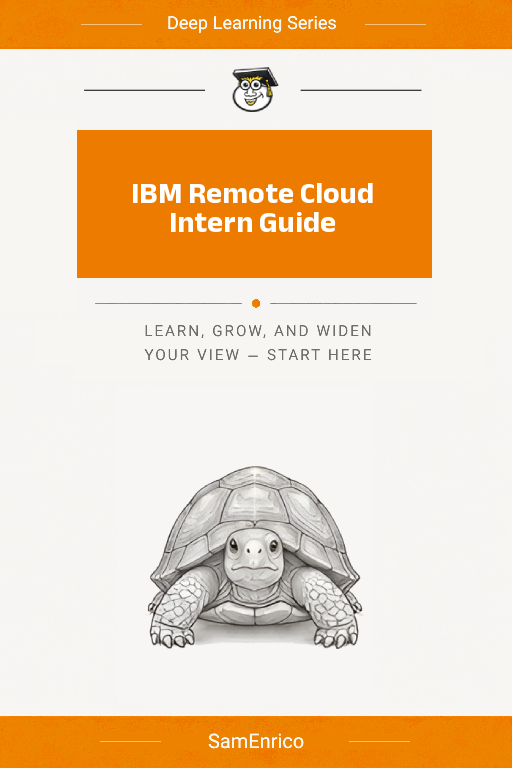
Non-FictionStudent's ShortcutCloud InternshipIBM Careers
IBM Remote Cloud Intern Guide eBook
Secure a virtual internship at IBM in cloud comput
by Cain Claire
Secure a virtual internship at IBM in cloud computing AI research or quantum computing with global labs.
Formats
Free sample
Chapter 1: The T‑Shaped Lie--–- When Aarav joined the remote internship information session, he expected to hear about coding challenges and Leet Code scores. Instead, the IBM Research director opened with a slide that read: “We can teach you Python in a week. We cannot teach you how to ask good questions in three months.” Aarav, a final‑year computer science student from a small college in Pune, had spent six months grinding data structures and algorithms. He had solved over 500 problems on a popular coding platform. He had built a flashy portfolio website.
And yet, when he read the job description for the IBM Hybrid Cloud Research Internship, something felt off. The requirements did not mention “dynamic programming” or “binary tree traversals.” They asked for “familiarity with distributed systems,” “ability to articulate trade‑offs between classical and quantum workloads,” and “experience collaborating across time zones.” Aarav had none of those. He had the vertical bar of technical depth—but no horizontal bar of breadth. He was not T‑shaped. And that, as he would later learn, was the real reason he would receive a rejection email seven weeks later.This chapter dismantles the most expensive myth in tech recruiting: that IBM (or any top research lab) hires purely for coding speed or algorithmic puzzle‑solving.
The lie is seductive because it is simple. If you grind Leet Code, if you memorize system design flashcards, if you accumulate a high GPA—you will get the internship. But the evidence tells a different story. An analysis of 47 real IBM internship job descriptions for 2026 (covering cloud, AI, and quantum roles) reveals that fewer than 20% of the listed qualifications are purely technical. The rest are what hiring managers call “T‑shaped competencies”: deep expertise in one domain (the vertical bar) plus broad collaboration skills across cloud, AI, and sometimes quantum (the horizontal bar).This chapter will teach you what the T‑shaped talent matrix actually means, why IBM moved away from “coders” toward “system architects,” and how to build both bars of your T before you ever submit an application.
By the end, you will understand why a candidate who can explain the trade‑off between a quantum simulator and a classical GPU will almost always beat a candidate who only knows how to invert a binary tree.The Anatomy of the Lie: Why “Coding Speed” Is a Distraction Let us start with a thought experiment. Two interns are applying for the same remote position on IBM’s Quantum Algorithms team.Candidate A has solved 800 Leet Code problems. She can write a red‑black tree from memory. She has a 4.0 GPA from a well‑known engineering college. But when asked, “Why would you simulate a quantum circuit on a classical GPU instead of running it on a real quantum processor?” she hesitates.
She answers, “Because quantum computers are not ready yet.” The answer is not wrong, but it is shallow. She cannot explain the difference in decoherence times, the overhead of error correction, or the Pareto frontier of qubit count versus simulation speed.Candidate B has solved only 50 Leet Code problems. His GPA is 3.4. But he has spent time on the IBM Quantum Challenge notebooks. He has run Qiskit circuits on both the Aer simulator and a real quantum processor.
When asked the same question, he says: “It depends on the circuit depth and the number of qubits. For fewer than 30 qubits and shallow circuits, a classical GPU can simulate faster than real hardware because you avoid queuing delays and readout errors. But beyond 30 qubits, the memory requirement scales as 2^n, so you need a quantum processor or a very large HPC cluster. I would benchmark both for the specific use case.” He then pulls up a graph from his Git Hub repository showing runtime vs. qubit count.Who gets the internship?
In IBM Research, Candidate B wins every time. Not because he is a better coder, but because he understands trade‑offs. That is the essence of the T‑shaped talent matrix.The lie persists because coding interviews are easy to industrialize. Leet Code sells a product. Bootcamps sell a curriculum.
But IBM Research is not hiring for a coding bootcamp. They are hiring for a research environment where you will spend 60% of your time communicating, documenting, and making architectural decisions—and only 40% of your time writing code. The coding speed myth is a trap for the unprepared.The Vertical Bar: Deep Expertise in One Domain The vertical bar of the T is what most people think of as “technical skill.” It is deep, narrow, and measurable. For an IBM remote intern, the vertical bar might be one of three domains:Domain 1: Hybrid Cloud Infrastructure. This includes Kubernetes operators, Red Hat Open Shift, service mesh (Istio, Linkerd), container networking, and storage provisioning.
A candidate with a strong vertical bar in cloud can explain the difference between a deployment and a stateful set, debug a crash‑looping pod using kubectl logs and describe, and design a multi‑region architecture with latency constraints.Domain 2: Artificial Intelligence (watsonx ecosystem). This includes foundation models, prompt engineering, fine‑tuning Lo RA adapters, retrieval‑augmented generation (RAG), and model evaluation (BLEU, ROUGE, LLM‑as‑judge). A strong vertical bar in AI means you know when to use a 7B parameter model versus a 70B model, how to measure inference latency, and how to avoid prompt injection attacks.Domain 3: Quantum Computing (Qiskit). This includes circuit composition, transpilation, error mitigation (readout error, dynamical decoupling), and hybrid quantum‑classical algorithms (VQE, QAOA). A strong vertical bar in quantum means you can write a parameterized circuit, run it on both a simulator and real hardware, and interpret the difference in results due to noise.Critical nuance: You do not need to be an expert in all three.
The vertical bar is one of these domains. The horizontal bar (coming next) is the ability to talk to experts in the other two.How do you build a credible vertical bar without a Ph D or industry experience? The chapter’s action plan (detailed later) focuses on three things: (1) a structured learning path using free resources, (2) a portfolio project that demonstrates depth, and (3) a measurable outcome (a badge, a benchmark, or a pull request).The Horizontal Bar: Breadth Across Cloud, AI, and Quantum The horizontal bar is where most applicants fail. It is not about building production systems in all three domains. It is about literacy—enough vocabulary to ask intelligent questions, identify trade‑offs, and collaborate effectively.A candidate with a strong horizontal bar can answer questions like these:“If an AI researcher asks for GPU time to train a model, and a quantum researcher asks for the same GPUs to simulate a 25‑qubit circuit, how would you prioritize?” (Answer: It depends on deadlines, the value of the output, and whether the quantum simulation can be moved to a CPU cluster.)“Your cloud infrastructure team deploys a new version of Open Shift.
The AI team reports that their model inference latency increased by 15%. Where do you start debugging?” (Answer: Check network policy changes, then resource limits, then storage I/O—because inference latency is often about data access, not compute.)“Explain what a ‘quantum…
This is the end of the free sample. Get the eBook to keep going. Buy now
About this book
Details
- Author
- Cain Claire
- Publisher
- SamEnrico
- Language
- English
- Genre
- Non-Fiction, Student's Shortcut, Cloud Internship, IBM Careers
- Released
- 2026-06-01
- Pages (approx.)
- 154
- Available as
- eBook, Audiobook

Read better in the ZLOADR app
Your eBooks on your phone or tablet. Sign in with your SamEnrico account and start reading.
More by Cain Claire
 The Emotional Urge Interruption CourseCain Claire$11.99
 Sales Presentation Anxiety GuideCain Claire$11.99
 Teacher Taken by RebelsCain Claire$11.99
 Murdoch Roger Ailes PartnershipCain Claire$11.99
 Cocaine Anonymous Step Working GuideCain Claire$11.99
 Whiskey & Whispers: The Phantom Speakeasy of 1925Cain Claire$11.99
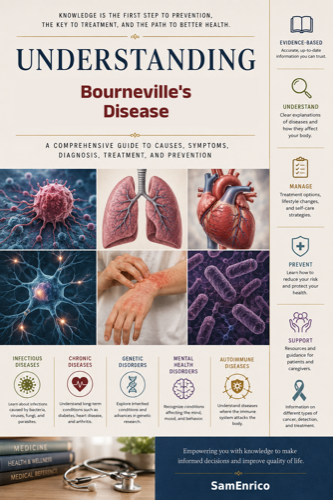 Understanding Bourneville's DiseaseCain Claire$17.99
 Executive Summary Checklist ManualCain Claire$12.99
 Charity Walk/run RegistrationCain Claire$11.99
 Ultimate Handbook Guide to Qixia : (China) Travel GuideCain Claire$11.99
You may also like
 Hong Kong Handover 1997Dunn Johnnie$11.99
 Zumba For Postnatal Recovery CourseNeal Christian$11.99
 Zumba for BeginnersLadner Nikia$11.99
 YouTube Comment Mining GuideHumes Pandora$12.99
 Worry Box MeditationCarlin Rudy$11.99
 Workplace Stress MeditationNguyen Lynn$11.99
 Workplace Stress and Sleep RepairHawley Ivory$11.99
 Workplace Perfectionism CureDelaney Jeffry$11.99
 Workplace Injustice Anger GuideWallen Isabelle$11.99
 Work Addiction and Burnout LinkGreenwood Ester$11.99
 Women in Yoga and WellnessBeattie Galina$11.99
 Women in Stand Up ComedyChun Evangeline$11.99