
Non-FictionHealth & WellnessLaboratory Medicine
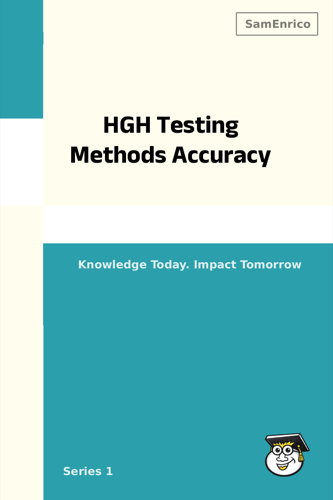
HGH Testing Methods Accuracy
Compare serum HGH, IGF-1, and urine tests for reli
Compare serum HGH, IGF-1, and urine tests for reliability in clinical assessment.
Formats
About this book
Free sample
Chapter 1: The 90-Minute Lie--The most expensive blood test you will ever take is also the most likely to be wrong. This is not hyperbole. It is the central, uncomfortable fact that the multi-billion dollar hormone testing industry would prefer you never learn. Every day, in thousands of clinics across the world, physicians order a single random blood draw for Human Growth Hormone. They do this to diagnose deficiency, to explain fatigue, to justify expensive treatments, or to reassure worried parents about a child’s short stature.
And every day, these same tests produce results that are not merely inaccurate, but physiologically meaningless—because they fundamentally misunderstand the biology of the very hormone they are trying to measure.Consider the following scenario, which is not hypothetical but represents a common clinical reality. A 45-year-old man presents with fatigue, reduced muscle mass, and difficulty losing weight. His primary care doctor, aware that adult growth hormone deficiency can cause these symptoms, orders a morning serum HGH level. The result comes back at 0.2 ng/m L. The reference range on the lab report says normal is 0.1 to 3.0 ng/m L.
His value is within range, so he is told his HGH is normal and his symptoms must have another cause. He leaves without treatment, frustrated and still unwell.Now consider an identical 45-year-old man with identical symptoms who happens to have his blood drawn thirty minutes earlier in the day. His result is 1.8 ng/m L—still well within the normal range. He is also told nothing is wrong. A third identical man, whose blood is drawn ninety minutes later, receives a result of 0.05 ng/m L, which the lab flags as abnormally low.
He is referred to an endocrinologist, undergoes expensive provocative stimulation testing, and is found to have completely normal pituitary function. His low value was simply a normal trough between pulses.Three identical patients. Three different results. Two misdiagnoses. Zero clinical utility.This is not a failure of laboratory technology.
It is a failure of clinical reasoning—specifically, the failure to account for what endocrinologists call pulsatility, and what this chapter will…
This is the end of the free sample. Get the eBook to keep going. Buy now
Contents
- Chapter 1
- Chapter 2
- Chapter 3
- Chapter 4
- Chapter 5
- Chapter 6
- Chapter 7
- Chapter 8
- Chapter 9
- Chapter 10
- Chapter 11
- Chapter 12
Details
- Author
- Regalado Lurline
- Publisher
- SamEnrico
- Language
- English
- Genre
- Non-Fiction, Health & Wellness, Laboratory Medicine
- Released
- 2026-06-09
- Pages (approx.)
- 143
- Available as
- eBook, Audiobook

Read better in the ZLOADR app
Your eBooks on your phone or tablet. Sign in with your SamEnrico account and start reading.
More by Regalado Lurline
 AI Transition Detection and ImprovementRegalado Lurline$11.99
 Self Hypnosis Color BreathingRegalado Lurline$11.99
 Agoraphobia Church Service Anxiety GuideRegalado Lurline$11.99
 Islamic Algebra Algorithm PioneersRegalado Lurline$11.99
 Kicks & Kings: How Air Jordan 1s Crowned a Cultural RevolutionRegalado Lurline$11.99
 The Forgotten Bridge of the Yangtze: A Love Lost in StoneRegalado Lurline$11.99
 Light Pollution ConsultantRegalado Lurline$11.99
 Ecommerce Generative AI OutlookRegalado Lurline$12.99
 How to Become a ScannerRegalado Lurline$11.99
You may also like
 Hong Kong Handover 1997Dunn Johnnie$11.99
 Zumba For Postnatal Recovery CourseNeal Christian$11.99
 Zumba for BeginnersLadner Nikia$11.99
 YouTube Comment Mining GuideHumes Pandora$12.99
 Worry Box MeditationCarlin Rudy$11.99
 Workplace Stress MeditationNguyen Lynn$11.99
 Workplace Stress and Sleep RepairHawley Ivory$11.99
 Workplace Perfectionism CureDelaney Jeffry$11.99
 Workplace Injustice Anger GuideWallen Isabelle$11.99
 Work Addiction and Burnout LinkGreenwood Ester$11.99
 Women in Yoga and WellnessBeattie Galina$11.99
 Women in Stand Up ComedyChun Evangeline$11.99