
Non-FictionStudent's ShortcutTechEdTech
Harvard Extension Technology Platform eBook
Courses via Zoom, Canvas LMS, with recorded lectur
by Knoll Xuan
Navigate Canvas, Zoom, and HES's digital learning tools effectively.
Formats
Free sample
Chapter 1: The Equity Mandate--–- In the summer of 2019, before the pandemic forced every university online, the Harvard Extension School was already running a quiet experiment. While most of higher education treated online learning as a second-class delivery mechanism—a way to squeeze more tuition dollars from remote students without fundamentally changing pedagogy—a small team at HES had been asking a different question: What if we designed every classroom, from the ground up, to serve three distinct populations simultaneously, with no single group receiving preferential treatment?The answer became HELIX, Harvard's proprietary hybrid learning model. And the first thing its architects discovered was that most of what the edtech industry called "Hy Flex" was not actually flexible at all. It was, in practice, a series of compromises that left someone out.This chapter reframes the entire conversation. It argues that technology is neutral, but design is political.
Every decision you make—where to place the camera, how to moderate chat, whether to record a breakout room—sends a message about which students matter. The Harvard Extension Technology Platform is not a collection of tools. It is a philosophy of equitable access, operationalized through the deliberate integration of Zoom, Canvas, and recorded lectures.If you take away only one idea from this book, let it be this: Equity is not a feature you add at the end. It is the foundation upon which everything else is built.The Three Modalities Problem Every course built on the HES Trinity must serve three distinct student populations simultaneously. Understanding their different needs, constraints, and patterns of engagement is the first step toward intentional design.The In-Person Student These students sit in a physical classroom.
They see the instructor's body language without video compression. They can raise a hand and receive immediate acknowledgment. They overhear side conversations before class begins. They have, in short, the richest bandwidth of interaction.But they also have constraints. They commute.
They pay for parking or public transit. They cannot rewind a confusing statement unless someone in the room asks for clarification. They are bound by a specific time and place.The Live Online Student (Zoom)These students attend synchronously but remotely. They see the instructor through a camera lens. They type questions into chat or raise a digital hand.
They hear the room through a microphone array that may or may not capture the student in the back row asking a quiet question.Their advantage is location independence. Their disadvantage is what media theorists call "transactional distance"—the psychological gap created by not sharing a physical space. They must work harder to feel present, and the instructor must work harder to include them.The On-Demand Student (Asynchronous)These students never attend live. They watch recordings, often at unusual hours—2 AM in Tokyo, 6 AM in Berlin before work, 10 PM in California after putting children to bed. They interact with the course through Canvas discussions, email, and recorded office hours.Their advantage is complete temporal freedom.
Their disadvantage is delayed feedback. By the time they post a question about Tuesday's lecture, the live session has already ended. They experience the course as a ghost in the machine.The central challenge of the HES Trinity is not technical. It is ethical. How do you design a learning experience where no student, regardless of modality, feels like a second-class citizen?Why "Hy Flex" Is the Wrong Starting Point The term "Hy Flex" (hybrid flexible) was coined in 2006 by Brian Beatty at San Francisco State University.
It promised a simple value proposition: students could choose, on a day-by-day basis, whether to attend in person, join live online, or watch asynchronously. All paths led to the same learning outcomes.In practice, most institutional implementations of Hy Flex have failed because they treated it as a logistics problem rather than a pedagogical one. The standard approach went something like this: set up a camera in the back of the room, stream the lecture to Zoom, record it to the cloud, and call it a day.What happened? In-person students ignored the remote participants. Remote students felt like they were watching television.
Asynchronous students never received any interaction at all. The result was three parallel courses running on the same schedule, with only the instructor pretending they were connected.The Harvard Extension School rejected this model. Instead, HELIX was built on a different premise: the three modalities are not separate tracks to be managed. They are three entry points into a single, shared learning experience. The instructor does not teach to the room and hope the camera catches it.
The instructor teaches to the camera, with the room as a studio audience, and the recording as the permanent artifact.This shift—from room-centric to camera-centric teaching—is the single most important adjustment any instructor must make. It feels unnatural at first. Every instinct says to look at the student who just raised a hand. But if you look at that student, the remote students see your profile. If you look at the camera, everyone sees your face.
The camera is not a barrier to connection. It is the primary connection point for two-thirds of your students.Equity by Design: The HELIX Pledge To operationalize equitable design, HES developed an internal document called the HELIX Pledge. It is not a legal contract. It is a commitment that every instructor makes before teaching in a HELIX classroom. The pledge has four clauses.Clause One: Every activity must be legible from all three modalities.Before you design any learning activity, ask: Can an in-person student, a live Zoom student, and an on-demand student all participate fully?
If the answer is no, redesign the activity or label it explicitly as "in-person only" (with an equally valuable alternative for remote students).A poll conducted during a live session is not legible to on-demand students unless the poll remains open in Canvas for 48 hours. A breakout room discussion is not legible unless a TA takes notes and posts them. A physical whiteboard is not legible unless it is captured by a document camera and uploaded.Clause Two: No modality should ever require a student to ask, "Did I miss something?"This clause targets the silent anxieties of remote learning. When a live Zoom student hears the instructor say, "As we discussed earlier," they cannot tell whether "earlier" meant five minutes ago or before the recording started. The solution is verbal signposting: "At 14 minutes into the recording, I made a claim about cognitive load.
Let me repeat that now."Similarly, when an on-demand student watches a recording and sees the instructor laugh at something off-camera, they should not have to wonder what was funny. The instructor should say, "A student in the room just made a good point about X. For those watching later, the point was Y."Clause Three: The TA is the voice of the remote student.In a traditional classroom, the instructor can see every face. In a HELIX classroom, the TA becomes the instructor's eyes and ears in the digital backchannel. The TA monitors Zoom chat, unmutes remote students, and—crucially—voices remote questions aloud so the room microphone picks them up.This is not an administrative task.
It is a pedagogical role. The TA decides which chat comments are worth surfacing, when to interrupt the instructor, and…
This is the end of the free sample. Get the eBook to keep going. Buy now
About this book
Details
- Author
- Knoll Xuan
- Publisher
- SamEnrico
- Language
- English
- Genre
- Non-Fiction, Student's Shortcut, Tech, EdTech
- Released
- 2026-05-29
- Pages (approx.)
- 160
- Available as
- eBook, Audiobook

Read better in the ZLOADR app
Your eBooks on your phone or tablet. Sign in with your SamEnrico account and start reading.
More by Knoll Xuan
 Emotional Flooding Relationship GuideKnoll Xuan$11.99
 Eisenhower For Graduate StudentsKnoll Xuan$11.99
 The Angry Parent Cooling CornerKnoll Xuan$11.99
 Persuasive Compliance ProgramKnoll Xuan$11.99
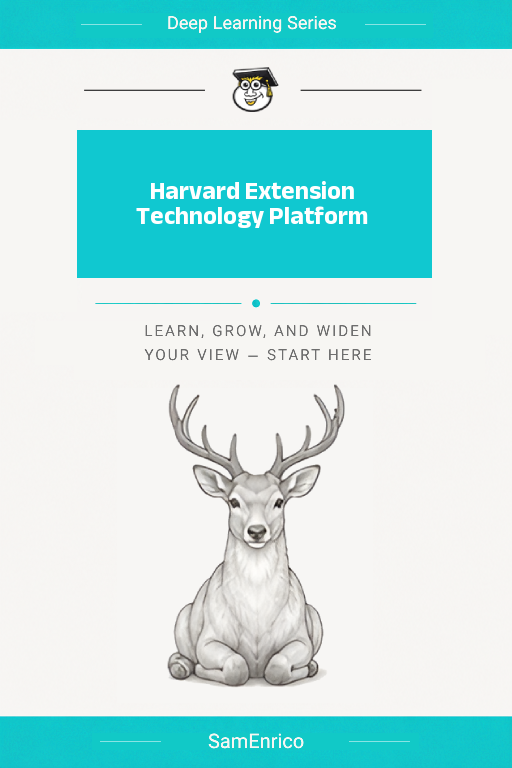 Harvard Extension Technology PlatformKnoll Xuan$12.99
 Emotion Podcasts ListKnoll Xuan$11.99
 Assertiveness for Survivors of AbuseKnoll Xuan$11.99
 Gwalior Fort CaptureKnoll Xuan$11.99
 Compliment Filter RetrainingKnoll Xuan$11.99
 Ben Horowitz HardKnoll Xuan$11.99
 The Timbuktu Scholars: Guardians of the Mathematical UniverseKnoll Xuan$11.99
 The Philosopher Kings of Axum: Wisdom and Empire in Ancient AfricaKnoll Xuan$11.99
You may also like
 Hong Kong Handover 1997Dunn Johnnie$11.99
 Zumba For Postnatal Recovery CourseNeal Christian$11.99
 Zumba for BeginnersLadner Nikia$11.99
 YouTube Comment Mining GuideHumes Pandora$12.99
 Worry Box MeditationCarlin Rudy$11.99
 Workplace Stress MeditationNguyen Lynn$11.99
 Workplace Stress and Sleep RepairHawley Ivory$11.99
 Workplace Perfectionism CureDelaney Jeffry$11.99
 Workplace Injustice Anger GuideWallen Isabelle$11.99
 Work Addiction and Burnout LinkGreenwood Ester$11.99
 Women in Yoga and WellnessBeattie Galina$11.99
 Women in Stand Up ComedyChun Evangeline$11.99