
Growth Equity Terms
Minority investment structures from 500 growth sta
by Sam Kennith
Minority investment structures from 500 growth stage deals.
Formats
About this book
Free sample
Chapter 1: The $100M Trap--–- Maria had raised $120 million from one of the most respected growth equity firms in Silicon Valley. She had done everything right: built a Saa S platform that tripled revenue year over year, recruited a world-class engineering team, and secured contracts with three Fortune 500 companies. The day the money hit the bank, she popped champagne with her co-founders and told her mother she had finally "made it."Eighteen months later, Maria sat across from a lawyer who explained that she had effectively lost control of her company. The growth equity investor—her "partner," as she had called him—held veto power over her salary, her ability to hire a VP of Sales, her budget for marketing, and any attempt to raise more capital. When she tried to negotiate an exit that would have given her employees a life-changing payout, the investor blocked it.
When she asked to see the company's full financials, she was told she needed "board approval." When she threatened to walk away, the investor reminded her of the drag-along rights that could force her to sell her shares at a price she didn't control.Maria's story is not an outlier. It is the rule.Welcome to the world of growth equity, where minority ownership does not mean minority control, where a 20% stake can come with 80% of the decision-making power, and where the most dangerous clauses are hidden in plain sight—often on page two of a term sheet that founders sign without legal review.The Scale-Up Gap: Where Growth Equity Lives To understand why Maria—and thousands of founders like her—got trapped, you first have to understand where growth equity sits in the capital stack. The venture capital industry has long been divided into two clean categories.On one side, early-stage Venture Capital backs companies that are pre-revenue, pre-product-market fit, and statistically likely to fail. A seed-stage investor might put $2 million into a company with five employees, a prototype, and a dream. They take 20% ownership, accept that nine out of ten investments will go to zero, and hope that the tenth returns the entire fund.…
This is the end of the free sample. Get the eBook to keep going. Buy now
Contents
- Chapter 1
- Chapter 2
- Chapter 3
- Chapter 4
- Chapter 5
- Chapter 6
- Chapter 7
- Chapter 8
- Chapter 9
- Chapter 10
- Chapter 11
- Chapter 12
Details
- Author
- Sam Kennith
- Publisher
- SamEnrico
- Language
- English
- Genre
- Non-Fiction, Capital & Valuation Register, Growth Equity
- Released
- 2026-06-10
- Pages (approx.)
- 155
- Available as
- eBook, Audiobook

Read better in the ZLOADR app
Your eBooks on your phone or tablet. Sign in with your SamEnrico account and start reading.
More by Sam Kennith
 Dolphin Swim CompanionSam Kennith$11.99
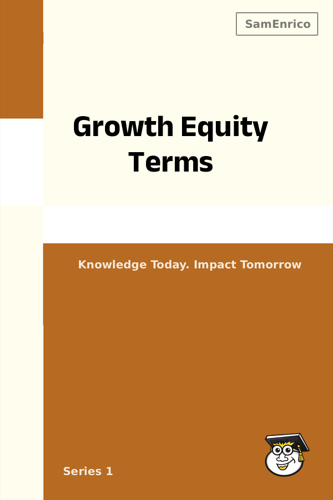 Growth Equity TermsSam Kennith$11.99
 The Road WarriorSam Kennith$11.99
 Feedback Integration GuideSam Kennith$11.99
 Caregiver Communication SkillsSam Kennith$11.99
 Trance for Chemotherapy Side EffectsSam Kennith$11.99
 Pet Loss For Pet SittersSam Kennith$11.99
 Fibromyalgia Pain Management GuideSam Kennith$11.99
 Tenant Communication GuideSam Kennith$11.99
 The Deluge Unleashed: Sobieski's Charge at Vienna (1683)Sam Kennith$11.99
 The Silk Road Skies: How a Forgotten Aviator Conquered Central Asia’s Deadliest AirspaceSam Kennith$11.99
 The Last Dance of the Dream Team: 1996 Olympics and the Birth of Global BasketballSam Kennith$11.99