
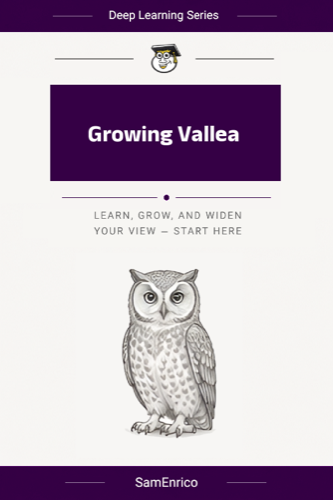
Non-FictionInformativeEducational
Growing Vallea eBook
This publication, published by SamEnrico, covers G
This publication, published by SamEnrico, covers Growing Vallea
Formats
Free sample
Chapter 1: The Lanterns of the Mist...--The first time I saw a Vallea in bloom, I mistook it for a trick of the light. I was hiking the old Quindío trail in Colombia’s Central Cordillera, at an elevation where the air itself seems to have weight—thick with moisture, cool against the skin, and fragrant with the rot and renewal of centuries-old cloudforest. The year-round mist that gives these forests their name had settled into the valley like a held breath, and through that gauze of water droplets, I saw what appeared to be small pink lanterns suspended among dark green leaves. They swayed gently, not from wind but from the vibration of hummingbirds—four of them, each no larger than my thumb, jostling for position at the flowers’ open mouths.I had been a gardener for fifteen years by then. I had grown orchids in terrariums, propagated rare rhododendrons from seed, and once successfully overwintered a lemon tree in an unheated Massachusetts garage.
But I had never seen Vallea stipularis. I did not know its name, its origin, or its needs. I only knew that something in my chest tightened at the sight of it, the way it does when you encounter a living thing that asks nothing of you except to be witnessed.That feeling—that quiet, almost reverent pull toward a plant you cannot identify but suddenly cannot forget—is the reason you are holding this book. You have either seen a Vallea somewhere (a botanical garden, a rare plant sale, a photograph that stopped your scrolling) or you have heard rumors of it from other gardeners who speak its name in hushed, reverent tones. You are here because you want to grow it, and you want to grow it well.
You want to be the person on your block, or in your plant group, or in your family who can say, “Yes, that’s a Vallea. I grew it from a cutting. It took four years to bloom. And it was worth every single day.”This book will teach you how to do exactly that. But before we talk about soil p H, pruning windows, or the precise angle of your shade cloth, we need to talk about what you are actually undertaking.
Growing Vallea is not like growing tomatoes. It is not like growing roses. It is closer to raising a bonsai from seed or rehabilitating an antique piece of furniture—a slow, deliberate, deeply satisfying relationship with a living organism that does not operate on your timeline. Vallea rewards patience, punishes haste, and quietly teaches you things about your own gardening habits that you probably did not want to know but desperately needed to learn.What Is Vallea, Really?Let us start with taxonomy, because names matter and because the story of how this plant was named tells you something about its character. Vallea stipularis belongs to the family Elaeocarpaceae, a lineage of flowering plants that includes about 600 species distributed across tropical and subtropical regions.
The genus Vallea contains only two species, of which stipularis is the one you will encounter in cultivation—assuming you can find it at all. The name honors the Spanish botanist José Celestino Mutis’s contemporary, a man whose full story has been mostly lost to colonial archives, which feels fitting for a plant that has remained largely unknown outside its native range.The common names are more evocative. In Colombia and Ecuador, it is called Cupulicillo—“little cup”—a reference to the cupped, bell-like shape of its flowers. In parts of Peru and Bolivia, it is known as Granizo, which means “hail” or “hailstorm.” This name refers not to the flowers themselves but to the way the plant’s white, woolly leaf undersides catch the light during rain, appearing like a sudden squall of ice trapped among the branches. I prefer Granizo.
It captures something essential about Vallea’s personality: a plant that looks soft and delicate but has adapted to survive the harsh realities of high-altitude weather, including actual hail, freezing mist, and temperature swings that would kill a less resilient species.The flowers themselves are the main event, and they are worth describing in detail because they are unlike anything else in most temperate gardens. Each bloom hangs from a slender pedicel—a flower stalk—that allows it to dangle like a pendant. The petals are a soft rose to deep magenta, five in number, fused at the base to form a bell that opens just enough for hummingbirds to insert their slender bills. Inside, the reproductive structures are arranged in a ring, with a central style that protrudes slightly, giving each flower the appearance of a tiny lampion, the paper lanterns you might see at a summer festival. The blooming season is late spring to early summer in cultivation, though in their native habitat, individual plants can flower sporadically year-round due to the absence of true seasons.The foliage is equally distinctive.
Vallea leaves are heart-shaped, between two and four inches long, with a texture that is genuinely velvety to the touch. This is not marketing language. Run your finger along a healthy leaf, and it feels like lambs’ ears or high-quality flannel. The upper surface is dark green and slightly glossy. The underside is covered in fine, white hairs—a botanical adaptation called tomentum—that helps the plant retain moisture in the dry season (such as it is in the cloudforest) and protect itself from ultraviolet radiation at high altitudes.
When wind flips the leaves over, the undersides flash pale silver-white against the dark foliage, creating a two-toned effect that adds visual interest even when the plant is not in bloom.In its natural environment, Vallea grows as a shrub or small tree, reaching heights of ten to twenty feet over several decades. The bark is gray-brown and relatively smooth on young stems, becoming fissured with age. Branches tend to grow in a somewhat irregular, open habit—not densely bushy like a boxwood, but not spindly like a neglected azalea. This open structure, combined with the dangling flowers and two-toned leaves, gives the plant an architectural quality that landscape designers prize. Even when not in bloom, a mature Vallea looks like something deliberately placed, a focal point rather than a filler.Where Does It Come From?
(And Why That Matters)The cloudforests of the Andes are among the most biodiverse ecosystems on Earth, and they are also among the most threatened. These forests occupy a narrow elevational band between roughly 5,000 and 11,000 feet, where the persistent mist and fog create a unique microclimate that supports an astonishing array of endemic species. The trees are draped in epiphytes—orchids, bromeliads, ferns, mosses, and lichens—that never touch the ground. The soil is deep, dark, and crumbly, built from centuries of decomposing organic matter. Rainfall can exceed 200 inches per year, but the slopes are steep, so drainage is rapid.Vallea stipularis is native to this band across Colombia, Ecuador, Peru, and Bolivia.
Its elevational range is 8,000 to 13,000 feet, which means it grows in what botanists call the “upper montane cloudforest.” At these elevations, the average temperature ranges from 50 to 68 degrees Fahrenheit…
This is the end of the free sample. Get the eBook to keep going. Buy now
About this book
Details
- Author
- Butcher Melania
- Publisher
- SamEnrico
- Language
- English
- Genre
- Non-Fiction, Informative, Educational
- Released
- 2026-05-11
- Pages (approx.)
- 154
- Available as
- eBook, Audiobook

Read better in the ZLOADR app
Your eBooks on your phone or tablet. Sign in with your SamEnrico account and start reading.
More by Butcher Melania
 Mineral Deficiency Signs HandbookButcher Melania$11.99
 Data Center InvestmentButcher Melania$11.99
 Anniversary Reaction TriggersButcher Melania$11.99
 Skin Aging Supplement Evidence GuideButcher Melania$11.99
 Exercise Induced MigraineButcher Melania$11.99
 Competence Log MethodButcher Melania$11.99
 The Academic Conference TalkButcher Melania$11.99
 Narcissist Rage ResponseButcher Melania$11.99
 Koch New YorkButcher Melania$11.99
 The Silicon Oasis: AI and the Secrets of Central Asia's Deep Sea VentsButcher Melania$11.99
 The Nubian Star Charts: Astronomy and the Kushite Scholars of MeroëButcher Melania$11.99
 The Last Broadcast: The Mysterious Signals of Wow! SignalButcher Melania$11.99
You may also like
 Hong Kong Handover 1997Dunn Johnnie$11.99
 Zumba For Postnatal Recovery CourseNeal Christian$11.99
 Zumba for BeginnersLadner Nikia$11.99
 YouTube Comment Mining GuideHumes Pandora$12.99
 Worry Box MeditationCarlin Rudy$11.99
 Workplace Stress MeditationNguyen Lynn$11.99
 Workplace Stress and Sleep RepairHawley Ivory$11.99
 Workplace Perfectionism CureDelaney Jeffry$11.99
 Workplace Injustice Anger GuideWallen Isabelle$11.99
 Work Addiction and Burnout LinkGreenwood Ester$11.99
 Women in Yoga and WellnessBeattie Galina$11.99
 Women in Stand Up ComedyChun Evangeline$11.99