
Non-FictionInformativeEducational
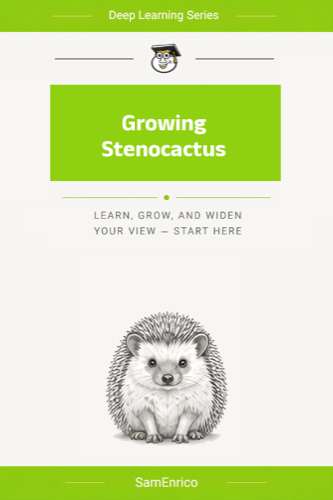
Growing Stenocactus Audiobook
This publication, published by SamEnrico, covers G
This publication, published by SamEnrico, covers Growing Stenocactus
Formats
Free sample
Chapter 1: The Desert Classroom--The first Stenocactus I ever owned died in seventeen days. I had bought it from a reputable nursery, potted it in commercial "cactus soil," placed it on a sunny windowsill, and watered it once a week—exactly as the general care instructions had advised. On day twelve, I noticed a soft, darkened area near the base. On day fifteen, the plant tilted slightly when I touched it. On day seventeen, I lifted it from the pot to discover that the entire root system had turned into a brown, foul-smelling mush.
The soil was still damp from my watering five days earlier. That plant did not die from neglect. It died from too much attention, applied in precisely the wrong way.That failure—and the decade of experimentation that followed—taught me something that no general cactus book had ever made clear: Stenocactus is not just another cactus. It operates by different rules, responds to different cues, and punishes mistakes that other species tolerate. The genus demands a fundamental rethinking of what "caring for a plant" actually means.
This chapter introduces you to that rethinking before we dive into the specific techniques of light, water, soil, and temperature that follow in subsequent chapters. Consider it your orientation to a different way of growing—one that will save you the seventeen days of failure that cost me my first plant.Why Stenocactus Demands a Different Approach Most houseplants and garden plants follow a predictable logic: more water equals more growth, richer soil equals healthier plants, and constant attention equals better results. This logic works for philodendrons, tomato plants, and roses. It fails catastrophically for Stenocactus.The reason lies in the plant's evolutionary history. Stenocactus evolved in one of the harshest plant environments on Earth: the Chihuahuan Desert, which stretches across northern Mexico and into Texas and New Mexico.
This is not a soft, sandy desert of dunes and occasional rain. It is a high-altitude desert, with many Stenocactus populations growing at elevations between 4,000 and 7,000 feet above sea level. At these elevations, the air is thin and dry. Daytime summer temperatures routinely exceed 100°F (38°C), while winter nights can plunge below 20°F (-7°C). Rainfall is scarce and unpredictable—some years bring fewer than ten inches of total precipitation, much of it falling in brief, violent summer thunderstorms followed by weeks of bone-dry heat.In this environment, Stenocactus developed a suite…
This is the end of the free sample. Get the Audiobook to keep going. Buy now
About this book
Details
- Author
- Luster Horacio
- Publisher
- SamEnrico
- Language
- English
- Genre
- Non-Fiction, Informative, Educational
- Released
- 2026-06-03
- Pages (approx.)
- 141
- Available as
- eBook, Audiobook

Listen in the VoxFlicks app
Audiobooks and audio dramas wherever you go. Sign in with your SamEnrico account and press play.
More by Luster Horacio
 Financial Stress And Social Isolation GuideLuster Horacio$11.99
 Newsletter Subscriber ComparisonLuster Horacio$11.99Newsletter Subscriber ComparisonLuster Horacio$11.99
 Liberating the MindLuster Horacio$11.99
 The MBSR Home Practice GuideLuster Horacio$11.99
 Dreams After Suicide LossLuster Horacio$11.99
 Funeral Director Stress GuideLuster Horacio$11.99
 Ford and Edison FriendshipLuster Horacio$11.99
 Bay View Murder Sheppard CaseLuster Horacio$11.99
 Elena Kagan ConsensusLuster Horacio$11.99
 The Pacific Skyfarer: A Medieval Astronomer’s Secret VoyageLuster Horacio$11.99
 Ride the Devil’s Backbone: The Ballad of Bass ReevesLuster Horacio$11.99
You may also like
 Hong Kong Handover 1997Dunn Johnnie$11.99
 Zumba For Postnatal Recovery CourseNeal Christian$11.99
 Zumba for BeginnersLadner Nikia$11.99
 YouTube Comment Mining GuideHumes Pandora$12.99
 Worry Box MeditationCarlin Rudy$11.99
 Workplace Stress MeditationNguyen Lynn$11.99
 Workplace Stress and Sleep RepairHawley Ivory$11.99
 Workplace Perfectionism CureDelaney Jeffry$11.99
 Workplace Injustice Anger GuideWallen Isabelle$11.99
 Work Addiction and Burnout LinkGreenwood Ester$11.99
 Women in Yoga and WellnessBeattie Galina$11.99
 Women in Stand Up ComedyChun Evangeline$11.99