
Non-FictionInformativeEducational
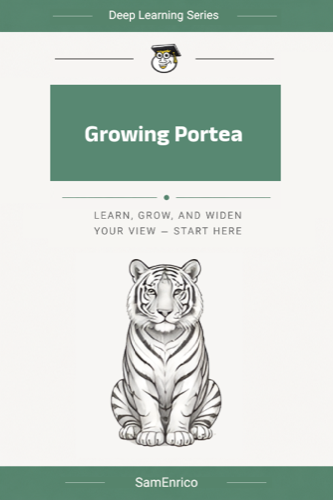
Growing Portea
This publication, published by SamEnrico, covers G
This publication, published by SamEnrico, covers Growing Portea
Formats
About this book
Free sample
Chapter 1: The Prince of Brazil...--–- It began, as many obsessions do, with a single photograph. A grainy image on an obscure bromeliad forum showed a plant that defied every expectation I had about ornamental gardening. The leaves, broad and leathery, arched outward like the ribs of a green cathedral, and from the center rose a flower spike so otherworldly—a cascade of violet, coral, and electric blue—that I assumed it had been Photoshopped. It had not. The plant was Portea petropolitana, and it was growing not in a Brazilian rainforest but on a sun-drenched balcony in San Diego.
That image haunted me for months. When I finally tracked down a small pup of my own, I brought it home, placed it in a plastic pot with standard potting soil, watered it with tap water every three days, and watched it die in six weeks. My first Portea did not fail because I lacked dedication. It failed because I lacked understanding.This book is the result of that failure and the decade of learning that followed. In the pages ahead, I will teach you everything I wish I had known on that first day—not just how to keep Portea alive, but how to help it thrive, bloom, and produce generations of offspring.
But before we discuss soil recipes or watering schedules, we must first understand what Portea is, where it comes from, and why it demands a different kind of attention than the houseplants lining the shelves of your local garden center.Portea belongs to the Bromeliaceae family, a vast and diverse group that includes Spanish moss, the edible pineapple (Ananas comosus), and the ubiquitous Guzmania and Neoregalia sold in every big-box store. But while those genera have been hybridized and domesticated into predictable, easy-care specimens, Portea remains something closer to its wild ancestors. It has not been bred for compact growth or perpetual flowering. It retains the rugged architecture, slow metabolism, and dramatic reproductive strategy of the Atlantic Coastal Forest—the Mata Atlântica of eastern Brazil. Growing Portea successfully means working with these ancient adaptations, not against them.Let…
This is the end of the free sample. Get the eBook to keep going. Buy now
Contents
- Chapter 1
- Chapter 2
- Chapter 3
- Chapter 4
- Chapter 5
- Chapter 6
- Chapter 7
- Chapter 8
- Chapter 9
- Chapter 10
- Chapter 11
- Chapter 12
Details
- Author
- Stjohn Deshawn
- Publisher
- SamEnrico
- Language
- English
- Genre
- Non-Fiction, Informative, Educational
- Released
- 2026-06-02
- Pages (approx.)
- 142
- Available as
- eBook, Audiobook

Read better in the ZLOADR app
Your eBooks on your phone or tablet. Sign in with your SamEnrico account and start reading.
More by Stjohn Deshawn
 Benzo Information for DoctorsStjohn Deshawn$11.99
 John Wayne Gacy's ChildhoodStjohn Deshawn$11.99
 LTC Insurance And Estate PlanningStjohn Deshawn$11.99
 Breath Awareness for Postpartum RecoveryStjohn Deshawn$11.99
 Affirmations For Betrayal RecoveryStjohn Deshawn$11.99
 Religious Extremist ChildhoodStjohn Deshawn$11.99
 FCPA Technology Sector CasesStjohn Deshawn$11.99
 Overcoming Love AddictionStjohn Deshawn$11.99
 Zero Day Exploit TrendsStjohn Deshawn$12.99
 TM For AthletesStjohn Deshawn$11.99
 The Phantom Pain: The Enigma of the 1951 Pont-Saint-Esprit Mass HysteriaStjohn Deshawn$11.99
 The Habsburg Codex: Vienna’s Secret RenaissanceStjohn Deshawn$11.99
You may also like
 Hong Kong Handover 1997Dunn Johnnie$11.99
 Zumba For Postnatal Recovery CourseNeal Christian$11.99
 Zumba for BeginnersLadner Nikia$11.99
 YouTube Comment Mining GuideHumes Pandora$12.99
 Worry Box MeditationCarlin Rudy$11.99
 Workplace Stress MeditationNguyen Lynn$11.99
 Workplace Stress and Sleep RepairHawley Ivory$11.99
 Workplace Perfectionism CureDelaney Jeffry$11.99
 Workplace Injustice Anger GuideWallen Isabelle$11.99
 Work Addiction and Burnout LinkGreenwood Ester$11.99
 Women in Yoga and WellnessBeattie Galina$11.99
 Women in Stand Up ComedyChun Evangeline$11.99