
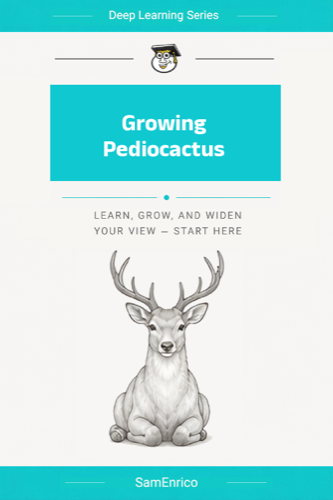
Growing Pediocactus
This publication, published by SamEnrico, covers G
This publication, published by SamEnrico, covers Growing Pediocactus
Formats
About this book
Free sample
Chapter 1: The Foot That Bites Back...--–- The first thing you need to understand about Pediocactus is that it does not want to be grown. This is not a plant that rewards neglect with forgiveness, nor one that thrives on the benign indifference you might offer a golden barrel cactus or a jade plant. Pediocactus—the foot cactus, named for the soft, fleshy tubercles that resemble toes—is a botanical contradiction: a high-altitude desert dweller, a cold-weather succulent, a miniature fortress of spines that can rot into brown mush in forty-eight hours if you water it at the wrong time of year. It is, in every sense, a plant that bites back.The genus carries a reputation that precedes it among cactus enthusiasts. In online forums and cactus society meetings, Pediocactus is spoken of in hushed, almost superstitious tones.
"I've killed three," a grower will admit, and the listener nods knowingly. "Magnificent while they lasted," another will say, gesturing to an empty clay pot. The conventional wisdom is that these plants are "difficult," "touchy," or—in the blunt assessment of one nursery catalog—"for advanced collectors only." But here is the secret that this book will unfold across twelve chapters: Pediocactus is not inherently fragile. It is, rather, profoundly specific. And specificity is not the same as fragility.The mistake most growers make is one of category error.
They treat Pediocactus as they treat Mammillaria or Echinocactus—as a warm-desert cactus that tolerates heat, thrives on benign neglect, and requires only sharp drainage and bright light to flourish. This approach fails because Pediocactus did not evolve in the Sonoran Desert. It did not evolve in the Chihuahuan Desert. It evolved in the Great Basin—a cold, high-altitude desert that stretches from the eastern slopes of the Sierra Nevada across Nevada, Utah, and into Colorado and Wyoming. The Great Basin is not a desert of sand dunes and saguaros.
It is a desert of sagebrush, pinyon-juniper woodlands, and mountain ranges that rise like islands from a sea of arid basins. It is a place where winter temperatures drop to -20°F…
This is the end of the free sample. Get the eBook to keep going. Buy now
Contents
- Chapter 1
- Chapter 2
- Chapter 3
- Chapter 4
- Chapter 5
- Chapter 6
- Chapter 7
- Chapter 8
- Chapter 9
- Chapter 10
- Chapter 11
- Chapter 12
Details
- Author
- Collado Zelda
- Publisher
- SamEnrico
- Language
- English
- Genre
- Non-Fiction, Informative, Educational
- Released
- 2026-06-02
- Pages (approx.)
- 156
- Available as
- eBook, Audiobook

Read better in the ZLOADR app
Your eBooks on your phone or tablet. Sign in with your SamEnrico account and start reading.
More by Collado Zelda
 Eye Emergency First Aid KitCollado Zelda$11.99
 Problem Solving for EmotionsCollado Zelda$11.99
 ER Nurse Burnout Prevention GuideCollado Zelda$11.99
 Meditation For Better Sleep CompleteCollado Zelda$11.99
 Sunken Submarine Rescue TalesCollado Zelda$11.99
 The Waco Gas MasksCollado Zelda$11.99
 Anubis Jackal GodCollado Zelda$11.99
 Palace For Grocery ShoppingCollado Zelda$11.99
 Exercise For Burnout RecoveryCollado Zelda$11.99
 The Deep Blue Code: How the Ocean’s Secrets Cracked the InternetCollado Zelda$11.99
 Jazz & the Jinn: Harlem's Hidden MysticsCollado Zelda$11.99
 Anubis' Unseen Scales: The Weighing of the Modern SoulCollado Zelda$11.99