

Non-FictionInformativeEducational
Growing Ozothamnus Audiobook
This publication, published by SamEnrico, covers G
This publication, published by SamEnrico, covers Growing Ozothamnus
Formats
Free sample
Chapter 1: The Forgotten Genus...–- In the vast, sun-scorched landscapes of southeastern Australia and the rocky, wind-battered slopes of New Zealand’s South Island, there grows a genus of shrubs so resilient, so quietly beautiful, and so utterly ignored by mainstream horticulture that you could walk past a hundred books on perennial gardening and never once see its name. That genus is Ozothamnus, and its obscurity is not a reflection of its merit but rather a symptom of gardening culture’s obsession with high-maintenance, water-guzzling, fertilizer-dependent ornamentals. For decades, while gardeners have wrestled with finicky roses that demand weekly spraying, thirsty hydrangeas that wilt in August heat, and lavender that succumbs to humidity and root rot, Ozothamnus has waited in the wings—tough as old boots, beautiful as fine jewelry, and almost impossible to kill if you understand just three simple rules. This chapter is the story of that neglect and the beginning of its redemption.The word Ozothamnus comes from the Greek ozo (to smell) and thamnos (shrub), a reference to the aromatic foliage that characterizes most species in the genus. First described by the botanist Henri Cassini in 1817, the genus has undergone multiple taxonomic revisions, at various times being lumped together with Helichrysum (strawflowers) and then separated again as genetic analysis revealed distinct evolutionary lineages.
Today, the genus contains approximately 50 to 60 species, depending on which taxonomist you consult, with new species still being described from remote corners of New Zealand as recently as 2020. But taxonomic debates, while fascinating to botanists, matter far less to gardeners than a simple question: why should I care about a plant I have never heard of?The answer begins with a single undeniable fact of twenty-first-century gardening: water is becoming scarce, and the plants we have traditionally relied upon are failing. From California to Catalonia, from Cape Town to Canberra, garden designers and homeowners are confronting the reality that the English cottage garden—that lush, romantic ideal of delphiniums, hollyhocks, and rambling roses—was a product of a specific climate (cool, moist, maritime) that does not exist in most of the world. When you try to force that aesthetic onto a Mediterranean, semi-arid, or even temperate continental climate, you spend your summers chained to a hose, your springs amending soil that never quite works, and your autumns replanting specimens that expired from root rot, fungal disease, or simple heat exhaustion. Ozothamnus offers an…
This is the end of the free sample. Get the Audiobook to keep going. Buy now
About this book
Details
- Author
- Herrera Monique
- Publisher
- SamEnrico
- Language
- English
- Genre
- Non-Fiction, Informative, Educational
- Released
- 2026-05-18
- Pages (approx.)
- 157
- Available as
- eBook, Audiobook

Listen in the VoxFlicks app
Audiobooks and audio dramas wherever you go. Sign in with your SamEnrico account and press play.
More by Herrera Monique
 Tenzing Everest Sherpa RightsHerrera Monique$11.99
 Restless Leg Syndrome Iron Infusion GuideHerrera Monique$11.99
 Scorsese Visual LanguageHerrera Monique$11.99
 The Mount Carmel ChildrenHerrera Monique$11.99
 Important Documents Emergency KitHerrera Monique$11.99
 Imposter Syndrome BurnoutHerrera Monique$11.99
 Female Rulers Power Transition WorkbookHerrera Monique$11.99
 Cash Flow for ConsultingHerrera Monique$11.99
 Rumination Breaking StrategiesHerrera Monique$11.99
 Ember and the Last PhoenixHerrera Monique$11.99
 The Lost Kingdom Beneath the Lake: Unveiling Tibet’s Hidden SecretsHerrera Monique$11.99
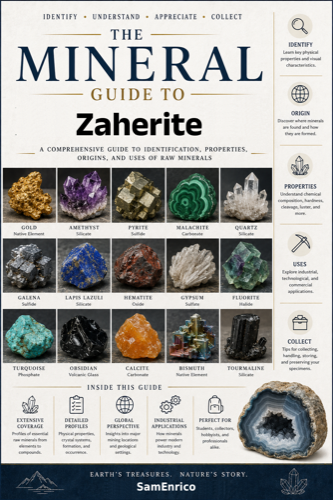 The Mineral Guide to ZaheriteHerrera Monique$11.99
You may also like
 Hong Kong Handover 1997Dunn Johnnie$11.99
 Zumba For Postnatal Recovery CourseNeal Christian$11.99
 Zumba for BeginnersLadner Nikia$11.99
 YouTube Comment Mining GuideHumes Pandora$12.99
 Worry Box MeditationCarlin Rudy$11.99
 Workplace Stress MeditationNguyen Lynn$11.99
 Workplace Stress and Sleep RepairHawley Ivory$11.99
 Workplace Perfectionism CureDelaney Jeffry$11.99
 Workplace Injustice Anger GuideWallen Isabelle$11.99
 Work Addiction and Burnout LinkGreenwood Ester$11.99
 Women in Yoga and WellnessBeattie Galina$11.99
 Women in Stand Up ComedyChun Evangeline$11.99