
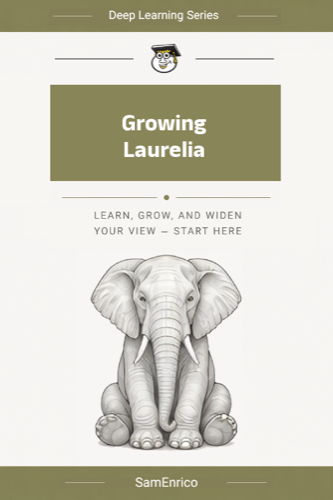
Non-FictionInformativeEducational
Growing Laurelia
This publication, published by SamEnrico, covers G
This publication, published by SamEnrico, covers Growing Laurelia
Formats
About this book
Free sample
Chapter 1: Beyond the Laurel Hedge...--–- Most gardeners, when they first encounter the name Laurelia, make the same innocent mistake. They assume it is a laurel. A bay laurel, perhaps, or a cherry laurel—some familiar, dependable evergreen that has graced European gardens for centuries. They are wrong. But they are wrong in the most productive way possible, because that mistake opens the door to something far stranger, far more useful, and far more deserving of attention than any true laurel ever was.–- The confusion is understandable.
The leaves are glossy, yes. They are evergreen, aromatic, and arranged alternately along the stem. To the casual observer, a Laurelia could easily pass for a laurel on a foggy morning. But the botanical reality is far more interesting. Laurelia belongs to the Atherospermataceae family—a small, ancient lineage of flowering trees whose closest relatives live in Madagascar, Australia, and New Caledonia.
True laurels (Lauraceae) include bay, cinnamon, and avocado. Laurelia shares none of those culinary heavyweights as cousins. It is, instead, a botanical orphan from the lost world of Gondwana.–- This book is the first comprehensive guide to growing these remarkable trees. Whether you are a rare plant collector with a greenhouse full of botanical curiosities, a homeowner standing in defeat before a swampy patch of yard where nothing else survives, or a gardener who simply loves the scent of cloves and nutmeg drifting from an unexpected source—this book is for you. Before we discuss planting, pruning, or propagation, we must first answer a more fundamental question: why Laurelia?
Among the thousands of trees you could plant, why this one?The Tree That Should Not Be Forgotten–- Laurelia is not a new discovery. Indigenous peoples of Chile and New Zealand have known these trees for centuries. The Mapuche people of Chile used Laurelia sempervirens—known to them as trihue or triwe—for timber, medicine, and ritual purposes. The Māori of New Zealand recognized Laurelia novae-zelandiae—pukatea—as a source of durable wood for canoes, paddles, and tools. But somewhere between the colonial era and the present day, these trees slipped through the cracks…
This is the end of the free sample. Get the eBook to keep going. Buy now
Contents
- Chapter 1
- Chapter 2
- Chapter 3
- Chapter 4
- Chapter 5
- Chapter 6
- Chapter 7
- Chapter 8
- Chapter 9
- Chapter 10
- Chapter 11
- Chapter 12
Details
- Author
- Archie Lianne
- Publisher
- SamEnrico
- Language
- English
- Genre
- Non-Fiction, Informative, Educational
- Released
- 2026-05-11
- Pages (approx.)
- 157
- Available as
- eBook, Audiobook

Read better in the ZLOADR app
Your eBooks on your phone or tablet. Sign in with your SamEnrico account and start reading.
More by Archie Lianne
 Tanganyika IndependenceArchie Lianne$11.99
 Focus Endurance TrainingArchie Lianne$11.99
 CoQ10 Heart Energy GuideArchie Lianne$11.99
 Persuasive Consulting ProposalArchie Lianne$11.99
 Self-Esteem After Weight ChangeArchie Lianne$11.99
 Dementia Caregiving MemoirArchie Lianne$11.99
 Stem Cell Transplant SurvivorArchie Lianne$11.99
 The Stress and PCOS LinkArchie Lianne$11.99
 Medical Bedside NonverbalsArchie Lianne$11.99
 The Purple Conspiracy: The Secret War for Justinian's ThroneArchie Lianne$11.99
 Silent No More: The Unheard Voices of the 1919 Seattle General StrikeArchie Lianne$11.99
 Seeds of the First Dawn: The Lost Crops of the Indus ValleyArchie Lianne$11.99
You may also like
 Hong Kong Handover 1997Dunn Johnnie$11.99
 Zumba For Postnatal Recovery CourseNeal Christian$11.99
 Zumba for BeginnersLadner Nikia$11.99
 YouTube Comment Mining GuideHumes Pandora$12.99
 Worry Box MeditationCarlin Rudy$11.99
 Workplace Stress MeditationNguyen Lynn$11.99
 Workplace Stress and Sleep RepairHawley Ivory$11.99
 Workplace Perfectionism CureDelaney Jeffry$11.99
 Workplace Injustice Anger GuideWallen Isabelle$11.99
 Work Addiction and Burnout LinkGreenwood Ester$11.99
 Women in Yoga and WellnessBeattie Galina$11.99
 Women in Stand Up ComedyChun Evangeline$11.99