
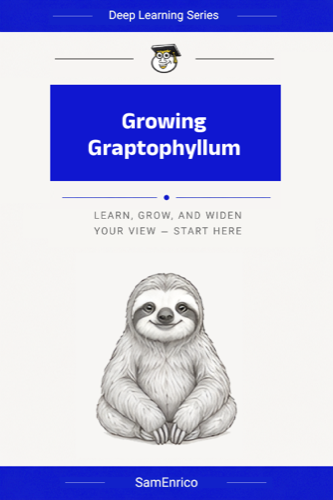
Non-FictionInformativeEducational
Growing Graptophyllum eBook
This publication, published by SamEnrico, covers G
by Driver Dulce
This publication, published by SamEnrico, covers Growing Graptophyllum
Formats
Free sample
Chapter 1: The Great Divide...–- You have just unboxed a plant that looks like a cartoon character exploded across its leaves – creamy white splashes, pink blushes, and deep green veins creating a pattern so artificial-looking that your first instinct is to check if someone painted it. The label reads Graptophyllum pictum, "Caricature Plant." The care tag says "bright indirect light" and "keep moist." You place it on your windowsill, water it twice a week, and within thirty days, the leaves are curling, the edges are crisp, and the plant looks like it is staging a slow, deliberate protest against your existence.Meanwhile, three thousand miles away, a gardener in Southern California just planted a different Graptophyllum – G. excelsum, the Scarlet Fuchsia – in full sun, clay soil, and ninety-degree heat. They water it once every two weeks. It is thriving, covered in red tubular flowers, and attracting hummingbirds by the dozen.Same genus.
Same first four letters on the botanical label. Completely different lives.This is the great divide of Graptophyllum, and it is the single biggest source of confusion for new growers. You cannot treat a tropical understory plant from New Guinea the same way you treat a sun-loving shrub from Australia. They are cousins, not twins. And until you understand the split personality of this genus, you will kill plants, waste money, and convince yourself that you have a black thumb when the problem was never your thumb – it was your assumptions.This chapter exists to solve that confusion before you buy another plant or mourn another leaf drop.
We will map the fifteen known species of Graptophyllum, trace their bizarre geographical split between Africa and the Pacific Islands, and create a clear, practical system for matching the right species to your specific environment. By the end of this chapter, you will know exactly which Graptophyllum belongs in your home or garden – and just as importantly, which ones you should avoid.The Genus That Makes Botanists Scratch Their Heads The name Graptophyllum comes from Greek roots: graptos meaning "painted" or "written," and phyllon meaning "leaf." The painted leaf. It is an apt description for the most popular species, G. pictum, whose variegation truly looks like someone took a fine brush and stroked white and cream across a dark green canvas. But the name also captures something deeper about this genus – a kind of botanical deception, where appearances mislead and species defy easy categorization.The genus belongs to the family Acanthaceae, the same family that gives us the familiar shrimp plant (Justicia brandegeeana) and the Mexican petunia (Ruellia simplex).
Within Acanthaceae, Graptophyllum sits in a tribe called Justicieae, which contains over 2,000 species spread across every continent except Antarctica. But here is where things get strange.Most plant genera have a coherent geographical range. You find Rhododendron across the Northern Hemisphere. Eucalyptus belongs to Australia. Protea is almost exclusively South African.
Graptophyllum does not play by these rules. Its fifteen known species are split between two completely separate regions: the island of New Guinea and surrounding Pacific islands, and – somehow – the continent of Africa, specifically the tropical west and central regions.Botanists call this a "disjunct distribution," a fancy term meaning "we have no idea why these plants ended up so far apart." The leading hypothesis involves ancient continental drift – when Africa, South America, Australia, and Antarctica were still connected as part of the supercontinent Gondwana, the ancestors of Graptophyllum may have been widespread across the southern landmasses. As the continents drifted apart, the genus fractured, with one branch staying in Africa and another riding the Australian-New Guinea plate northward into the Pacific. This split happened an estimated 30 to 50 million years ago, meaning Graptophyllum species have been evolving independently for longer than most mammals have existed.What does this mean for you, the grower? It means that Graptophyllum species do not share a single, unified care manual.
The African species evolved under different light regimes, different soil conditions, and different competition pressures than the Pacific species. Even within the Pacific group, G. excelsum from Australia experiences a vastly different climate than G. pictum from New Guinea.Understanding this history is not academic trivia. It is the key to unlocking why one Graptophyllum thrives in full desert sun while another withers in a south-facing window.
The plants are not being difficult. They are being exactly what evolution made them.The Complete Species Reference Table Before we dive into individual species, it is worth acknowledging that of the fifteen known species, only three are widely available in cultivation. The remaining twelve – including G. balansae, G. glandulosum, and G.
repandum – exist primarily in botanical gardens, herbarium specimens, and the wild. Unless you are a botanist on an expedition to New Caledonia, you will never encounter them. We will focus this chapter, and this entire book, on the three species you can actually buy.The table below consolidates all species information into a single reference. No more flipping between chapters. No more contradictory numbers.
All temperature thresholds, humidity requirements, and care specifications are unified and consistent.Feature G. pictum (Caricature Plant)G. excelsum (Scarlet Fuchsia)G. ilicifolium (Holly Fuchsia)Native Range New Guinea, Moluccas, Philippines Eastern Australia (Queensland, New South Wales)New Caledonia, Vanuatu Growth Habit Upright woody shrub, single-stemmed unless pinched Suckering shrub, forms dense thickets Dense, prickly shrub, extremely branching Typical Height3-6 feet (indoors), up to 10 feet (greenhouse)6-10 feet4-8 feet Leaf Morphology Broad, oval, dramatic variegation (cream, pink, yellow)Narrow, elliptical, solid green Small, holly-like, spiny margins, dark green Flower Color Red to purple-red, tubular Bright scarlet red, heavy nectar Red to pink, tubular, sparse Optimal Temperature65-85°F (18-29°C)65-85°F (18-29°C)65-85°F (18-29°C)Minimum Safe Temp60°F (15.5°C) – protect below this60°F (15.5°C) indoors; established outdoors tolerates brief 28°F (-2°C)60°F (15.5°C) indoors; established outdoors tolerates brief 28°F (-2°C)Humidity Needs50%+ relative humidity (high)30-60% (adaptable)30-50% (low to moderate)Light Preference60-80% scattered light; no direct afternoon sun Full sun (6+ hours direct) for maximum flowering Full sun to part shade; tolerates high light Watering Top inch dry; consistent moisture Top inch dry; drought-tolerant once established Top inch dry; highly drought-tolerant Soil Preference Rich, organic, well-draining Adaptable; tolerates clay and loam Rocky, sandy, well-draining; poor soil tolerant Typical Use Indoor specimen, greenhouse, tropical container Outdoor hedge, bird garden, privacy screen Security barrier, xeriscape, dry garden Special Features Most variegated species; dramatic foliage Most floriferous; attracts hummingbirds/sunbirds Prickly leaves deter intruders; extremely drought-tolerant This table is your reference. Bookmark this page.
When someone tells you "I have a Graptophyllum and it needs X," check the table. When you read conflicting advice online, check the table. When your plant looks unhappy and you are not sure why, start with the table.Species Deep Dive: Graptophyllum pictum – The Caricature Plant If you bought a Graptophyllum from a houseplant shop, an online rare plant dealer, or a tropical plant expo, you almost certainly bought G. pictum. This is the showstopper.
This is the plant that stops people mid-sentence when they walk into your living room. This is the plant that non-plant people will assume is fake because "no real plant looks like that."The common name…
This is the end of the free sample. Get the eBook to keep going. Buy now
About this book
Details
- Author
- Driver Dulce
- Publisher
- SamEnrico
- Language
- English
- Genre
- Non-Fiction, Informative, Educational
- Released
- 2026-05-18
- Pages (approx.)
- 160
- Available as
- eBook, Audiobook

Read better in the ZLOADR app
Your eBooks on your phone or tablet. Sign in with your SamEnrico account and start reading.
More by Driver Dulce
 The Caged Girl EscapeDriver Dulce$11.99
 Spin Instructor TrainingDriver Dulce$11.99
 Parent Loss and Marriage StrainDriver Dulce$11.99
 The Biphasic Sleep PatternDriver Dulce$11.99
 Jumia Fulfillment Fees GuideDriver Dulce$11.99
 The Social Smoker SolutionDriver Dulce$11.99
 Sibling Grief For ParentsDriver Dulce$11.99
 Cancer Pain MeditationDriver Dulce$11.99
 Boundary Setting For TeensDriver Dulce$11.99
 The Unbreakable Comeback: How the NBA Banned a Legend and Made Him GreaterDriver Dulce$11.99
 The Last Ride of the Cyclone: The Day Six Flags Over Texas Became a NightmareDriver Dulce$11.99
 Nefertiti's Lost Sunken Palace: The Queen’s Vanished ParadiseDriver Dulce$11.99
You may also like
 Hong Kong Handover 1997Dunn Johnnie$11.99
 Zumba For Postnatal Recovery CourseNeal Christian$11.99
 Zumba for BeginnersLadner Nikia$11.99
 YouTube Comment Mining GuideHumes Pandora$12.99
 Worry Box MeditationCarlin Rudy$11.99
 Workplace Stress MeditationNguyen Lynn$11.99
 Workplace Stress and Sleep RepairHawley Ivory$11.99
 Workplace Perfectionism CureDelaney Jeffry$11.99
 Workplace Injustice Anger GuideWallen Isabelle$11.99
 Work Addiction and Burnout LinkGreenwood Ester$11.99
 Women in Yoga and WellnessBeattie Galina$11.99
 Women in Stand Up ComedyChun Evangeline$11.99