
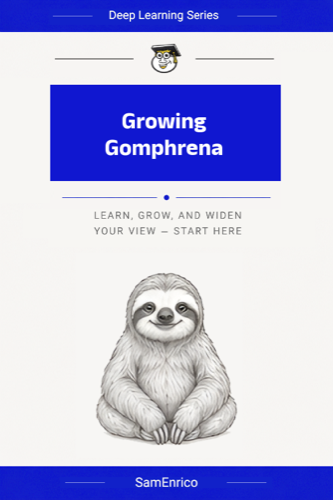
Growing Gomphrena
This publication, published by SamEnrico, covers G
This publication, published by SamEnrico, covers Growing Gomphrena
Formats
About this book
Free sample
Chapter 1: The Hidden Universe--–- You are holding a seed the size of a grain of sand. It is brown, unremarkable, and weighs almost nothing. In your other hand, you could hold a dozen more just like it. Together, they cost less than a cup of coffee. And yet, within that speck of organic matter lies a biological program so precise, so resilient, and so potentially profitable that it has survived ice ages, droughts, and the complete indifference of evolution.
That seed is a Gomphrena globosa, and it is waiting for you to make a single decision: which one?Before you dig a single hole, before you mix a single tray of potting soil, before you even decide whether this flower will end up in a backyard mason jar or a wholesale cooler bound for a Manhattan florist, you must make a choice. And that choice—which cultivar to grow—will determine everything that follows. Your harvest dates, your stem length, your color palette, your pest pressure, your profit margin, and even your sanity during the August heat wave all trace back to the moment you selected a variety.This is not hyperbole. In the world of cut flowers, variety selection is not a minor footnote. It is the foundation.
And with Gomphrena, a genus that spans compact bedding plants to six-foot-tall branching monsters, the difference between a profitable crop and a frustrating one can be measured in inches of stem length and weeks of vase life.The Three Pillars of Gomphrena Let us begin with taxonomy, because names matter. The flower you are about to grow belongs to the genus Gomphrena, a member of the Amaranthaceae family—the same family that gives us celosia, amaranth, and quinoa. But within this genus, three species dominate the horticultural trade, and each serves a radically different purpose.Gomphrena globosa is the classic. This is the flower your grandmother might have dried and tucked into a wreath. It is compact, usually topping out at twelve to twenty-four inches, with round, clover-like heads in shades of magenta, purple, white, and pink.
If you want a low-maintenance bedding plant or a reliable dried flower for crafts, globosa is your answer. But for…
This is the end of the free sample. Get the eBook to keep going. Buy now
Contents
- Chapter 1
- Chapter 2
- Chapter 3
- Chapter 4
- Chapter 5
- Chapter 6
- Chapter 7
- Chapter 8
- Chapter 9
- Chapter 10
- Chapter 11
- Chapter 12
Details
- Author
- Ridenour Adelina
- Publisher
- SamEnrico
- Language
- English
- Genre
- Non-Fiction, Informative, Educational
- Released
- 2026-06-02
- Pages (approx.)
- 144
- Available as
- eBook, Audiobook

Read better in the ZLOADR app
Your eBooks on your phone or tablet. Sign in with your SamEnrico account and start reading.
More by Ridenour Adelina
 Parent Death Anniversary GuideRidenour Adelina$11.99
 The Nap Smartphone App GuideRidenour Adelina$11.99
 Enterprise Remote MetricsRidenour Adelina$11.99
 Assertiveness Journal PromptsRidenour Adelina$11.99
 Neck Pain MeditationRidenour Adelina$11.99
 Amazon Private Label GuideRidenour Adelina$11.99
 The Long Walk Home MemoirRidenour Adelina$11.99
 The Smoke Free Pregnancy PlanRidenour Adelina$11.99
 Child Loss Grief JournalRidenour Adelina$11.99
 The Ballot and the Beast: A Byzantine Election NightRidenour Adelina$11.99
 Rum & Rebellion: The Pirate Who Outsmarted the British NavyRidenour Adelina$11.99
 Belisarius: The Last Roman's Final StandRidenour Adelina$11.99