
Non-FictionInformativeEducational
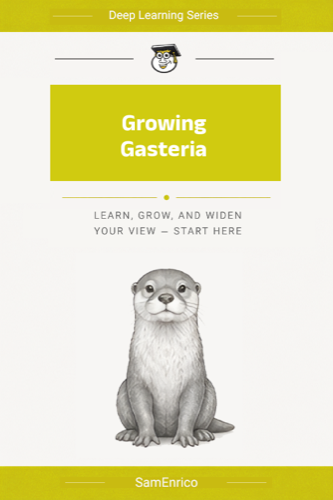
Growing Gasteria
This publication, published by SamEnrico, covers G
This publication, published by SamEnrico, covers Growing Gasteria
Formats
About this book
Free sample
Here is an in-depth summary of each chapter for Growing Gasteria by Sam Enrico, based on the approved outline. These summaries are written in the voice of the book—authoritative, practical, and visually driven—bridging the gap between botanical accuracy and home-grower accessibility.Introduction: Why Gasteria?Summary: The introduction opens with a bold claim: Gasteria is the most forgiving sculptural succulent you’ve never paid attention to. It contrasts Gasteria with finicky Aloes (which etiolate easily) and slow Haworthias (which hide their beauty). The chapter explains that Gasteria offers the best of both worlds: architectural leaves, high shade tolerance, and remarkable pest resistance. It positions the genus as the "intelligent choice" for plant lovers who want high aesthetics without grow lights.
The introduction also provides a brief roadmap—how to use the book by season, hardiness zone, and experience level—and includes a personal anecdote from Sam Enrico about the first Gasteria that survived a decade of neglect on a north-facing windowsill.Part 1: The World of Gasteria Chapter 1: The Gasteria Demystified Summary: This chapter untangles the taxonomy of Gasteria within the Asphodelaceae family—the same family as Aloe and Haworthia. It explains how to distinguish them: Aloes have serrated leaf margins, Haworthias have translucent "windowed" leaves, and Gasteria have rough, tongue-like leaves with a distinct keel. The origin story follows their evolution along the coastal and semi-arid regions of South Africa, from the Eastern Cape to the Karoo. The name Gasteria comes from the Greek gaster (stomach), referencing the bulbous, stomach-shaped flowers. A sidebar covers the history of cultivation: first described in 1703, popularized in European glasshouses in the Victorian era, and now experiencing a revival due to the succulent houseplant boom.Chapter 2: Species vs.
Hybrids – A Visual Directory Summary: This is the visual heart of Part 1. It’s organized like a field guide but for the home grower.Classic Species: G. bicolor (two-toned leaves), G. carinata (keeled, boat-shaped leaves), G. maculata (spotted, hardy), G.
verrucosa (dense white tubercles).Dwarf Gems: G. armstrongii – famous for its distichous (two-row) fan shape that stacks leaves vertically.Heavyweights: G. excelsa – the largest, reaching 2…
This is the end of the free sample. Get the eBook to keep going. Buy now
Contents
- Chapter 1
- Chapter 2
- Chapter 3
- Chapter 4
- Chapter 5
- Chapter 6
- Chapter 7
- Chapter 8
- Chapter 9
- Chapter 10
- Chapter 11
- Chapter 12
Details
- Author
- Hickey Jerrell
- Publisher
- SamEnrico
- Language
- English
- Genre
- Non-Fiction, Informative, Educational
- Released
- 2026-06-02
- Pages (approx.)
- 152
- Available as
- eBook, Audiobook

Read better in the ZLOADR app
Your eBooks on your phone or tablet. Sign in with your SamEnrico account and start reading.
More by Hickey Jerrell
 Project Completion VelocityHickey Jerrell$11.99
 Governor's School Voucher FightHickey Jerrell$11.99
 Thyroid and WeightHickey Jerrell$11.99
 Parent Friendship Isolation GuideHickey Jerrell$11.99
 The Financial Reality Acceptance GuideHickey Jerrell$11.99
 Substack Subscriber EnvyHickey Jerrell$11.99
 Sleep And Language MemoryHickey Jerrell$11.99
 Boundary Guilt ReleaseHickey Jerrell$11.99
 The Codebreaker’s Gambit: How a Teen Hacker Took Down a Billion-Dollar EmpireHickey Jerrell$11.99
 Nonprofit Crisis LeadershipHickey Jerrell$11.99
 The Lost Script of the Renaissance: How an Anonymous Scribe Shaped Elizabethan TheaterHickey Jerrell$11.99
 Shadows of the Silk Road: The Conspiracy That Reshaped EmpiresHickey Jerrell$11.99
You may also like
 Hong Kong Handover 1997Dunn Johnnie$11.99
 Zumba For Postnatal Recovery CourseNeal Christian$11.99
 Zumba for BeginnersLadner Nikia$11.99
 YouTube Comment Mining GuideHumes Pandora$12.99
 Worry Box MeditationCarlin Rudy$11.99
 Workplace Stress MeditationNguyen Lynn$11.99
 Workplace Stress and Sleep RepairHawley Ivory$11.99
 Workplace Perfectionism CureDelaney Jeffry$11.99
 Workplace Injustice Anger GuideWallen Isabelle$11.99
 Work Addiction and Burnout LinkGreenwood Ester$11.99
 Women in Yoga and WellnessBeattie Galina$11.99
 Women in Stand Up ComedyChun Evangeline$11.99