
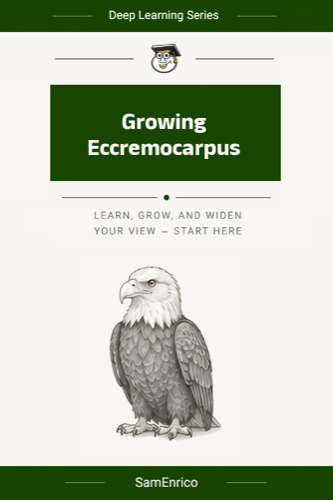
Growing Eccremocarpus eBook
This publication, published by SamEnrico, covers G
by Hudson Nora
This publication, published by SamEnrico, covers Growing Eccremocarpus
Formats
Free sample
Chapter 1: The Perennial Lie--–- Every spring, across the temperate gardens of the Northern Hemisphere, a quiet ritual unfolds. Gardeners stand in nursery aisles, running their fingers along the delicate tendrils of a vibrant green vine, reading a label that confidently declares: Eccremocarpus scaber — Half-Hardy Annual. They buy it, plant it, and by midsummer they are rewarded with a cascade of fiery orange and red tubular flowers that hum with bee activity. Then the frost comes. The blackened remains are yanked from the soil and consigned to the compost heap.
Another annual finished its duty. Another plant discarded.But here is the secret the nursery labels do not tell you: that plant was not finished. It was not genetically programmed to die. It was not an annual at all. And buried beneath the soil, in a cluster of tuberous roots that never had a chance to mature, was a perennial waiting to live for another five, seven, or even ten years.This is the great deception at the heart of modern horticulture—not a malicious lie, but a convenient simplification that has robbed gardeners of one of the most rewarding perennial climbers in cultivation.
The Chilean Glory Flower, Eccremocarpus scaber, has been mislabeled, misunderstood, and mistreated for nearly two centuries. It is time to set the record straight.The Convenient Fiction The story begins in the 1840s, when the legendary plant collector William Lobb was scouring the coastal hills of Chile for the Veitch Nursery in England. Among the many discoveries he sent back to Europe was a rambunctious vine with clusters of tubular flowers that shifted from deep scarlet to bright yellow. The plant scrambled over rocks and shrubs, using delicate tendrils to pull itself toward the sun. It was vigorous, free-flowering, and utterly unlike anything in English gardens at the time.Veitch introduced it to the trade as the “Chilean Glory Flower,” and it became an immediate sensation.
There was just one problem: the plant was too easy to grow from seed. Nurserymen quickly realized they could produce thousands of plants cheaply and reliably each spring. They also realized that the plant flowered spectacularly in its first year. And so, a commercial decision was made. Rather than market it as the tender perennial it truly was—a plant that required winter protection and would reward repeat customers with years of growth—they labeled it a half-hardy annual.
The logic was simple and brutal: annuals sell better. Annuals encourage repeat purchases. Annuals require no complicated instructions about mulching, frost protection, or overwintering.The lie stuck. For nearly two hundred years, gardeners have been taught that Eccremocarpus lives for one season and dies. But the plant never agreed to this arrangement.
In mild coastal gardens—the Scilly Isles, Cornwall, western Ireland, the Pacific Northwest—observant gardeners noticed that their “annual” was coming back each spring. Not from seed, but from the original roots. The plant was not dying. It was being killed by cold, and where the cold was not severe enough, it simply kept growing.What Is An Annual, Really?To understand the deception, we must first understand what the word “annual” actually means in botanical terms—and what it conceals.A true annual is a plant that completes its entire life cycle within a single growing season. It germinates, grows, flowers, sets seed, and dies, all in the span of a few months.
The death is programmed into its genes. No amount of coddling, fertilizing, or winter protection will persuade a marigold or a zinnia to live a second year. Their genetic clocks simply run down, and they die whether the weather is warm or cold.A biennial, by contrast, lives for two seasons. It grows vegetatively in its first year, flowers and sets seed in its second, and then dies. Again, the death is programmed.
A foxglove will die after flowering even if you bring it indoors and give it perfect conditions.Then there are perennials. These plants live for three or more years, flowering repeatedly. Their roots and storage organs survive from season to season, even if their above-ground growth dies back. Some perennials are herbaceous—they die back to the ground each winter and regrow from the roots in spring. Others are woody—they retain above-ground structure year after year.Eccremocarpus belongs to a category botanists call “tender perennials.” It has a woody base and tuberous roots that can survive for many years, but it lacks the genetic programming to withstand freezing temperatures.
In its native Chile, where winters are mild and summers are dry, it grows as a scrambling evergreen perennial, flowering nearly year-round. When brought to colder climates, its above-ground growth dies back with the first hard frost, but the root system—the heart of the plant—remains alive, waiting for spring.The horticultural trade has obscured this reality with terms like “half-hardy annual” and “tender perennial grown as an annual.” Both phrases are technically accurate in the sense that the plant is often treated as an annual in commerce. But they are deeply misleading in the sense that they imply the plant’s death is inevitable, when in fact it is merely a function of temperature and winter protection.This book exists to correct that misunderstanding. And it begins with a single, non-negotiable truth: Eccremocarpus is a perennial. Treat it as one, and you will be rewarded with years of spectacular growth.
Treat it as an annual, and you will never know what you are missing.The Geography Of Possibility If Eccremocarpus is a perennial, why does it die in so many gardens? The answer lies in winter temperatures, soil drainage, and the duration of cold snaps. Let us break down where the plant can survive as a true perennial and where it requires intervention.Zone 9 and above (minimum winter temperatures above 20°F / -7°C). In these climates—coastal California, Florida, the Gulf Coast, the Mediterranean, coastal Australia, New Zealand, South Africa—the Chilean Glory Flower is reliably perennial with minimal protection. The plant may remain semi-evergreen through winter, and light flowering may continue even in the coldest months.
A light mulch around the crown is beneficial but not strictly necessary.Zone 8 (minimum temperatures 10-20°F / -12 to -7°C). This includes the Pacific Northwest, the British Isles (especially the western coasts), the southeastern United States away from the mountains, and similar maritime-influenced regions. Here, the plant is perennial with reliable winter protection. Gardeners should mulch heavily with 4-6 inches of straw, leaf mold, or bark chips. Planting against a south-facing wall provides added warmth and protection.Zone 7 (minimum temperatures 0-10°F / -18 to -12°C).
This includes parts of the mid-Atlantic United States, the interior Pacific Northwest, the English Midlands, and similar transitional climates. Perennial cultivation is possible but requires careful site selection, consistent protection, and a willingness to accept occasional losses. Plant in the warmest, most sheltered microclimate available. Mulch deeply. Consider the cold-tolerant species E.
vargasianus, which has demonstrated survival in Zone 7 with protection.Zone 6 and below (minimum temperatures below 0°F / -18°C). In these climates, the Chilean Glory Flower cannot be reliably grown as a perennial in the ground. The roots will freeze solid and die, regardless…
This is the end of the free sample. Get the eBook to keep going. Buy now
About this book
Details
- Author
- Hudson Nora
- Publisher
- SamEnrico
- Language
- English
- Genre
- Non-Fiction, Informative, Educational
- Released
- 2026-06-02
- Pages (approx.)
- 136
- Available as
- eBook, Audiobook

Read better in the ZLOADR app
Your eBooks on your phone or tablet. Sign in with your SamEnrico account and start reading.
More by Hudson Nora
 Meditation for Social Media ComparisonHudson Nora$11.99
 Assertiveness Scripting GuideHudson Nora$11.99
 Mindfulness Meditation for Chronic PainHudson Nora$11.99
 Loving Kindness For StrangersHudson Nora$11.99
 Social Academic BalanceHudson Nora$11.99
 Overdose Prevention GuideHudson Nora$11.99
 Texas Talent MagnetHudson Nora$11.99
 Palace for SpeechesHudson Nora$11.99
 Shenandoah Dark HollowHudson Nora$11.99
 The Ghosts of Red Cliffs: Cao Cao's Doomed Ambition (208 AD)Hudson Nora$11.99
 Nefertiti's Lost Crown: A Pharaoh's Secret LegacyHudson Nora$11.99
 Lyssa’s Curse: The Fury Behind the MadnessHudson Nora$11.99