
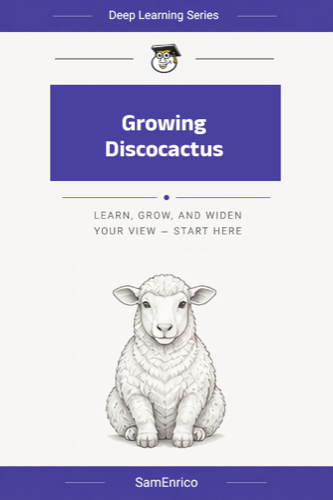
Non-FictionInformativeEducational
Growing Discocactus
This publication, published by SamEnrico, covers G
This publication, published by SamEnrico, covers Growing Discocactus
Formats
About this book
Free sample
Chapter 1: The Alien Pebble--I killed my first Discocactus in seventy-two hours. It arrived in the mail as a perfect, dark green button the size of a plum, covered in elegant curved spines that caught the light like tiny fishhooks. I had read exactly one blog post about cactus care, which assured me that all succulents were "virtually indestructible." I planted it in generic cactus soil from a big box store, placed it on a south-facing windowsill, and gave it a thoughtful shower with tap water. Three days later, it was a brown, translucent, foul-smelling hockey puck. The spines fell off when I touched them.
The roots had turned to black slime. I buried it in the backyard and told no one for two years. That corpse taught me everything. This chapter is the eulogy—and the resurrection.Why Discocactus Are Not Your Average Cactus If you have grown Echinopsis (the Easter lily cactus) or Mammillaria (the pincushion cactus) and assumed all cacti operate the same way, you are about to be humbled. Those genera evolved to survive the relentless, dry heat of the Atacama and the Sonoran deserts.
They store water for months. They tolerate temperature swings from freezing to 45°C (113°F). They flower without asking permission. Discocactus, by contrast, evolved in a completely different world—one defined not by sand and sunbaked rock, but by morning dew, afternoon cloud cover, and the dramatic granite domes of eastern Brazil called inselbergs.The word "inselberg" comes from German for "island mountain"—and that is exactly what these habitats are. Imagine a massive, smooth dome of ancient granite rising abruptly out of the surrounding lowland forest.
No soil accumulates on the steep upper slopes. What little organic debris exists blows away. And yet, here, wedged into shallow cracks no deeper than your thumb, grows Discocactus. During the dry season (May through September), these plants receive zero rainfall for four to five months. They survive exclusively on the condensation that forms on their own bodies each dawn, when warm, humid air from the forest below rises and meets the cool night surface of…
This is the end of the free sample. Get the eBook to keep going. Buy now
Contents
- Chapter 1
- Chapter 2
- Chapter 3
- Chapter 4
- Chapter 5
- Chapter 6
- Chapter 7
- Chapter 8
- Chapter 9
- Chapter 10
- Chapter 11
- Chapter 12
Details
- Author
- Corrigan Letitia
- Publisher
- SamEnrico
- Language
- English
- Genre
- Non-Fiction, Informative, Educational
- Released
- 2026-05-07
- Pages (approx.)
- 155
- Available as
- eBook, Audiobook

Read better in the ZLOADR app
Your eBooks on your phone or tablet. Sign in with your SamEnrico account and start reading.
More by Corrigan Letitia
 Cody Ko That'sCorrigan Letitia$11.99
 Skilled Trades MigrationCorrigan Letitia$11.99
 Meditation for OCD Intrusive ThoughtsCorrigan Letitia$11.99
 Research Proposal for Marshall ScholarshipCorrigan Letitia$11.99
 LinkedIn Profile OptimizationCorrigan Letitia$12.99
 Secondary Markets AnalysisCorrigan Letitia$11.99
 Architecture Studio Stress ReliefCorrigan Letitia$11.99
 Aging and Intellectual Worth GuideCorrigan Letitia$11.99
 Volleyball Serve HypnosisCorrigan Letitia$11.99
 The Silk Road Strategist: Li Jun's Forgotten Blueprint for EnduranceCorrigan Letitia$11.99
 The Vanishing of the Phantom HighwaymanCorrigan Letitia$11.99
 How to Start a Crude Natural Phosphates Business (Beginners Guide)Corrigan Letitia$11.99
You may also like
 Hong Kong Handover 1997Dunn Johnnie$11.99
 Zumba For Postnatal Recovery CourseNeal Christian$11.99
 Zumba for BeginnersLadner Nikia$11.99
 YouTube Comment Mining GuideHumes Pandora$12.99
 Worry Box MeditationCarlin Rudy$11.99
 Workplace Stress MeditationNguyen Lynn$11.99
 Workplace Stress and Sleep RepairHawley Ivory$11.99
 Workplace Perfectionism CureDelaney Jeffry$11.99
 Workplace Injustice Anger GuideWallen Isabelle$11.99
 Work Addiction and Burnout LinkGreenwood Ester$11.99
 Women in Yoga and WellnessBeattie Galina$11.99
 Women in Stand Up ComedyChun Evangeline$11.99