
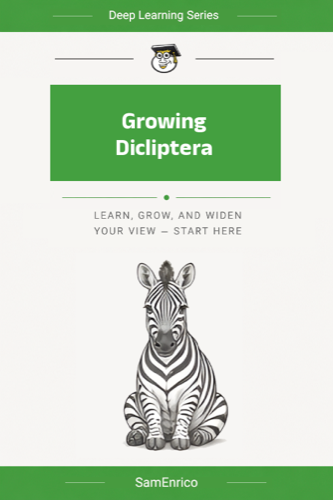
Growing Dicliptera
This publication, published by SamEnrico, covers G
This publication, published by SamEnrico, covers Growing Dicliptera
Formats
About this book
Free sample
Chapter 1: The $4 Plant...--The first time I killed a Dicliptera, I was relieved.Not because I enjoyed failure—I don't. But because I had finally found a plant that died for a reason I could understand. The petunias had always died for no reason at all. The hostas had been eaten by slugs despite my nightly flashlight patrols. The lavender had turned into a woody, defeated skeleton despite getting the "full sun" it allegedly needed.
But the Dicliptera? That one died because I planted it in a clay pit and then watered it like it was a rice paddy. The cause of death was clear, correctable, and entirely my fault. That, as strange as it sounds, was the beginning of my obsession.In the ten years since that first failure, I have grown Dicliptera in fourteen different gardens, seven USDA hardiness zones, and three countries. I have grown it in the ground, in pots, in hanging baskets, in window boxes, and once—during a particularly misguided experiment—in a hydroponic setup that failed spectacularly.
I have watched it survive drought that killed neighboring sedums. I have seen it bloom continuously for six months with nothing more than an occasional trim. And I have sat, coffee in hand, as hummingbirds visited the same cluster of orange-red flowers every twelve to fourteen minutes for an entire afternoon.This book exists because I kept meeting gardeners who had never heard of Dicliptera, or who had tried it once, failed, and assumed the plant was difficult. The opposite is true. Dicliptera is one of the most forgiving, adaptable, and rewarding plants you can grow—but it operates by a different set of rules than the plants lining the entrance of your local big-box garden center.
Those plants are bred for shelf appeal, not survival. Dicliptera comes from a lineage of plants that evolved to thrive on benign neglect.This chapter introduces you to the plant itself: where it comes from, why it looks the way it does, which species you should actually care about, and why understanding its botanical identity will save you from the…
This is the end of the free sample. Get the eBook to keep going. Buy now
Contents
- Chapter 1
- Chapter 2
- Chapter 3
- Chapter 4
- Chapter 5
- Chapter 6
- Chapter 7
- Chapter 8
- Chapter 9
- Chapter 10
- Chapter 11
- Chapter 12
Details
- Author
- Tom Nathanael
- Publisher
- SamEnrico
- Language
- English
- Genre
- Non-Fiction, Informative, Educational
- Released
- 2026-05-06
- Pages (approx.)
- 147
- Available as
- eBook, Audiobook

Read better in the ZLOADR app
Your eBooks on your phone or tablet. Sign in with your SamEnrico account and start reading.
More by Tom Nathanael
 Jewish Diaspora Family ReunitedTom Nathanael$11.99
 Research Proposal for EducationTom Nathanael$11.99
 Strength Visualization HypnosisTom Nathanael$11.99
 Sector FAQ GuideTom Nathanael$11.99
 Cruise Ship Doctor Stress GuideTom Nathanael$11.99
 Three Minute Body Scan TechniqueTom Nathanael$11.99
 Glacier National Park GhostsTom Nathanael$11.99
 CBD for Cannabis WithdrawalTom Nathanael$11.99
 The Last Voyage of the Nautilus: Jules Verne’s Forgotten SubmarineTom Nathanael$11.99
 The Golden Ledger: The Financial Mavericks of the Mali EmpireTom Nathanael$11.99
 Ultimate Handbook Guide to Manaus : (Brazil) Travel GuideTom Nathanael$11.99
 South African Vendor Credit LinesTom Nathanael$12.99