
Non-FictionInformativeEducational
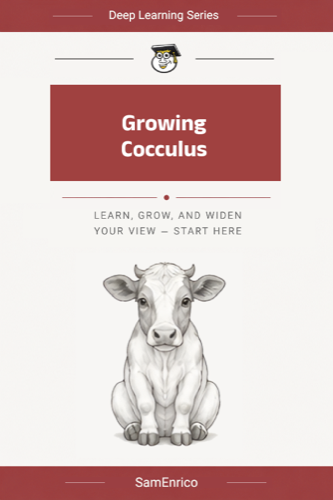
Growing Cocculus eBook
This publication, published by SamEnrico, covers G
This publication, published by SamEnrico, covers Growing Cocculus
Formats
Free sample
Chapter 1: The Survivor’s Secret--–- On a humid July afternoon in the Carolina Piedmont, I watched a plant survive something that should have killed it. Temperatures had soared past 38°C for twelve consecutive days. The hydrangeas were crispy brown. The dogwoods looked like they’d been ironed flat. And yet, tucked against the eastern wall of an abandoned farmhouse, a sprawling vine with small, glossy leaves and clusters of red berries hadn’t just survived – it was thriving.
No irrigation. No mulch. No human intervention at all. When I finally identified that plant as Cocculus carolinus, I had no idea that this chance encounter would send me down a five-year rabbit hole of research, failure, and eventual mastery of one of horticulture’s most overlooked and forgiving genera.That moment changed how I think about gardening. For years, I had been chasing the usual suspects: roses that demanded weekly spraying, Japanese maples that scorched if you looked at them wrong, and hydrangeas that refused to bloom if you pruned at the wrong phase of the moon.
But here was a plant that asked for nothing and gave everything – shade, berries for birds, dense screening, and eventually, a surprising income stream from selling cuttings to local florists. This chapter reveals the secret that plant taught me: Cocculus isn’t difficult to grow. You’ve just been told the wrong things about what it needs.Before we dig into the soil, before we talk about propagation or pruning or profit, we need to understand what Cocculus actually is and why it behaves the way it does. Because once you understand the plant’s evolutionary history and its built-in survival strategies, every other decision becomes obvious. You won’t need to memorize complicated schedules or obsess over p H meters.
You’ll just know what the plant wants.What Exactly Is Cocculus?The genus Cocculus belongs to the Menispermaceae family – a group of mostly tropical and subtropical flowering plants whose name means “moon seed,” referring to the crescent-shaped seeds found inside their fruit. If that family name doesn’t ring any bells, you’re not alone. The Menispermaceae are best known to botanists and poison-arrow enthusiasts; they contain alkaloids that have been used for everything from traditional medicine to fish stunning. But don’t let that alarm you. The Cocculus species we grow in gardens are perfectly safe to handle, with toxicity only concentrated in the berries (more on that in Chapter 2 and Chapter 12).The genus includes approximately a dozen species, but only four are relevant to home gardeners and commercial growers.
These split into two distinct habits: evergreen shrubs and deciduous climbers. The evergreen shrub, Cocculus laurifolius, comes from the warm temperate regions of the Himalayas and East Asia. It grows as a dense, multi-stemmed bush that can reach 4 to 5 meters in height. Its leaves look remarkably like those of true laurel (Laurus nobilis) – hence the common name “Hindu Laurel” – but unlike culinary bay, Cocculus laurifolius is not edible. The deciduous climbers, primarily Cocculus carolinus (native to the southeastern United States) and Cocculus orbiculatus (native to East Asia), are twining vines that can scramble up trees, fences, and trellises to lengths of 6 meters or more.Why does this distinction matter?
Because evergreen shrubs and deciduous vines have different pruning needs, different light requirements, and different roles in the landscape. Try to grow C. laurifolius as a vine and you’ll be disappointed by its stiff, shrubby habit. Try to treat C. carolinus as a freestanding shrub and it will sprawl awkwardly across your garden beds.
Knowing which you have – or which you want – is the first step to success.The Geography of Resilience To understand why Cocculus is so forgiving, you have to look at where it evolved. Take Cocculus carolinus, for example. Its native range stretches from Virginia down to Florida and west to Texas and Oklahoma. That’s a region of wild extremes: humid, swampy summers, occasional droughts, ice storms in winter, and soil that ranges from sandy coastal plains to heavy clay. A plant that survived across this territory for millions of years didn’t do so by being fussy.
It developed a deep, extensive root system that can tap moisture from deep soil layers during dry spells. It learned to go dormant when conditions turned harsh. It adapted to both full sun along forest edges and deep shade beneath hardwood canopies.Cocculus laurifolius tells a similar story, though from the other side of the planet. Its native range includes the Himalayas, southern China, and Taiwan – mountains with thin, rocky soil, intense sun at higher elevations, and cold winters that would kill less hardy plants. That’s why C.
laurifolius can tolerate temperatures down to -12°C once established, and why it laughs at the poor, shallow soil that makes other evergreens struggle.The takeaway here is simple: Cocculus is not a hothouse orchid. It doesn’t come from pampered garden ancestry. It comes from the botanical equivalent of boot camp. This means that when you bring Cocculus into your garden, you’re not signing up for a daily care regimen. You’re inviting a survivor to take up residence.Growth Habits: Decumbent, Twining, and Shrubby One of the most common sources of confusion among new Cocculus growers is understanding how a particular species wants to grow.
Let me clear this up with a simple framework.Decumbent growth describes plants that grow along the ground, with stems that lie flat but may turn upward at the tips. Some Cocculus species, particularly young plants or those grown in deep shade, will adopt a decumbent habit as they search for something to climb. This isn’t a problem – it’s the plant telling you it wants support. Provide a trellis or a neighboring shrub, and those stems will start reaching upward within weeks.Twining growth is what most people picture when they think of vines. The stem wraps around a support structure as it grows, using friction and pressure to hold itself in place.
Both C. carolinus and C. orbiculatus are true twiners. They prefer supports that are roughly 1 to 2 centimeters in diameter – think bamboo poles, wooden dowels, or the branches of a sturdy shrub. They will struggle to climb flat surfaces or very thick posts.
Give them the right support, and they will climb enthusiastically. Give them the wrong support, and they will sprawl.Shrubby growth is the domain of C. laurifolius. This species produces multiple stems from the base, forming a dense, rounded bush that requires no external support. With regular pruning, it can be shaped into a formal hedge, a topiary sphere, or even a small tree by selecting a single leader and removing lower branches.The key insight here is that you can’t force one habit onto another species.
I’ve seen gardeners try to train C. laurifolius as a vine by tying its stiff stems to trellises – it looks terrible and fights you every step of the way. I’ve also seen people try to grow C. carolinus as a freestanding shrub, resulting in a messy, tangled heap. Match the plant to the role, and you’ll save yourself years of frustration.Leaves, Stems, and Roots: What…
This is the end of the free sample. Get the eBook to keep going. Buy now
About this book
Details
- Author
- Fitzgerald Terrence
- Publisher
- SamEnrico
- Language
- English
- Genre
- Non-Fiction, Informative, Educational
- Released
- 2026-06-02
- Pages (approx.)
- 155
- Available as
- eBook, Audiobook

Read better in the ZLOADR app
Your eBooks on your phone or tablet. Sign in with your SamEnrico account and start reading.
More by Fitzgerald Terrence
 Drug Dependency Treatment Center GuideFitzgerald Terrence$11.99
 Dream of Flying MeaningFitzgerald Terrence$11.99
 Self Hypnosis For Lacrosse ShootingFitzgerald Terrence$11.99
 Networking for Tech ProfessionalsFitzgerald Terrence$11.99
 The Financial Stress BreathingFitzgerald Terrence$11.99
 Cancer Parent CaregivingFitzgerald Terrence$11.99
 Anapanasati for First RespondersFitzgerald Terrence$11.99
 Liberian Civil War EscapeFitzgerald Terrence$11.99
 Email Sending AnxietyFitzgerald Terrence$11.99
 Whispers of the Marid: The Djinn King’s CurseFitzgerald Terrence$11.99
 The Pink Panther Heist: A Diamond in the RoughFitzgerald Terrence$11.99
 The Harmonic Crown: Black Composers of the Classical EpochFitzgerald Terrence$11.99
You may also like
 Hong Kong Handover 1997Dunn Johnnie$11.99
 Zumba For Postnatal Recovery CourseNeal Christian$11.99
 Zumba for BeginnersLadner Nikia$11.99
 YouTube Comment Mining GuideHumes Pandora$12.99
 Worry Box MeditationCarlin Rudy$11.99
 Workplace Stress MeditationNguyen Lynn$11.99
 Workplace Stress and Sleep RepairHawley Ivory$11.99
 Workplace Perfectionism CureDelaney Jeffry$11.99
 Workplace Injustice Anger GuideWallen Isabelle$11.99
 Work Addiction and Burnout LinkGreenwood Ester$11.99
 Women in Yoga and WellnessBeattie Galina$11.99
 Women in Stand Up ComedyChun Evangeline$11.99