
Non-FictionInformativeEducational
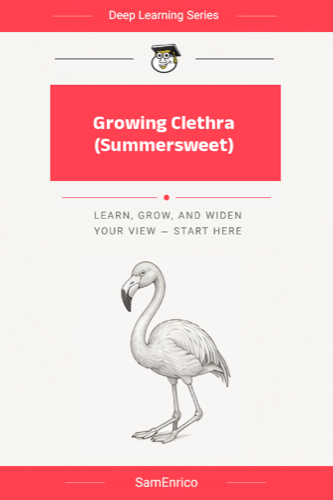
Growing Clethra (Summersweet)
This publication, published by SamEnrico, covers G
by Robins Loise
This publication, published by SamEnrico, covers Growing Clethra (Summersweet)
Formats
About this book
Free sample
Chapter 1: Understanding the Native Logic...--The first time I killed a Clethra, I was trying too hard. I had read a two-paragraph description in a general gardening encyclopedia—"prefers moist, well-drained soil, full sun to partial shade"—and I treated it exactly like a rose. I amended the planting hole with a generous scoop of synthetic fertilizer. I pruned it in November because the branches looked "messy" after the leaves dropped. I piled mulch up against the stem in a perfect volcano, just as I had been taught to do with my hybrid teas.
By the following spring, the plant was dead. Not dormant. Not slow to leaf out. Dead in the way that branches snap like dry spaghetti and the roots crumble to gray dust between your fingers.That failure taught me something no book had yet articulated. Clethra alnifolia does not follow the rules of a Japanese maple or a hydrangea or a boxwood.
It follows the rules of a plant that evolved in the swamps, coastal thickets, and dappled woodlands of eastern North America. Once I stopped imposing foreign gardening habits onto this native shrub and started listening to what it actually needed, everything changed. The second Clethra I planted—a straight species, unglamorous, unpatented, bought for twelve dollars at a native plant sale—is still thriving fifteen years later. It has grown into a twelve-foot-wide thicket that fills my July garden with a fragrance so sweet and complex that visitors consistently stop mid-sentence and ask, "What is that incredible smell?"This book exists because most gardening guides give Clethra a single paragraph or a sidebar, yet this shrub solves more garden problems than almost any other plant you can grow. It blooms when everything else has stopped.
It thrives in the wet, shady spots where hostas rot and impatiens mildew. It tolerates salt spray from coastal storms that would defoliate a lilac. It feeds hummingbirds, swallowtails, and native bees during the lean weeks of late summer when other nectar sources have dried up. And for all these superpowers, it asks almost nothing in return—provided you understand…
This is the end of the free sample. Get the eBook to keep going. Buy now
Contents
- Chapter 1
- Chapter 2
- Chapter 3
- Chapter 4
- Chapter 5
- Chapter 6
- Chapter 7
- Chapter 8
- Chapter 9
- Chapter 10
- Chapter 11
- Chapter 12
Details
- Author
- Robins Loise
- Publisher
- SamEnrico
- Language
- English
- Genre
- Non-Fiction, Informative, Educational
- Released
- 2026-05-08
- Pages (approx.)
- 144
- Available as
- eBook, Audiobook

Read better in the ZLOADR app
Your eBooks on your phone or tablet. Sign in with your SamEnrico account and start reading.
More by Robins Loise
 Drug Dependency Support Group DirectoryRobins Loise$11.99
 Anapanasati for DepressionRobins Loise$11.99
 The Sponsorship RelationshipRobins Loise$11.99
 Self Hypnosis For Bowling PerformanceRobins Loise$11.99
 Freudian Dream JournalRobins Loise$11.99
 Caregiving for Parents HandbookRobins Loise$11.99
 Tunnel Driving MeditationRobins Loise$11.99
 The Foreclosure Survival GuideRobins Loise$11.99
 Kurdish Family ReunificationRobins Loise$11.99
 The TikTok Files: How the Algorithm Knows You Better Than You Know YourselfRobins Loise$11.99
 The Last Stand of Dara: Justinian's Bloodstained Gambit (540 AD)Robins Loise$11.99
 The Great Golf Ball Conspiracy: How a Rogue Engineer Rigged the GameRobins Loise$11.99
You may also like
 Hong Kong Handover 1997Dunn Johnnie$11.99
 Zumba For Postnatal Recovery CourseNeal Christian$11.99
 Zumba for BeginnersLadner Nikia$11.99
 YouTube Comment Mining GuideHumes Pandora$12.99
 Worry Box MeditationCarlin Rudy$11.99
 Workplace Stress MeditationNguyen Lynn$11.99
 Workplace Stress and Sleep RepairHawley Ivory$11.99
 Workplace Perfectionism CureDelaney Jeffry$11.99
 Workplace Injustice Anger GuideWallen Isabelle$11.99
 Work Addiction and Burnout LinkGreenwood Ester$11.99
 Women in Yoga and WellnessBeattie Galina$11.99
 Women in Stand Up ComedyChun Evangeline$11.99