
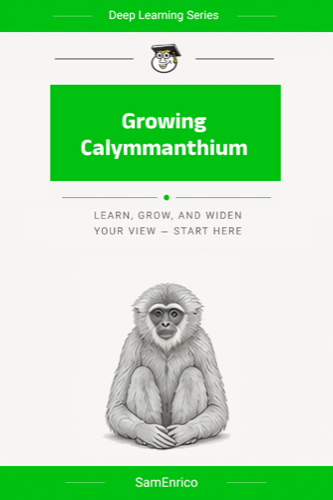
Non-FictionInformativeEducational
Growing Calymmanthium
This publication, published by SamEnrico, covers G
This publication, published by SamEnrico, covers Growing Calymmanthium
Formats
About this book
Free sample
Chapter 1: The Living Relic...--The first time I killed a Calymmanthium, I didn’t even know what I had done wrong. I stood over its shriveled, gray-brown corpse—a two-year-old seedling I had imported from a German collector at considerable expense—and felt the unique shame that comes from loving something to death. The soil was still wet. The roots had dissolved into a dark smear against the inside of the plastic pot. A tiny, woody caudex, no larger than my thumbnail, sat in the center of this mess like a drowned acorn.
I had watered it exactly as I watered my Trichocereus. I had placed it in the same bright, unshaded window. I had assumed that a cactus was a cactus. I was wrong.That failure, early in my obsessive career as a collector of rare cacti, sent me down a path that would eventually consume twelve years of my life, thousands of dollars in failed experiments, and three separate expeditions to northern Peru. The plant that died in my care was Calymmanthium substerile, a species so peculiar, so evolutionarily distinct, that botanists still argue about where it belongs in the cactus family tree.
It is not a pretty plant by conventional standards. It does not produce the dramatic, ribbed columns of a San Pedro or the golden spines of a barrel cactus. Instead, it grows as a sprawling, shrubby mess of thin, woody stems that look more like dead twigs than living tissue. Its flowers, when they appear, are small, white, and nocturnal—easy to miss entirely. Its fruit is a hard, wooden capsule that requires a hammer or a long soak to open.
Nothing about this plant announces itself as special. And yet, once you understand what it represents, you cannot look away.Calymmanthium is a living fossil. It sits at the exact evolutionary transition point between the earliest, leaf-bearing cacti (the genus Pereskia, which looks more like a rose bush than a cactus) and the modern, ribbed, water-storing giants that dominate the deserts of the Americas. Its stems are barely succulent. Its spines are sparse and unimpressive.…
This is the end of the free sample. Get the eBook to keep going. Buy now
Contents
- Chapter 1
- Chapter 2
- Chapter 3
- Chapter 4
- Chapter 5
- Chapter 6
- Chapter 7
- Chapter 8
- Chapter 9
- Chapter 10
- Chapter 11
- Chapter 12
Details
- Author
- Wilde Garnett
- Publisher
- SamEnrico
- Language
- English
- Genre
- Non-Fiction, Informative, Educational
- Released
- 2026-05-23
- Pages (approx.)
- 141
- Available as
- eBook, Audiobook

Read better in the ZLOADR app
Your eBooks on your phone or tablet. Sign in with your SamEnrico account and start reading.
More by Wilde Garnett
 Time Blocking for Motion AppWilde Garnett$11.99
 Police Officer Anger RestructuringWilde Garnett$11.99Police Officer Anger RestructuringWilde Garnett$11.99
 Body Scan for Writer's BlockWilde Garnett$11.99
 Hybrid Meeting SpeakingWilde Garnett$11.99
 Patagonia Ice Field TraverseWilde Garnett$11.99
 Unidentified Remains Victim AdvocacyWilde Garnett$11.99
 Moroccan Grocer To Franchise OwnerWilde Garnett$11.99
 Liraglutide GuideWilde Garnett$11.99
 The Philosophers of Axum: Wisdom and Empire in Ancient EthiopiaWilde Garnett$11.99
 Apocalypse Now: The Art of War in the JungleWilde Garnett$11.99
 How to Produce Alternative Energy GeneratorsWilde Garnett$11.99
You may also like
 Hong Kong Handover 1997Dunn Johnnie$11.99
 Zumba For Postnatal Recovery CourseNeal Christian$11.99
 Zumba for BeginnersLadner Nikia$11.99
 YouTube Comment Mining GuideHumes Pandora$12.99
 Worry Box MeditationCarlin Rudy$11.99
 Workplace Stress MeditationNguyen Lynn$11.99
 Workplace Stress and Sleep RepairHawley Ivory$11.99
 Workplace Perfectionism CureDelaney Jeffry$11.99
 Workplace Injustice Anger GuideWallen Isabelle$11.99
 Work Addiction and Burnout LinkGreenwood Ester$11.99
 Women in Yoga and WellnessBeattie Galina$11.99
 Women in Stand Up ComedyChun Evangeline$11.99