
Non-FictionInformativeEducational
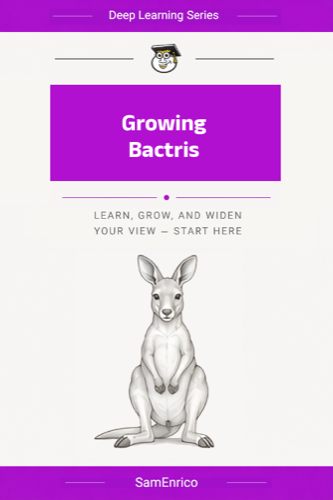
Growing Bactris eBook
This publication, published by SamEnrico, covers G
This publication, published by SamEnrico, covers Growing Bactris
Formats
Free sample
Chapter 1: The Palm That Keeps Giving...--–- The first time I watched a farmer harvest a Bactris heart-of-palm without flinching, without gloves, without the careful choreography that spiny palms demand, I realized I had misunderstood this plant entirely. For years, I had categorized Bactris gasipaes as just another tropical palm—interesting, perhaps, but niche, difficult, and best left to botanists and subsistence farmers in the Amazon. That morning in Costa Rica’s Brunca region, standing knee-deep in red clay as Don Carlos swung a machete through a cluster of stems as thick as my wrist, I watched him pull out a cylinder of pure white tissue the length of his forearm. He handed it to me, still dripping. "Prueba," he said.
Try it. The crunch was clean, the flavor somewhere between an artichoke heart and a fresh water chestnut, but more delicate than both. "Veinte mil colones por kilo," he added, smiling. Twenty thousand colones. Roughly thirty-two dollars per kilogram.
And his plantation—just two hectares of scruffy, spiny-looking clumps on land that had failed at coffee and corn—was producing that much every week.–- This book exists because of that morning. Not because Bactris is exotic, though it is. Not because it is profitable, though it can be spectacularly so. This book exists because the peach palm—pejibaye in Costa Rica, pixbae in Panama, chontaduro in Colombia—represents something rare in agriculture: a genuinely sustainable, high-value, dual-purpose crop that simultaneously feeds people, restores degraded land, and generates income from small plots. It is the palm that keeps giving.
And almost nobody in the English-speaking world knows how to grow it properly.–- The agricultural literature on Bactris is fragmented across Portuguese and Spanish journals, buried in extension bulletins from the 1980s, or locked behind academic paywalls. What exists for the English reader falls into two categories: brief encyclopedia entries that treat the plant as a botanical curiosity, or dense agronomic papers focused on single variables like germination temperature or nitrogen response. There is no comprehensive grower's manual. There is no book that takes you from an empty field to a thriving, perpetually harvesting plantation. There is no guide that answers the practical questions I had after that morning in Brunca: Where do I get spineless seeds?
How much spacing? What about frost? Can I really harvest every nine months? What do I do with all the fruit?–- This book answers those questions. It is written for the small-scale tropical farmer, the homesteader in Hawaii or Florida, the ex-pat looking for an agricultural project in Central America, the regenerative agriculture enthusiast seeking perennial crops, and the adventurous gardener who wants to grow something genuinely unusual.
It assumes no prior knowledge of palm cultivation but respects your intelligence. Every claim about germination rates, spacing outcomes, fertilizer responses, and disease pressure is drawn from peer-reviewed research, field trials, and interviews with successful growers across the Americas. When the science is uncertain, I tell you. When growers disagree, I present both sides and explain the trade-offs. When I recommend a specific product or variety, it is because I have seen it work.–- Before we dive into the soil chemistry and propagation techniques, however, we need to understand what Bactris actually is—not just botanically, but economically and ecologically.
This chapter answers three foundational questions: Why should you grow this palm instead of any other crop? What are the two distinct pathways to profit (heart-of-palm vs. fruit)? And which path fits your specific circumstances of land, labor, capital, and temperament? By the end of this chapter, you will know whether Bactris is right for you, and if so, which model to pursue.--The Two Faces of Bactris: A Crop of Dual Destinies–- Bactris gasipaes is unique among commercial palms in that it is harvested for two completely different products from the same plant.
This duality is both its greatest strength and the source of most confusion among new growers. The peach palm produces two harvests: the tender, white inner core of its stem (heart-of-palm, or palmito) and the starchy, peach-like fruits that grow in large hanging bunches. However—and this is critical—the agronomic practices that optimize one harvest fundamentally compromise the other.–- Heart-of-palm production requires high-density planting, rapid stem elongation, and harvest at 15-18 months. The goal is many straight, thick stems per hectare. In this model, you never see the fruit.
The plant is cut before it reaches reproductive maturity. Your revenue comes entirely from the palmito, which you sell fresh, cooked, or pickled to restaurants, hotels, and specialty food distributors.–- Fruit production requires low-density planting, genetic diversity for cross-pollination, and patience. The first harvest comes at 3-5 years, with peak production between years 6 and 10. The fruit is starchy (20-30% carbohydrates), rich in vitamin A (beta-carotene gives it the distinctive orange color), and contains healthy oils (5-15% depending on variety). You can eat it fresh after boiling, turn it into flour, ferment it into chicha, or press it for oil.
The stem becomes a secondary product—you can still harvest a single heart from each stem if you manage the clump carefully, but this is a bonus, not the main event.–- Some growers attempt both. They plant at moderate density, harvest the first stems for heart-of-palm at 18 months, then leave the remaining stems to fruit. This works, but only up to a point. The stems that fruit produce smaller, lower-quality hearts. The clump’s energy goes into reproductive tissue, not vegetative growth.
In my observation across dozens of farms, the dual-purpose approach works best as a transition strategy: harvest hearts for immediate income while you wait for fruit production to begin, then phase out heart harvests as fruit volume increases. Planning to do both equally is a recipe for mediocrity in both.--The 2x2 Decision Matrix: Finding Your Path–- Before you buy a single seed or a single clone, you must answer two questions. First: What is your primary market—palmito or fruit? Second: What is your harvest model—clear-cut (plant, harvest once, replant) or perpetual (harvest repeatedly from the same clump for 10-15 years)?–- These two questions create a 2x2 matrix. Your position in this matrix determines everything else: variety selection, propagation method (seeds vs.
clones), planting density, fertilization schedule, and harvest timing.High Density (20,000+ plants/ha)Low Density (5,000-7,000 plants/ha)Clear-Cut Model Single harvest at 18 months. Maximum palmito yield. Then replant. Best for rented land or high land costs.Not economically viable. Too few stems per hectare to cover costs.Perpetual Model Harvest individual stems every 9-12 months from same clump.
No replanting for 10-15 years. Ideal for owned land.Fruit-focused. First harvest 3-5 years. Hearts as occasional bonus. Lowest labor requirement.–- Which cell fits you?
Let me translate each into a grower profile.–- High Density, Clear-Cut: You have access to land for 2-3 years, perhaps leased. You need maximum return per hectare in the shortest time. You have capital for initial planting (20,000 plants/ha requires significant nursery investment) and labor for harvest and replanting. You are selling fresh palmito to high-end buyers who pay by the kilogram, not by the box. You do not care about fruit.–-…
This is the end of the free sample. Get the eBook to keep going. Buy now
About this book
Details
- Author
- Garris Lakeisha
- Publisher
- SamEnrico
- Language
- English
- Genre
- Non-Fiction, Informative, Educational
- Released
- 2026-05-11
- Pages (approx.)
- 160
- Available as
- eBook, Audiobook

Read better in the ZLOADR app
Your eBooks on your phone or tablet. Sign in with your SamEnrico account and start reading.
More by Garris Lakeisha
 Mergers And Acquisitions GuideGarris Lakeisha$11.99
 Gambling Addiction and CryptocurrencyGarris Lakeisha$11.99
 The Self Worth Performance ReviewGarris Lakeisha$11.99
 Telehealth DetoxGarris Lakeisha$11.99
 Life Review Journal MethodGarris Lakeisha$11.99
 Interruption JournalGarris Lakeisha$11.99
 Grief and Shame After DivorceGarris Lakeisha$11.99
 Child Loss and SiblingsGarris Lakeisha$11.99
 The Poisoned Lovers: The Deadly Duet of Christine and Marcel PetiotGarris Lakeisha$11.99
 Tangaroa’s Wrath: The Great Wave That Swallowed the SunGarris Lakeisha$11.99
 How to Produce Health FoodGarris Lakeisha$11.99
 How to Produce Motor Vehicle LightingGarris Lakeisha$11.99
You may also like
 Hong Kong Handover 1997Dunn Johnnie$11.99
 Zumba For Postnatal Recovery CourseNeal Christian$11.99
 Zumba for BeginnersLadner Nikia$11.99
 YouTube Comment Mining GuideHumes Pandora$12.99
 Worry Box MeditationCarlin Rudy$11.99
 Workplace Stress MeditationNguyen Lynn$11.99
 Workplace Stress and Sleep RepairHawley Ivory$11.99
 Workplace Perfectionism CureDelaney Jeffry$11.99
 Workplace Injustice Anger GuideWallen Isabelle$11.99
 Work Addiction and Burnout LinkGreenwood Ester$11.99
 Women in Yoga and WellnessBeattie Galina$11.99
 Women in Stand Up ComedyChun Evangeline$11.99