
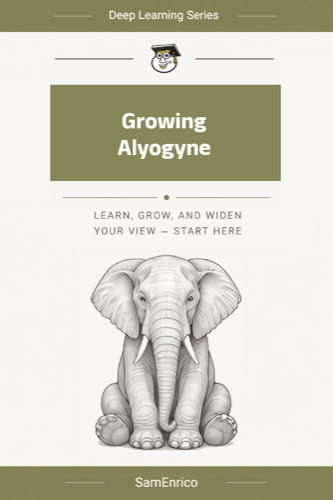
Non-FictionInformativeEducational
Growing Alyogyne
This publication, published by SamEnrico, covers G
by Booth Lenita
This publication, published by SamEnrico, covers Growing Alyogyne
Formats
About this book
Free sample
Chapter 1: The One-Day Flower...--The first time I watched a deep purple Alyogyne bloom open at dawn and fall to the ground before dinner, I thought I had done something terribly wrong. I had watered it correctly—or so I believed. The soil was sandy and well-draining, just as every Australian native plant book recommended. The sun beat down for a full eight hours each day. And yet, there on the mulch lay a perfect, undamaged flower, as vibrant as the moment it had unfurled twelve hours earlier.
My heart sank. Another gardening failure, I assumed. Another plant that had rejected my care.It took me three more fallen flowers—three more days of watching buds open into breathtaking 12-centimeter corollas only to collapse by evening—before I understood the truth. I had not killed anything. I had simply witnessed one of the most extraordinary survival strategies in the plant kingdom.The Alyogyne flower is not designed to last.
It is designed to make an impression. Each bloom invests every ounce of its energy into a single, spectacular day of pollination. It opens at first light, when native bees are just beginning to stir. It presents its undivided style—that unique botanical fingerprint that separates Alyogyne from its hibiscus cousins—like a landing platform. It produces nectar, releases pollen, and sends out visual signals that can be seen from meters away.
And then, as the sun begins to set, it releases its petals, dropping them cleanly to the ground without fuss or mess.This is not weakness. This is efficiency. And it is the first and most important lesson that every Alyogyne gardener must learn.The Genus That Refuses to Be Forgotten Alyogyne (pronounced al-ee-oh-GUY-nee) belongs to the Malvaceae family, the same botanical clan that includes cotton (Gossypium), okra (Abelmoschus), and the beloved tropical hibiscus (Hibiscus rosa-sinensis). For decades, taxonomists lumped these Australian natives into the hibiscus genus, treating them as simply another branch of that vast and diverse family tree. But careful botanical examination revealed a difference that mattered: the style.In true hibiscus species, the female reproductive structure—the style—branches into five…
This is the end of the free sample. Get the eBook to keep going. Buy now
Contents
- Chapter 1
- Chapter 2
- Chapter 3
- Chapter 4
- Chapter 5
- Chapter 6
- Chapter 7
- Chapter 8
- Chapter 9
- Chapter 10
- Chapter 11
- Chapter 12
Details
- Author
- Booth Lenita
- Publisher
- SamEnrico
- Language
- English
- Genre
- Non-Fiction, Informative, Educational
- Released
- 2026-06-02
- Pages (approx.)
- 132
- Available as
- eBook, Audiobook

Read better in the ZLOADR app
Your eBooks on your phone or tablet. Sign in with your SamEnrico account and start reading.
More by Booth Lenita
 QMS Implementation Gantt ChartBooth Lenita$11.99
 Isaac Asimov BioBooth Lenita$11.99
 Teen Boundary ConversationBooth Lenita$11.99
 Intergroup Service in Twelve StepsBooth Lenita$11.99
 Gig Platform City ComparisonBooth Lenita$11.99
 Nonprofit Operations From Corporate GuideBooth Lenita$11.99
 Yahoo Security Question DatabaseBooth Lenita$11.99
 Plank Hold GuideBooth Lenita$11.99
 The Poet and the Pedal: Thomas Green's Forbidden Symphony of the 1866 OlympicsBooth Lenita$11.99
 The Silk Road Scrolls: The Secret Photographs of the Han DynastyBooth Lenita$11.99
 How to Start a Analytical Chemist Business (Beginners Guide)Booth Lenita$11.99
 A Collector's Handbook to the Panhard Dyna JuniorBooth Lenita$11.99
You may also like
 Hong Kong Handover 1997Dunn Johnnie$11.99
 Zumba For Postnatal Recovery CourseNeal Christian$11.99
 Zumba for BeginnersLadner Nikia$11.99
 YouTube Comment Mining GuideHumes Pandora$12.99
 Worry Box MeditationCarlin Rudy$11.99
 Workplace Stress MeditationNguyen Lynn$11.99
 Workplace Stress and Sleep RepairHawley Ivory$11.99
 Workplace Perfectionism CureDelaney Jeffry$11.99
 Workplace Injustice Anger GuideWallen Isabelle$11.99
 Work Addiction and Burnout LinkGreenwood Ester$11.99
 Women in Yoga and WellnessBeattie Galina$11.99
 Women in Stand Up ComedyChun Evangeline$11.99