
Non-FictionBusiness BriefEco-Compliance
GRASP Certification Export eBook
Get GRASP module with GlobalGAP for social complia
Get GRASP module with GlobalGAP for social compliance. Worker welfare and ethical practices.
Formats
Free sample
Chapter 1: The Harvest You Lost--–- The phone call came on a Tuesday afternoon. Maria Vasquez, who had run her family's strawberry farm in Huelva, Spain for seventeen years, expected confirmation of her export license renewal. Instead, her largest German buyer delivered a single sentence that would unravel an entire season's planning: "We cannot ship your product until you provide evidence of social compliance with our new Ethical Charter."Maria had done everything right. Her Global G.A.P. IFA certification for food safety was current.
Her berries were exceptional—sweet, firm, and perfectly sized. She had invested in drip irrigation, traceability systems, and cold chain logistics. Yet none of that mattered in that moment because a new gatekeeper had emerged in global agricultural trade. That gatekeeper was not about pesticide residue limits or microbiological contamination. It was about the woman who picked the berries, the hours she worked, the wage she received, and whether she could speak without fear of being fired.This chapter is for every Maria Vasquez—every farm owner, export manager, or production director who has watched a container sit at the dock while buyers demanded proof of something they could not quite define.
That something is social compliance, and the most efficient, globally recognized vehicle for proving it in fresh produce is the GLOBALG.A.P. Risk Assessment on Social Practice, known as GRASP.The Invisible Barrier That Cost You Money Last Year Before we discuss what GRASP is, let us examine what happens when you do not have it. Across the fresh produce industry, a quiet transformation has been underway. Between 2019 and 2024, the number of retailers requiring documented social compliance from their fresh produce suppliers increased by over 300 percent. This is not speculation; it is the documented trend line from the Consumer Goods Forum's Sustainable Supply Chain Initiative.Consider the following scenarios, any of which may already have happened to you.
A buyer requests your GRASP conformance letter two weeks before your scheduled shipment. You do not have it. Your container is held. By the time you scramble to schedule an audit, the seasonal window has closed. You absorb storage costs, renegotiation fees, and the silent penalty that no invoice shows: your buyer now considers you unreliable.
Alternatively, imagine you are bidding for a new contract with a European supermarket chain. Your price is competitive. Your quality is proven. But another farm presents a GRASP letter alongside their IFA certificate. They win the contract even though their berries are objectively no better than yours.
The difference is not on the fruit; it is on the farm.These are not hypotheticals. They are the daily reality of agricultural export markets where social compliance has moved from a "nice to have" differentiator to a "must have" requirement. The question is no longer whether you need to address worker welfare and ethical practices. The question is which standard you will use and how quickly you can implement it without disrupting your core farming operations.Why GRASP Exists: A History You Need to Know GLOBALG.A.P., founded in 1997 as Euro-Retailer Produce Working Group Good Agricultural Practices, built its reputation on food safety and environmental stewardship. For nearly two decades, the IFA (Integrated Farm Assurance) standard was sufficient for most retailers.
A farm could demonstrate that it managed pesticide residues, water usage, traceability, and post-harvest handling. That was the entire conversation.Then the conversation changed. In the early 2010s, major European retailers began facing public pressure—not about food contamination, but about labor conditions in their supply chains. Documentary films exposed migrant worker exploitation on tomato farms in Italy. Investigative journalists documented child labor on cocoa farms in West Africa.
While these were not GLOBALG.A.P.'s direct failures, they created a market reality: consumers wanted proof that their food was not only safe but ethically produced. Food safety alone was no longer sufficient.GLOBALG.A.P. responded by developing the Risk Assessment on Social Practice, launched as a voluntary add-on in 2013. The name is important. It is not an audit or a certification in the traditional sense.
It is a risk assessment. This distinction—between checking boxes and understanding risks—is the philosophical foundation of everything that follows in this book. GRASP does not ask, "Did you post the required sign?" It asks, "Do your workers understand their rights, and can you prove it?"Version 2, released in 2021 and fully implemented by 2023, represented a fundamental shift. The old version had a binary outcome: pass or fail. The new version has a risk-based outcome: fully compliant, improvements needed, or not compliant.
More importantly, v2 introduced the Country Risk Concept, which uses the World Bank's Worldwide Governance Indicators to classify nations into low, medium, or high risk categories. A farm in a high-risk country faces more individual worker interviews and deeper document scrutiny than an identical farm in a low-risk country. GRASP does not pretend that all contexts are equal. Instead, it adjusts its scrutiny to match the risk profile of the operating environment.The 1.8 Million Worker Truth As of the most recent GLOBALG.A.P. data, GRASP currently covers over 1.8 million farm workers across more than 40 countries.
This is not a niche standard. It is the dominant social compliance framework in the fresh produce sector, particularly for exports from Africa, Latin America, and Southern Europe to Northern European markets.When a buyer like Aldi, Lidl, Tesco, or Sainsbury's requests GRASP, they are not being arbitrary. They are aligning with an industry-wide benchmark that reduces their own due diligence costs. Without GRASP, each buyer might conduct its own social audit, asking different questions with different scoring systems, leading to audit fatigue for farms and inconsistent standards across the supply chain. With GRASP, a single assessment serves multiple buyers.This efficiency is GRASP's greatest practical advantage.
Because GRASP is an add-on to IFA rather than a standalone standard, the certification body visits your farm once to assess both food safety and social practice. Your records overlap. Your worker interviews are combined. Your corrective action plan addresses both domains. If you already hold IFA certification, adding GRASP requires no new certification body, no new audit schedule, and minimal additional documentation.
The marginal cost is surprisingly low compared to the market access you gain.What GRASP Is Not: Clearing Up Dangerous Misunderstandings Before we go further, let us demolish three persistent myths about GRASP that cause farms to make expensive mistakes.Myth one: GRASP certification is just another paperwork exercise. This is dangerously wrong. GRASP requires documented systems, yes. But it places equal weight on worker interviews. An auditor will spend as much time talking to workers in private as reviewing your policies.
If your policies say one thing and your workers describe another, the worker interview determines your outcome. GRASP is not a test of your filing system; it is a test of your farm's actual human rights practices.Myth two: GRASP is only for large corporate farms. The data contradicts this. Smallholder groups and cooperative farms represent a significant portion of GRASP-certified operations. The standard includes specific accommodations for small producers, including reduced sample sizes and group certification options.
The key is not farm size but system completeness. A ten-hectare farm with documented procedures and trained staff can pass…
This is the end of the free sample. Get the eBook to keep going. Buy now
About this book
Details
- Author
- Cleary Cristie
- Publisher
- SamEnrico
- Language
- English
- Genre
- Non-Fiction, Business Brief, Eco-Compliance
- Released
- 2026-05-30
- Pages (approx.)
- 127
- Available as
- eBook, Audiobook

Read better in the ZLOADR app
Your eBooks on your phone or tablet. Sign in with your SamEnrico account and start reading.
More by Cleary Cristie
 Internal Mobility BenchmarksCleary Cristie$11.99
 Mindful Stretching BreakCleary Cristie$11.99
 Smith Wigglesworth PentecostCleary Cristie$11.99
 The Mechanical Engineer InnovationCleary Cristie$11.99
 The Complicated Grief and Substance UseCleary Cristie$11.99
 The Hollow Hunger: The Last Survivors of the Dyatlov PassCleary Cristie$11.99
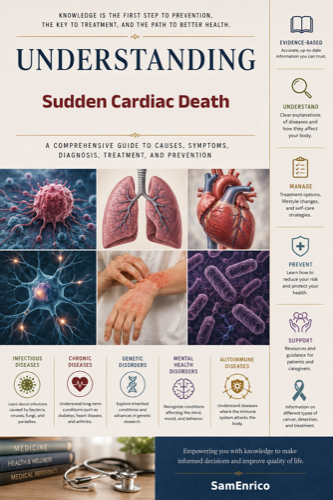 Understanding Sudden Cardiac DeathCleary Cristie$17.99
 Purchase Price Allocation GuideCleary Cristie$12.99
 Documentary PhotographyCleary Cristie$11.99
 How to Become a Squeegee TenderCleary Cristie$11.99
You may also like
 Hong Kong Handover 1997Dunn Johnnie$11.99
 Zumba For Postnatal Recovery CourseNeal Christian$11.99
 Zumba for BeginnersLadner Nikia$11.99
 YouTube Comment Mining GuideHumes Pandora$12.99
 Worry Box MeditationCarlin Rudy$11.99
 Workplace Stress MeditationNguyen Lynn$11.99
 Workplace Stress and Sleep RepairHawley Ivory$11.99
 Workplace Perfectionism CureDelaney Jeffry$11.99
 Workplace Injustice Anger GuideWallen Isabelle$11.99
 Work Addiction and Burnout LinkGreenwood Ester$11.99
 Women in Yoga and WellnessBeattie Galina$11.99
 Women in Stand Up ComedyChun Evangeline$11.99