
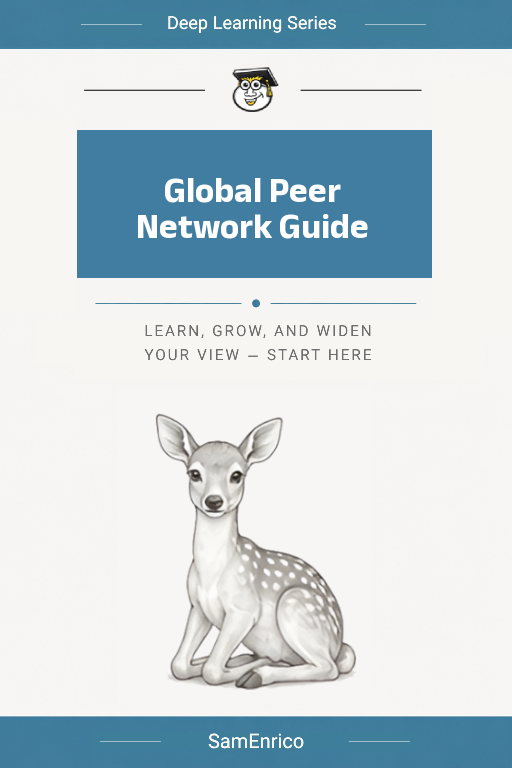
Global Peer Network Guide eBook
Facilitate international franchisee peer groups fo
by Duarte Fanny
Facilitate international franchisee peer groups for best practice sharing. Organize annual global conference for cross border learning and networking.
Formats
Free sample
Chapter 1: The Franchisor’s Blind Spot--–- The email arrived at 11:47 PM on a Tuesday. A franchisee in Poland had written to the global operations inbox, a channel that corporate encouraged for “escalating systemic issues.” His store had just lost its third manager in six months. Local wages were rising faster than the recommended salary bands in the operations manual. His competitors across the street were offering signing bonuses he could not match without violating brand standards. He had attended every training webinar.
He had followed every corporate guideline. And he was still bleeding talent. “I know someone in this system has solved this,” he wrote. “Can you connect me to them?”The global operations team forwarded the email to three different departments. Legal wanted to review the wage band question.
HR wanted to update the training materials. The regional director for Eastern Europe offered to schedule a coaching call in two weeks. No one, however, answered the franchisee’s actual question. No one connected him to another franchisee who had faced rising wages and found a creative workaround. Six months later, that franchisee sold his stores and left the system.
His replacement, a multi-unit operator from a different brand, walked into the same market conditions and thrived. How? He had a network. He called three peers in similar markets before signing his first lease. He learned about flexible staffing models, alternative benefits structures, and local wage negotiation tactics that the corporate manual had never contemplated.
The difference was not intelligence, capital, or effort. It was connection.This is the franchisor’s blind spot. In a global franchise system, the gap between what corporate knows and what the collective franchisee community knows is vast. It is not a small gap that occasional surveys and annual meetings can bridge. It is a chasm.
And most franchisors not only fail to measure this gap—they fail to see it at all. They operate under a model that assumes knowledge flows from the center outward, from the top down, from the manual to the store. But in reality, the most valuable knowledge flows sideways. It flows from a franchisee in Brazil to a franchisee in Indonesia. It flows from a multi-unit operator in Texas to one in Germany.
It flows in ways that are invisible to corporate unless corporate intentionally builds the architecture to capture and amplify it.The Geography of Ignorance The first step toward solving a problem is admitting you have it. For most franchisors, that admission is surprisingly difficult. The difficulty arises not from arrogance, though that can play a role, but from a deeper structural issue: the way franchise systems measure success. Quarterly reports track same-store sales, unit growth, and royalty revenue. Field visit reports track compliance scores and audit findings.
Training completion reports track how many franchisees watched how many videos. None of these metrics measure what franchisees actually know. None measure what corporate does not know. None measure the gap between the two.Let us name this gap explicitly. Call it the knowledge differential.
In any franchise system, there are problems that have been solved by at least one franchisee but have not yet been adopted by the rest. There are innovations that exist in a single market that could save millions across the system if only they were known. There are failures that have been paid for by one franchisee that others could avoid for free. The knowledge differential is the measure of how much valuable information is trapped in silos. In most global franchise systems today, that differential is enormous.
Conservative estimates suggest that the average franchisee sits on at least three innovations that would benefit the broader system. The average multi-unit operator sits on at least ten. The average system, therefore, has thousands of solutions already in existence, already proven, already generating value for a handful of people—while the rest of the system struggles with problems that have already been solved.Why does this happen? Because sharing is not automatic. It is not even natural in competitive environments.
Franchisees operate their own businesses. They pay their own bills. They have limited time and limited incentive to document their innovations for the benefit of strangers. More importantly, many franchisees have learned through bitter experience that sharing with corporate can be dangerous. Corporate might take their idea, turn it into a mandatory policy, and charge them for implementation.
Corporate might share their financial data with competitors in the system. Corporate might use their innovation as evidence that they were violating some other rule. The rational franchisee, operating in a system without trust, hoards their best ideas. The rational franchisor, operating without visibility into the hoarding, assumes that no ideas exist.The Innovation Graveyard Every franchise system has an innovation graveyard. It is not a physical place.
It is a collection of ideas that died because they could not travel. Consider a few examples from real systems, anonymized but accurate.A franchisee in South Africa developed a mobile ordering system that reduced wait times by 40% during peak hours. His solution cost almost nothing to implement—he repurposed existing hardware and used free software. Corporate had been working on a mobile ordering solution for eighteen months with a budget of two million dollars. They never released it.
The South African franchisee’s solution never spread beyond his three stores.A franchisee in Canada figured out how to reduce energy costs by 22% through a simple scheduling change that aligned HVAC operation with delivery windows. His utility bills dropped by thousands of dollars per month. Corporate’s sustainability team had been piloting a different approach in five stores for a year with mixed results. The Canadian franchisee’s solution was never documented, never shared, and eventually lost when he sold his stores.A group of franchisees in Australia and New Zealand created an informal Whats App group to share labor scheduling tactics during a severe staffing shortage. Within six months, the group had developed a standardized approach to split shifts, cross-training, and student hiring that reduced turnover by 35%.
Corporate learned about the group entirely by accident when a regional manager overheard a conversation at a conference. No one had thought to tell them.These examples are not exceptions. They are the rule. In every system, the innovation graveyard grows larger every year. And the tragedy is that these buried innovations are not incremental improvements.
They are often transformative. They are the difference between a franchisee who barely survives a market downturn and one who captures market share from struggling competitors. They are the difference between a system that stagnates and one that evolves.The Trust Gap If knowledge sharing is so valuable, why is it so rare? The answer lies in trust. Specifically, it lies in what Stephen M.R.
Covey calls the trust dividend—the measurable economic benefit that flows from high-trust relationships. In low-trust environments, transactions are expensive. Every interaction requires contracts, lawyers, monitoring, and enforcement. In high-trust environments, transactions are cheap. People share freely because they believe their generosity will be reciprocated and their vulnerability will not be exploited.Most franchise systems operate in a state of what we might call brittle trust.
The franchisor and franchisees trust each other enough to maintain the basic relationship, but not enough to share vulnerabilities freely.…
This is the end of the free sample. Get the eBook to keep going. Buy now
About this book
Details
- Author
- Duarte Fanny
- Publisher
- SamEnrico
- Language
- English
- Genre
- Non-Fiction, Business Brief
- Released
- 2026-05-27
- Pages (approx.)
- 147
- Available as
- eBook, Audiobook

Read better in the ZLOADR app
Your eBooks on your phone or tablet. Sign in with your SamEnrico account and start reading.
More by Duarte Fanny
 Loving Kindness for a Partner in RecoveryDuarte Fanny$11.99
 Parent Loss Complicated GriefDuarte Fanny$11.99
 Calcium Bone Health GuideDuarte Fanny$11.99
 Meth Family Intervention GuideDuarte Fanny$11.99
 Immigrant Logistics Disruptor CourseDuarte Fanny$11.99
 Visuospatial SketchpadDuarte Fanny$11.99
 Sunset Meadow VisualizationDuarte Fanny$11.99
 NVC For HealthcareDuarte Fanny$11.99
 Review and Reflect BlockDuarte Fanny$11.99
 The Silver Branch: A Druid’s Last StandDuarte Fanny$11.99
 The Healing Hands of the Nile: Black Surgeons of Ancient EgyptDuarte Fanny$11.99
 The Coral Whisperer: How One Woman Saved an OceanDuarte Fanny$11.99
You may also like
 Franchising Your Local Brand Across Borders Child Labor LawsWilson Ida$11.99
 Franchising Your Local Brand Across Borders Beneficial OwnershipGordon Debbie$11.99
 Franchising Your Local Brand Across Borders Trade SecretsKeener Tatum$11.99
 Franchising Your Local Brand Across Borders Performance DashboardsCota Lisette$11.99
 Franchising Your Local Brand Across Borders Parallel ImportsBailey Wallace$11.99
 Franchising Your Local Brand Across Borders Packaging RegulationsRandle Adaline$11.99
 Franchising Your Local Brand Across Borders Know Your CustomerMyers Adam$11.99
 Franchising Your Local Brand Across Borders Human TraffickingFranklin Lee$11.99
 Franchising Your Local Brand Across Borders Government IncentivesLogsdon Beckie$11.99
 Franchising Your Local Brand Across Borders Carbon FootprintMcfarlane Margot$11.99
 Franchising Your Local Brand Across Borders Bribery LawsStarr Cortney$11.99
 Franchising Your Local Brand Across Borders Best Practice SharingBryson Vernia$11.99