
Non-FictionConsumer Mind ReportEthical Consumerism
Gen Z Value Alignment Guide eBook
Reveals how sustainability, social justice, and au
Reveals how sustainability, social justice, and authenticity drive younger consumer spending and brand choice.
Formats
Free sample
Chapter 1: The Trust Ratio...–- In 2023, a 22-year-old Tik Tok user with 412 followers posted a 47-second video. She had no production budget, no lighting kit, and no script. She simply pointed her phone camera at a dumpster behind a mall in Ohio and said, “Hey, that ‘sustainable’ clothing brand you all love? I just found fifteen of their return tags in the trash. The clothes are fine.
They just didn’t sell fast enough.” The video received 200 views in the first hour. By hour twelve, it had 1.4 million views. By the end of the week, the brand’s stock price had dropped 11 percent. Their “sustainability” Instagram account, which had posted a carefully produced video about recycled materials just three days earlier, was deleted. The brand never recovered.This is not a story about cancel culture.
This is a story about the Trust Ratio—the single most important metric that Gen Z uses to evaluate whether your brand deserves their attention, their money, or their silence.If you are reading this book, you have likely already noticed that something has fundamentally broken in the relationship between brands and young consumers. You have probably run focus groups that made no sense. You have likely watched your carefully crafted “values-driven” campaigns land with a thud while a grainy video from a teenager in a parking lot goes viral. You may have even found yourself thinking, “What do they actually want from us?”The answer is simpler and more terrifying than you expect. They want you to be honest.
Not perfect. Not consistent in the way a corporate brand guide defines consistency. Not even necessarily kind by your grandmother’s definition. They want you to be honest about what you actually do, what you actually cost, and who you actually harm.And right now, most brands fail at honesty before they even begin.The Great Disillusionment: What Gen Z Inherited To understand Gen Z’s relationship with brands, you must first understand what they inherited. This generation, born roughly between 1997 and 2012, did not experience the gradual erosion of trust that older generations describe with nostalgia.
They were born into the wreckage.Consider the timeline of their formative years. The oldest members of Gen Z were eleven years old when the 2008 financial crisis collapsed the global economy. They watched their parents lose homes, retirement savings, and careers—not because their parents were lazy or unskilled, but because a financial system they were told to trust had been built on fraud. They were in high school when the student debt crisis became a national emergency, watching older siblings graduate with six figures of debt and no jobs. They were in college or entering the workforce when the COVID-19 pandemic revealed that “essential workers” were paid poverty wages while billionaires doubled their wealth.
And they have never, not once in their lives, breathed air that was not already damaged by climate collapse.This is not hyperbole. The World Health Organization has documented that Gen Z experiences climate anxiety at rates three times higher than baby boomers. A 2023 survey across seventeen countries found that 70 percent of Gen Z rank global advocacy above personal wealth accumulation—a reversal of every previous generation’s priorities. When asked to choose between a high-paying job at an unethical company and a lower-paying job at a mission-aligned organization, 63 percent of Gen Z chose the mission. They are not naive.
They are not idealistic in the way that young people have always been idealistic. They are strategic. They have looked at the world they inherited and concluded that traditional markers of success—home ownership, career stability, retirement savings—are either unattainable or unethical. So they have redefined success around something they can control: where they put their attention and their money.This brings us to the central psychological state that defines Gen Z’s consumer behavior: Anxious Resilience.Anxious Resilience: The Psychology of Inherited Collapse Anxious Resilience is not a clinical diagnosis. It is a behavioral pattern that researchers at The Future Laboratory and Mc Kinsey have independently identified across multiple Gen Z cohorts.
The definition has three components:First, hyper-awareness of systemic failure. Gen Z does not believe that any single brand, government, or institution can save the world. They have seen too many broken promises. They assume that every system is compromised until proven otherwise. This is not cynicism—cynicism implies a passive acceptance of corruption.
Anxious Resilience is active skepticism. It is the assumption that you are hiding something, combined with the genuine hope that you are not.Second, personal responsibility for collective problems. Despite their skepticism, Gen Z feels personally accountable for fixing the mess they inherited. This is the “anxious” part. They cannot afford a house, but they feel guilty when they buy fast fashion.
They did not cause climate change, but they punish themselves for not recycling perfectly. They are drowning in systemic problems while being told that individual consumer choices will save the world. This creates a constant low-grade moral panic.Third, a willingness to walk away from anything that increases that panic. This is the “resilience” part. Unlike millennials, who often responded to anxiety with performative activism (liking posts, sharing infographics), Gen Z responds by removing the source of anxiety.
If your brand makes them feel worse about their already overwhelming moral burden, they will not negotiate. They will not send a polite email. They will simply leave. And they will tell their friends.This is why your polished, aspirational, “we care about the planet” marketing campaign is failing. To a Gen Z consumer, your perfectly produced sustainability video is not inspiring.
It is exhausting. They have seen a thousand similar videos. They know that most of them are lies. And they are too tired to investigate whether yours is the exception. So they assume it is not.
They scroll past. They buy from someone else. Or they buy nothing at all.The Seven Inherited Crises That Shaped Gen ZBefore we introduce the solution—the Trust Ratio Audit—we must name the specific crises that created Anxious Resilience. These seven inherited failures are the lens through which Gen Z sees every brand promise.1. The Climate Crisis Gen Z will be the first generation to experience the full effects of climate change as a permanent condition, not a future threat.
They do not debate whether climate change is real. They debate which brands are doing enough to slow it. A 2022 survey in Singapore found that 63 percent of Gen Z feel “unease” about climate change daily. In Canada, 44 percent report paying more for sustainable fashion. In Indonesia, that number rises to 67 percent.
But—and this is critical—the same surveys show that Gen Z can identify greenwashing with 89 percent accuracy. They know when you are lying. They just do not always have the energy to prove it.2. The Student Debt Crisis In the United States alone, Gen Z holds over $1.7 trillion in student debt. In the United Kingdom, average graduate debt exceeds £45,000.
Even in countries with subsidized education, like Germany and France, Gen Z faces housing costs and living expenses that outpace entry-level wages. This means that every purchase is a trade-off. When a Gen Z consumer buys…
This is the end of the free sample. Get the eBook to keep going. Buy now
About this book
Details
- Author
- Loveless Arianne
- Publisher
- SamEnrico
- Language
- English
- Genre
- Non-Fiction, Consumer Mind Report, Ethical Consumerism
- Released
- 2026-05-26
- Pages (approx.)
- 143
- Available as
- eBook, Audiobook

Read better in the ZLOADR app
Your eBooks on your phone or tablet. Sign in with your SamEnrico account and start reading.
More by Loveless Arianne
 Aging Parents Self Esteem WorkbookLoveless Arianne$11.99
 Child Star Cult Escape StoriesLoveless Arianne$11.99
 The Military Deployment Reunion Stress GuideLoveless Arianne$11.99
 PNE for Yoga InstructorsLoveless Arianne$11.99
 Steve Jobs Lisa Project FailureLoveless Arianne$11.99
 Shadows of the Ballot Box: The Forgotten Cyberwar of 1996Loveless Arianne$11.99
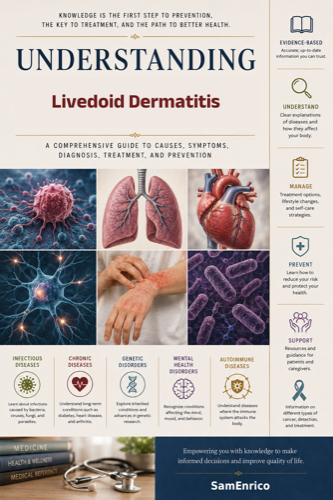 Understanding Livedoid DermatitisLoveless Arianne$17.99
 US Bank Account For LLC Non ResidentLoveless Arianne$12.99
 How to Become a Service Supervisor IiLoveless Arianne$11.99
 Executive Medical RepresentativeLoveless Arianne$11.99
You may also like
 Hong Kong Handover 1997Dunn Johnnie$11.99
 Zumba For Postnatal Recovery CourseNeal Christian$11.99
 Zumba for BeginnersLadner Nikia$11.99
 YouTube Comment Mining GuideHumes Pandora$12.99
 Worry Box MeditationCarlin Rudy$11.99
 Workplace Stress MeditationNguyen Lynn$11.99
 Workplace Stress and Sleep RepairHawley Ivory$11.99
 Workplace Perfectionism CureDelaney Jeffry$11.99
 Workplace Injustice Anger GuideWallen Isabelle$11.99
 Work Addiction and Burnout LinkGreenwood Ester$11.99
 Women in Yoga and WellnessBeattie Galina$11.99
 Women in Stand Up ComedyChun Evangeline$11.99