
Non-FictionConsumer Mind ReportYouth Marketing
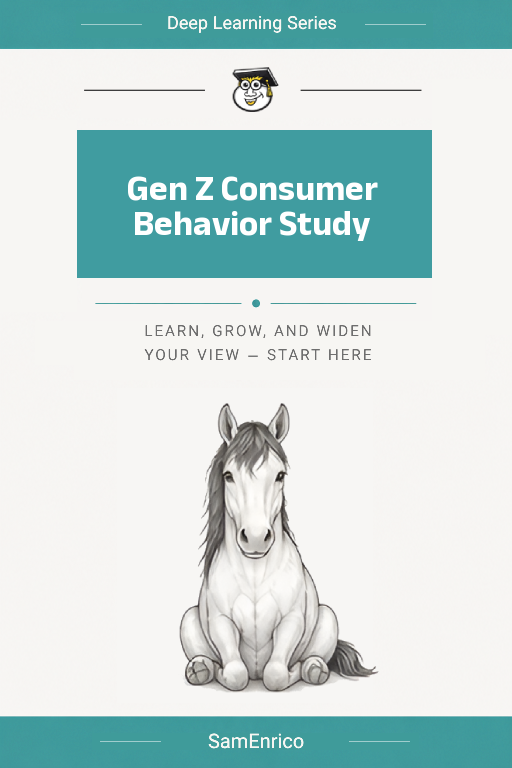
Gen Z Consumer Behavior Study eBook
Analyzes digital-first shopping, social commerce a
Analyzes digital-first shopping, social commerce adoption, and purpose-driven purchasing for younger consumer targeting.
Formats
Free sample
Chapter 1: The Leaking Funnel--The traditional marketing funnel is hemorrhaging Gen Z consumers at a rate that should terrify every CMO, brand strategist, and founder reading this book. The numbers tell a brutal story. According to recent data synthesized from "Voice of the New Generation" and Coresight Research, over seventy percent of Gen Z consumers actively ignore display ads. More than sixty percent have installed ad-blocking software on at least one device. And perhaps most damning, nearly eighty percent have admitted to abandoning a purchase entirely because a brand's marketing felt "too salesy" or "trying too hard." These are not statistics.
They are a verdict.The AIDA model—Attention, Interest, Desire, Action—was invented in 1898 by advertising pioneer Elias St. Elmo Lewis. It has survived two world wars, the invention of television, the rise of the internet, and the birth of social media. But it is not surviving Gen Z. The funnel assumes a compliant consumer who moves predictably from awareness to purchase, like water flowing downhill.
Gen Z does not flow. They ricochet. They back up. They jump from discovery to purchase in three seconds flat, or they take three months and then buy from a competitor they discovered entirely by accident. The linear funnel was designed for a world of limited choice and captive audiences.
We now live in a world of infinite choice and algorithmic chaos.This chapter dismantles the traditional AIDA marketing funnel not as an academic exercise but as a necessary act of demolition. We will argue that Gen Z has developed what we call "psychological ad blindness"—not merely a visual filter that ignores banner ads, but an active distrust mechanism that triggers skepticism the moment a brand tries too hard to sell. We will introduce the foundational framework that will appear throughout this book: the Three Authenticities—Transactional, Narrative, and Ethical—each of which represents a distinct dimension of trust that brands must earn. And we will establish the core principle that every subsequent chapter will reference: overt selling triggers skepticism; overt curation builds trust.The Death of the Linear Consumer Let us begin with a story. In 2019, a direct-to-consumer mattress company—let us call them Sleep Smart—spent twelve million dollars on a Super Bowl ad.
The ad was polished, humorous, and professionally produced. It featured a celebrity spokesperson, a catchy jingle, and a clear call to action: "Visit Sleep Smart.com and save twenty percent today." The company expected a surge in traffic. They received a modest bump that lasted approximately four hours. Their Gen Z conversion rate did not increase at all. Meanwhile, a competitor with no Super Bowl ad and no celebrity spokesperson—let us call them Mattress Underground—spent five thousand dollars sending free mattress samples to micro-influencers on You Tube.
Each influencer filmed an unscripted, poorly lit, thirty-minute review. One video featured a influencer's cat walking across the mattress mid-review. Another showed the influencer's roommate interrupting to ask about dinner plans. These videos generated two million organic views and a sustained thirty percent increase in Gen Z sales over six months.The Super Bowl ad failed not because it was bad, but because it was recognizable as advertising. The You Tube reviews succeeded not because they were professional, but because they were not.
This is the core insight of this chapter, and indeed of this book: Gen Z has developed an immune response to anything that feels like a traditional sales pitch. Their skepticism is not cynicism. It is survival. They grew up in a world where every click, every scroll, and every like was monetized. They watched their older siblings fall for "limited time offers" and "one-day sales." They learned that when a brand tries to close you, it is almost always against your interest.The AIDA funnel was designed for an era of scarcity.
There were three television channels. There were two newspapers. The local mall had one store that sold sneakers. Under those conditions, Attention was the bottleneck. If you could grab attention, Interest would follow, Desire would build, and Action would eventually occur.
Today, the bottleneck is not attention but trust. There are three million apps on the i OS App Store. There are billions of active websites. There are countless social media platforms, each with its own algorithm serving an endless stream of content. Attention is abundant and cheap.
Trust is scarce and expensive.The Three Authenticities Framework Because the term "authenticity" will appear frequently throughout this book—in discussions of influencer marketing, supply chain transparency, livestream shopping, and brand activism—we must define it with precision. Without clear definitions, "authenticity" becomes a meaningless buzzword that can mean anything from "honest pricing" to "unpolished video" to "political alignment." To avoid this confusion, we introduce the Three Authenticities Framework, which distinguishes between three distinct and non-overlapping dimensions of trust.Transactional Authenticity refers to honesty about the basic facts of a commercial exchange: price, quality, availability, delivery timelines, return policies, and terms of service. A brand with high Transactional Authenticity does not hide fees until checkout. It does not claim "unlimited supply" before a flash sale. It does not say "handcrafted" when products are made in automated factories.
Transactional Authenticity is the baseline. Without it, no other form of authenticity matters. When a brand is caught lying about shipping costs or inflating original prices to make discounts look larger, it has violated Transactional Authenticity. Gen Z punishes this violation swiftly and mercilessly.Narrative Authenticity refers to consistency between brand messaging and actions over time. A brand with high Narrative Authenticity does not contradict itself from one campaign to the next.
It does not claim to be edgy and rebellious in one commercial and safe and reliable in the next. It does not change its visual identity, tone of voice, or core positioning every six months chasing trends. Narrative Authenticity does not require a brand to be boring or static—it allows for evolution, reinvention, and growth—but it requires that changes be explained and justified rather than performed opportunistically. When a brand abruptly shifts from sustainability messaging to convenience messaging because sustainability is no longer trending, it has violated Narrative Authenticity. Gen Z notices.Ethical Authenticity refers to alignment between stated values and actual behaviors on matters of sustainability, labor, social justice, and community impact.
A brand with high Ethical Authenticity does not claim to support racial justice while employing no Black executives. It does not claim to care about climate while burning fossil fuels at an unmitigated rate. It does not issue Pride month statements while donating to anti-LGBTQ politicians. Ethical Authenticity is the most difficult to achieve and the most damaging to violate. When a brand is caught in performative activism—"woke-washing"—it has violated Ethical Authenticity.
Gen Z does not forgive this quickly, if at all.Throughout this book, each chapter will specify which type of authenticity is at stake. When we discuss influencer marketing in Chapter 8, we will focus on Transactional and Narrative Authenticity. When we discuss supply chains in Chapter 10, we will focus on Ethical Authenticity. When we discuss brand activism in Chapter 11, we will focus on all three. By maintaining these distinctions, we avoid the trap of…
This is the end of the free sample. Get the eBook to keep going. Buy now
About this book
Details
- Author
- Garland Carissa
- Publisher
- SamEnrico
- Language
- English
- Genre
- Non-Fiction, Consumer Mind Report, Youth Marketing
- Released
- 2026-05-30
- Pages (approx.)
- 148
- Available as
- eBook, Audiobook

Read better in the ZLOADR app
Your eBooks on your phone or tablet. Sign in with your SamEnrico account and start reading.
More by Garland Carissa
 Child Star Identity Loss RecoveryGarland Carissa$11.99
 Warm Exhalation Release PracticeGarland Carissa$11.99
 PNE for Post COVID PainGarland Carissa$11.99
 The Emotional Labor Balance WorkbookGarland Carissa$11.99
 Steve Jobs Deathbed RegretsGarland Carissa$11.99
 The Iron Crown and the Imperial Dream: The Rise of the Holy Roman EmpireGarland Carissa$11.99
 Understanding Lissencephaly Syndrome Type 2Garland Carissa$17.99
 How to Become a Service ObserverGarland Carissa$11.99
 ERP Systems for EnterprisesGarland Carissa$11.99
 Foreign Owner LLC Formation HandbookGarland Carissa$12.99
You may also like
 Hong Kong Handover 1997Dunn Johnnie$11.99
 Zumba For Postnatal Recovery CourseNeal Christian$11.99
 Zumba for BeginnersLadner Nikia$11.99
 YouTube Comment Mining GuideHumes Pandora$12.99
 Worry Box MeditationCarlin Rudy$11.99
 Workplace Stress MeditationNguyen Lynn$11.99
 Workplace Stress and Sleep RepairHawley Ivory$11.99
 Workplace Perfectionism CureDelaney Jeffry$11.99
 Workplace Injustice Anger GuideWallen Isabelle$11.99
 Work Addiction and Burnout LinkGreenwood Ester$11.99
 Women in Yoga and WellnessBeattie Galina$11.99
 Women in Stand Up ComedyChun Evangeline$11.99