
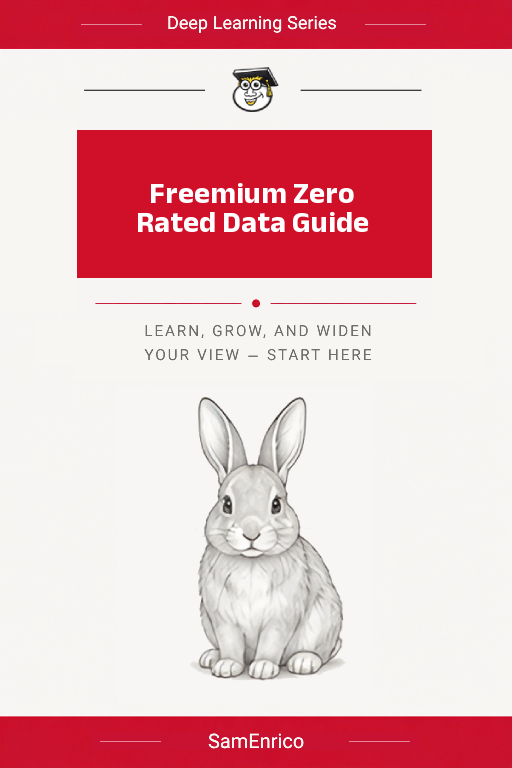
Freemium Zero Rated Data Guide eBook
Partner with mobile carriers to zero-rate your fre
by Jean Malia
Partner with mobile carriers to zero-rate your freemium product's data usage.
Formats
Free sample
Chapter 1: The Data Anxiety Epidemic--–- It starts the same way every time. A user opens your beautifully designed app. They scroll, tap, watch, or read for a few minutes. Then the hesitation creeps in. Their eyes drift to the top corner of the screen—the status bar—where a small icon shows they are not on Wi-Fi.
They are burning their monthly mobile data allowance. A video autoplays. They flinch. They close the app. They tell themselves they will come back later when they have Wi-Fi.
But later never comes. You have just lost a user, not because your product was bad, not because your pricing was wrong, but because of something entirely outside your control: data anxiety.This chapter reveals the hidden epidemic that is silently destroying your freemium conversion funnel. You will learn why mobile data costs—not product quality or pricing—have become the single biggest barrier to user engagement in markets representing billions of people. More importantly, you will discover why every dollar you spend on mobile advertising is being undermined by a problem that advertising cannot solve. And you will see, for the first time, the mathematical proof that zero-rating your app's data usage is not a cost to be minimized but an investment that generates returns far exceeding any acquisition channel available today.Let us begin with a story that changed how the world's largest technology companies think about mobile growth.The $500 Million Wake-Up Call In 2014, Facebook was stuck.
The company had conquered the developed world, but in emerging markets—India, Indonesia, Nigeria, Brazil—growth had hit a wall. Not because people didn't want Facebook. Not because the app was too complicated. Because mobile data cost too much.Facebook's internal research revealed a stunning statistic: in India, the average mobile user consumed less than 100 megabytes of data per month. To put that in perspective, loading Facebook's home page just five times would consume nearly half of their monthly allowance.
Videos were completely out of the question. Photo albums? Forget it. Users were rationing their data like wartime supplies, and Facebook was losing billions of potential daily active users.The company's response became one of the most ambitious—and controversial—experiments in mobile history. Facebook struck deals with carriers in dozens of countries to zero-rate access to a stripped-down version of their platform called Free Basics.
Users could browse Facebook, send messages, check weather, read health tips, and access a handful of other approved sites without paying a single megabyte of data charges.The results were immediate and staggering. In countries where Free Basics launched, Facebook's user acquisition cost dropped by more than 80 percent. Daily active users tripled within six months in some markets. People who had never used a smartphone data plan before suddenly became daily digital citizens. The data anxiety that had kept them away vanished overnight.But then the backlash came.
Regulators in India banned Free Basics, arguing that it violated net neutrality by creating a "walled garden" where Facebook decided which websites were worthy of free access. Privacy advocates warned that Facebook would become the gatekeeper of the internet for the world's poorest people. Critics called it digital colonialism.Facebook eventually shut down Free Basics, having spent an estimated $500 million on the initiative. The company learned a painful lesson: you cannot create a walled garden and expect the world to thank you for it.But here is what almost everyone missed. The core insight behind Free Basics was not wrong.
Zero-rating works. It works better than any other user acquisition method ever invented. The mistake was not in sponsoring data. The mistake was in sponsoring only a curated slice of the internet while locking users out of everything else.This book teaches you how to do zero-rating correctly. You will learn how to sponsor your app's data usage while also giving users a path to the open internet—using general data vouchers, premium tiers, and transparent communication.
Done right, zero-rating will acquire users at a fraction of the cost of Facebook or Google ads, retain them three to five times longer, and convert them to paid subscribers at rates that will make your investors ask if your numbers are real.The Mathematics of Data Anxiety Let us quantify the problem you are currently losing sleep over. According to the GSMA, the global trade body for mobile carriers, the average cost of 1 gigabyte of mobile data varies wildly by country:In the United States and Western Europe, 1GB costs approximately 3to3 to 3to6. That is annoying but not crippling for most users. In India, after aggressive price wars among carriers, 1GB costs as little as 0.10to0.10 to 0.10to0.30. That is cheap in absolute terms but still meaningful given that the average Indian mobile user earns less than 10perday.In Nigeria,1GBcosts10 per day.
In Nigeria, 1GB costs 10perday.In Nigeria,1GBcosts0.50 to 1.00,representing0.5to1percentofaminimumdailywage.Inthe Philippines,1GBcostsroughly1.00, representing 0.5 to 1 percent of a minimum daily wage. In the Philippines, 1GB costs roughly 1.00,representing0.5to1percentofaminimumdailywage.Inthe Philippines,1GBcostsroughly0.80.Now consider how much data your app consumes. A single minute of standard-definition video streaming consumes approximately 10 to 15 megabytes. A high-resolution photo upload might consume 2 to 5 megabytes. A typical news article with images can consume 3 to 8 megabytes.
Even a simple text-heavy social media feed, constantly refreshing and loading new content, can consume 20 to 50 megabytes per hour of active use.Do the math. A user in Nigeria with a 100 megabyte daily data budget (costing roughly $0.10) can watch only seven minutes of video in your app before exhausting half their daily allowance. They can scroll a social feed for perhaps two hours before hitting their limit—but only if they do absolutely nothing else on their phone that day. No Whats App messages. No email.
No maps. No other apps at all.Data anxiety is not irrational fear. It is a perfectly rational response to scarcity. Users who have experienced bill shock—opening their monthly statement to find $50 in unexpected overage charges—develop a Pavlovian aversion to consuming data on cellular networks. They check their balance before opening any app.
They close apps aggressively. They disable autoplay. They avoid videos altogether. And most damaging for your business: they open your app less frequently, spend less time inside it, and are far less likely to discover the premium features that would convert them from free users to paying customers.Why Mobile Advertising Cannot Solve This You might be thinking: fine, data anxiety is real, but I can just buy my way through it with mobile ads. Facebook, Google, Tik Tok, and other advertising platforms allow me to target users who are likely to love my app.
I pay 3to3 to 3to5 per install in developed markets or 0.50to0.50 to 0.50to1.50 in emerging markets. That is an acceptable customer acquisition cost.This logic contains a fatal flaw. Mobile advertising acquires a user once—at the moment of install. But data anxiety affects that user every single time they open your app. You can pay for the install.
You cannot pay for the user's ongoing willingness to consume data.Consider two identical users. Both install your music streaming app because they saw a beautiful ad on Instagram. Both are…
This is the end of the free sample. Get the eBook to keep going. Buy now
About this book
Details
- Author
- Jean Malia
- Publisher
- SamEnrico
- Language
- English
- Genre
- Non-Fiction, Business Brief
- Released
- 2026-06-01
- Pages (approx.)
- 137
- Available as
- eBook, Audiobook

Read better in the ZLOADR app
Your eBooks on your phone or tablet. Sign in with your SamEnrico account and start reading.
More by Jean Malia
 The Gacy Psychiatric EvaluationJean Malia$11.99
 Caffeine and Memory SleepJean Malia$11.99
 Opioid Overdose Reversal GuideJean Malia$11.99
 LTC Insurance Middle Income GuideJean Malia$11.99
 Pattern Recognition MusicJean Malia$11.99
 The Reformation in TransylvaniaJean Malia$11.99
 Sexual Addiction and ADHDJean Malia$11.99
 TM Teacher Training OverviewJean Malia$11.99
 The Fire Below: Katia and Maurice Krafft’s Volcanic OdysseyJean Malia$11.99
 Revolutionaries Master GuideJean Malia$11.99
 The Bloodied Snows of Quebec: Wolfe’s Last Stand at the Plains of Abraham (1759)Jean Malia$11.99
 The Mind of the Unabomber: Decoding a Lone Wolf’s DescentJean Malia$11.99
You may also like
 Franchising Your Local Brand Across Borders Child Labor LawsWilson Ida$11.99
 Franchising Your Local Brand Across Borders Beneficial OwnershipGordon Debbie$11.99
 Franchising Your Local Brand Across Borders Trade SecretsKeener Tatum$11.99
 Franchising Your Local Brand Across Borders Performance DashboardsCota Lisette$11.99
 Franchising Your Local Brand Across Borders Parallel ImportsBailey Wallace$11.99
 Franchising Your Local Brand Across Borders Packaging RegulationsRandle Adaline$11.99
 Franchising Your Local Brand Across Borders Know Your CustomerMyers Adam$11.99
 Franchising Your Local Brand Across Borders Human TraffickingFranklin Lee$11.99
 Franchising Your Local Brand Across Borders Government IncentivesLogsdon Beckie$11.99
 Franchising Your Local Brand Across Borders Carbon FootprintMcfarlane Margot$11.99
 Franchising Your Local Brand Across Borders Bribery LawsStarr Cortney$11.99
 Franchising Your Local Brand Across Borders Best Practice SharingBryson Vernia$11.99