
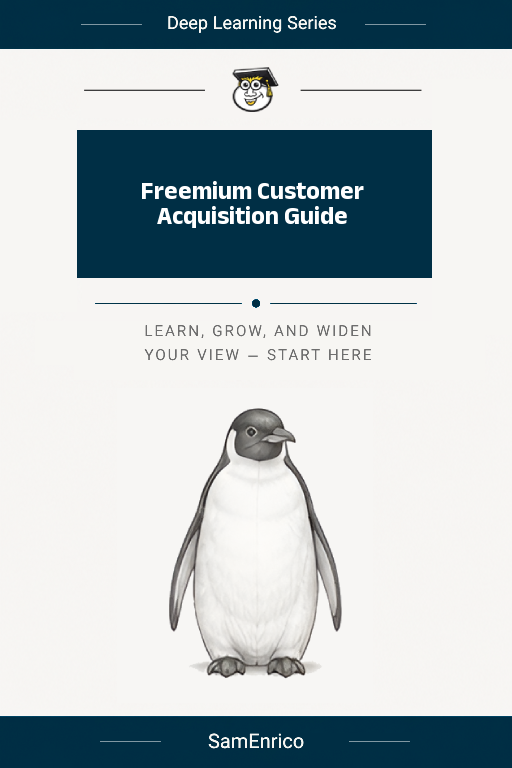
Freemium Customer Acquisition Guide eBook
Acquire freemium users via USSD codes and offline
by Pipkin Kizzy
Acquire freemium users via USSD codes and offline marketing channels.
Formats
Free sample
Chapter 1: The Fertilizer Bag...--–- In 2018, a Nigerian agtech startup called Kitovu raised 2millioninventurefunding.Theybuiltabeautifulappthathelpedfarmersidentifycropdiseases,accessweatherforecasts,andfindmarketpricesfortheirharvest.Theappwasfreetodownload.Thefreemiummodelwastextbook:freetierforbasicinformation,paidtierforpersonalizedrecommendationsanddirectbuyerconnections.Theteamran Facebookads,Googleads,andinfluencercampaigns.Theyspent2 million in venture funding. They built a beautiful app that helped farmers identify crop diseases, access weather forecasts, and find market prices for their harvest. The app was free to download. The freemium model was textbook: free tier for basic information, paid tier for personalized recommendations and direct buyer connections. The team ran Facebook ads, Google ads, and influencer campaigns.
They spent 2millioninventurefunding.Theybuiltabeautifulappthathelpedfarmersidentifycropdiseases,accessweatherforecasts,andfindmarketpricesfortheirharvest.Theappwasfreetodownload.Thefreemiummodelwastextbook:freetierforbasicinformation,paidtierforpersonalizedrecommendationsanddirectbuyerconnections.Theteamran Facebookads,Googleads,andinfluencercampaigns.Theyspent2 million. They got forty-seven downloads. Forty-seven. For two million dollars.The founders were devastated. They had followed every growth playbook from Silicon Valley.
They had optimized their app store listing. They had run A/B tests on their landing pages. They had done everything right by the standards of every best-selling marketing book on their shelves. And they had nothing to show for it except a $42,553 cost per acquisition and a board meeting that felt like a funeral.Then they tried something that every expert told them was stupid. They stopped running digital ads.
They stopped optimizing their app store page. They printed USSD codes on fertilizer bags. Not fancy QR codes. Not NFC chips. Just plain text: *123# – Dial for free farming tips.
The fertilizer bags cost 0.002eachtoprint.Theydistributed500,000bagsthroughexistingagriculturalsupplychains.Withinsixmonths,theyhad400,000activeusers.Theircostperacquisitiondroppedfrom0.002 each to print. They distributed 500,000 bags through existing agricultural supply chains. Within six months, they had 400,000 active users. Their cost per acquisition dropped from 0.002eachtoprint.Theydistributed500,000bagsthroughexistingagriculturalsupplychains.Withinsixmonths,theyhad400,000activeusers.Theircostperacquisitiondroppedfrom42,553 to $0.0025. Their freemium conversion rate from free to paid was three times higher than their original app-only funnel.This book is about that fertilizer bag.
It is about the 60% of potential users who own a phone but not a smartphone. It is about the $0.002 acquisition channel that scales better than any Facebook ad. And it is about why everything you have read about freemium customer acquisition is fundamentally broken for most of the world.The Great Smartphone Lie Let me start with a statistic that will change how you think about growth. In Nigeria, smartphone penetration is approximately 40%. In Kenya, it is 44%.
In India, it is 54%. In Indonesia, it is 48%. These are not fringe markets. These are the fastest-growing economies in the world, home to more than 2 billion people. And in every single one of them, the majority of mobile phone users – the offline majority – are on feature phones or basic devices with no app store access, unreliable data connections, and expensive internet plans.The traditional freemium playbook – the one preached by every best-selling book on your shelf – assumes a user who has a smartphone, a data plan, a credit card, and the digital literacy to navigate an app store.
That user exists. But that user is not the majority. That user is the privileged minority. And by building your freemium acquisition strategy exclusively for that minority, you are leaving 60% of your total addressable market on the table for competitors who are willing to meet users where they actually are.Consider the math. If your total addressable market is 10 million potential users in Nigeria, the smartphone-only approach targets 4 million people.
The remaining 6 million – the offline majority – are invisible to your Facebook ads, unreachable by your app store optimization, and untouchable by your retargeting campaigns. But they have phones. They have money. They have needs that your product could solve. They simply lack the device and the data plan that your acquisition funnel assumes as a baseline.This is not a niche problem.
This is not a "developing market" edge case. This is the reality of freemium customer acquisition for any company that wants to scale beyond the wealthy, urban, smartphone-owning elite. The companies that figure out how to acquire the offline majority will win the next decade of growth. The companies that double down on app store optimization will burn millions of dollars chasing the same 40% that every other competitor is already fighting over.The Zero Data Funnel The solution is what I call the Zero Data Funnel. It is a method of acquiring freemium users who have never opened an app store, entered a credit card, or clicked a Google ad.
These users interact with your service through USSD – Unstructured Supplementary Service Data – the same technology used for mobile banking, airtime recharge, and balance inquiries on every mobile phone on the planet.USSD is not new. It is not sexy. It is not the kind of technology that gets featured at Tech Crunch Disrupt. But USSD is the most underrated growth channel in the history of digital business. Here is why: every mobile phone, from a 15featurephonetoa15 feature phone to a 15featurephonetoa1,500 i Phone, supports USSD.
Every mobile network, from the most advanced 5G carrier to the most rural 2G tower, routes USSD messages. And every mobile user, from the illiterate farmer to the urban professional, has used USSD to check their airtime balance, recharge their phone, or transfer money.The Zero Data Funnel looks nothing like a traditional freemium funnel. There is no app store. There is no download. There is no "sign up with Google" button.
Instead, the user dials a shortcode – something like *123# – and a text menu appears instantly on their screen. They press 1 for the free basic plan. They press 2 to redeem a voucher. They press 3 to check their balance. They press 0 to exit.
No internet. No data plan. No credit card. No app store account. Just a phone, a dialer, and a user who needs what you are offering.The most powerful proof of the Zero Data Funnel comes from mobile money.
In Sub-Saharan Africa, USSD accounts for 9 out of 10 mobile money transactions. Services like M-Pesa, MTN Mobile Money, and Airtel Money have acquired hundreds of millions of users through USSD alone. These users check their balances, send money, pay bills, and take loans – all through text menus on feature phones. The average M-Pesa user transacts more than 300 times per year, entirely through USSD. They have never downloaded an app.
They have never visited a website. They have never clicked a Facebook ad. And yet they represent billions of dollars in transaction value.If mobile money can build a billion-dollar business on USSD, so can you. The technology is proven. The user behavior is trained.
The only thing missing is your willingness to build for the offline majority rather than complaining that they do not own i Phones.Access-Led Growth vs. Product-Led Growth The Zero Data Funnel is built on a fundamentally different growth model than the one preached by Silicon Valley. That model is called Product-Led Growth, or PLG. It says: build a great product, offer a free tier, let users discover value inside the app, and then convert them to paid through in-app upgrades. PLG works beautifully for software companies serving smartphone users in wealthy markets.
Dropbox used PLG. Zoom used PLG. Slack used PLG. But PLG assumes that the user can access your product in the first place. And for the offline majority, that assumption is false.What you need is a different model.
I call it Access-Led Growth, or ALG. ALG says: build a great product, but make the access point – not…
This is the end of the free sample. Get the eBook to keep going. Buy now
About this book
Details
- Author
- Pipkin Kizzy
- Publisher
- SamEnrico
- Language
- English
- Genre
- Non-Fiction, Business Brief
- Released
- 2026-05-30
- Pages (approx.)
- 134
- Available as
- eBook, Audiobook

Read better in the ZLOADR app
Your eBooks on your phone or tablet. Sign in with your SamEnrico account and start reading.
More by Pipkin Kizzy
 OCD Treatment Without Specialists GuidePipkin Kizzy$11.99
 Silencing Your Inner Fraud VoicePipkin Kizzy$11.99Silencing Your Inner Fraud VoicePipkin Kizzy$11.99
 Hydration and Memory SleepPipkin Kizzy$11.99
 Music Playlist For Road CalmPipkin Kizzy$11.99
 Delegation HandbookPipkin Kizzy$11.99
 Pattern Recognition JournalPipkin Kizzy$11.99
 Overcoming Sexual NarcissismPipkin Kizzy$11.99
 TM For Skin ConditionsPipkin Kizzy$11.99
 Affirmations For Boss BullyingPipkin Kizzy$11.99
 The Billionaire's Shadow: The Untold Empire of Sam Walton's HeirsPipkin Kizzy$11.99
 Whispers of the Crystal Cavern: The Lost Symphony of the DwarvesPipkin Kizzy$11.99
You may also like
 Hong Kong Handover 1997Dunn Johnnie$11.99
 Zumba For Postnatal Recovery CourseNeal Christian$11.99
 Zumba for BeginnersLadner Nikia$11.99
 YouTube Comment Mining GuideHumes Pandora$12.99
 Worry Box MeditationCarlin Rudy$11.99
 Workplace Stress MeditationNguyen Lynn$11.99
 Workplace Stress and Sleep RepairHawley Ivory$11.99
 Workplace Perfectionism CureDelaney Jeffry$11.99
 Workplace Injustice Anger GuideWallen Isabelle$11.99
 Work Addiction and Burnout LinkGreenwood Ester$11.99
 Women in Yoga and WellnessBeattie Galina$11.99
 Women in Stand Up ComedyChun Evangeline$11.99