
Non-FictionStartup GuideLean Methodology
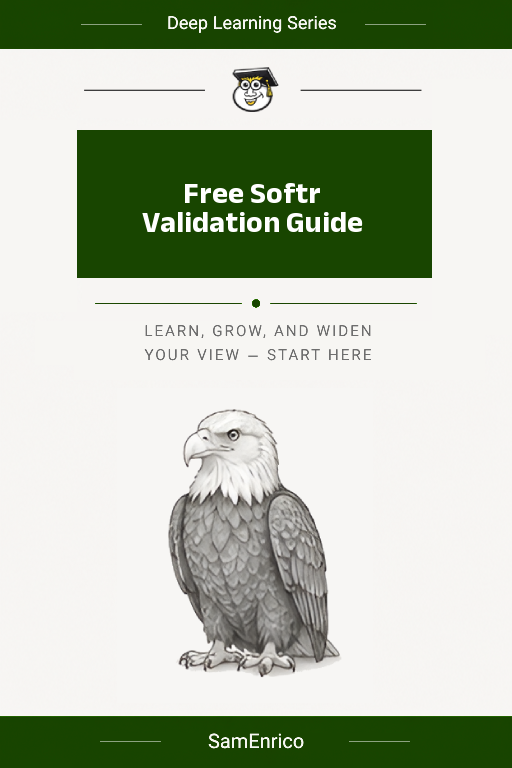
Free Softr Validation Guide eBook
Use free Softr to build Airtable-powered sites. Va
Use free Softr to build Airtable-powered sites. Validate portal and directory ideas.
Formats
Free sample
Chapter 1: The $100,000 Mistake--–- Most founders discover they have built the wrong product on the day they launch. That is a tragedy. Worse is discovering it six months later, after the credit card bills have arrived and the team has gone home. I have watched dozens of smart, hardworking people burn through their savings building directory sites, portal applications, and membership hubs that nobody wanted. Not because the idea was bad.
Because they validated nothing.The scenario repeats itself constantly. A founder wakes up with a brilliant idea for a local business directory or a niche job board or a member-only resource portal. They spend three months learning a no-code tool, six weeks designing the perfect interface, and another two weeks obsessing over font choices. They launch with a grand social media announcement. Then nothing.
A few friends sign up. Maybe one stranger. The founder blames marketing. They try Facebook ads. They try content marketing.
They try everything except the one thing that would have worked: validating before building.This book exists because that painful story is completely avoidable. The tools that created the problem—no-code platforms—have also created the solution. You can now build a fully functional, public-facing directory portal in hours, not months. You can launch a submission form, collect real user data, and test whether strangers will pay for access before you spend a single dollar on hosting, design, or development. The only missing piece is the method.Chapter 1 is that method.
It is the foundational argument for why you are about to read twelve chapters of technical instruction. Without understanding the economics and psychology of validation, the steps mean nothing. You will build something. You will launch it. You will collect data.
But without the framework in this chapter, you will not know what the data means. You will not know when to pivot, when to persist, or when to shut the whole thing down and start over.This chapter deconstructs what a portal or directory actually is from a business perspective. It maps the economics of the free Softr and Airtable tiers so you understand exactly where the limits live and why those limits are actually gifts. It introduces the "boring advantage"—the counterintuitive truth that simple, ugly, unsexy portals generate more reliable revenue than flashy social platforms. And it walks through a real case study of a freelancer who built a directory in fourteen days, collected fifty paid listings, and only upgraded to a paid plan after revenue already covered the cost.By the end of this chapter, you will have a mental model for validation that works across any niche.
You will understand why the 1,000-record limit on Softr free is not a constraint but a forcing function. You will know the difference between a performance warning (500 records, slower load times) and a hard block (1,000 records, cannot add more). And you will be ready to build your first directory with confidence that you are not wasting your time.The Anatomy of a Portal Before you build anything, you need to name the parts. A portal or directory—the two terms are used interchangeably in this book—has exactly three components. Every successful portal has these three things.
Every failed portal is missing at least one.The first component is listings. These are the atomic units of value in your directory. If you are building a coffee shop directory, each coffee shop is a listing. If you are building a freelance job board, each job posting is a listing. If you are building a member directory for a professional association, each member profile is a listing.
Listings contain the information that your users actually want. Everything else exists to help them find and interact with these listings.The second component is search and filter capabilities. A directory with one thousand listings but no way to sort or filter them is useless. Your users need to find what they are looking for quickly. They need to search by keyword, filter by category, sort by date or rating or price.
The quality of your search and filter features determines whether users return or bounce. This is not an afterthought. It is central.The third component is user profiles and accounts. This one surprises many first-time builders. Why do you need accounts for a public directory?
Because validation requires tracking behavior. You need to know who is submitting listings, who is editing listings, who is paying for premium placement. Without accounts, you have anonymous traffic. Anonymous traffic cannot tell you whether your business model works. Accounts give you the ability to ask questions, send follow-up emails, and segment users by behavior.Every portal you have ever used follows this pattern.
Craigslist has listings, search, and accounts. Airbnb has listings, search, and accounts. Linked In has profiles, search, and accounts. The specific use case changes, but the underlying architecture does not. Once you understand this, you can build any portal.
The only variables are the data fields inside each listing and the specific filters you offer.Now here is the insight that unlocks free validation. These three components map directly to features that Softr and Airtable provide for free. Listings become Airtable records displayed through Softr List blocks. Search and filters become native Softr components that require no code. User accounts become Softr Auth with magic link logins.
You are not hacking anything together. You are using the tools exactly as designed.The Economics of Free Most founders misunderstand free tiers. They see them as limited, stripped-down versions of paid products. That is the wrong mental model. Free tiers are validation engines.
They are designed to give you just enough power to prove whether your idea works before you spend money.Softr's free tier offers unlimited visitors and one thousand active records. Unlimited visitors means you can drive as much traffic as you want to your validation portal. There is no paywall at one hundred visitors or one thousand visitors. You can launch, promote aggressively, and collect data from every single person who shows up. The one thousand active record limit means you can store up to one thousand listings, user profiles, or any combination of records.
For validation, one thousand records is enormous. Most directories never reach five hundred active listings. If you hit one thousand, you have already proven demand and should be upgrading because you are generating revenue.Airtable's free tier offers twelve hundred rows and one thousand API calls per hour per base. The twelve hundred rows give you a buffer above the Softr limit. You will hit Softr's one thousand record limit before you hit Airtable's twelve hundred row limit.
The one thousand API calls per hour is the more restrictive constraint. Every time a visitor loads your directory page, Softr makes API calls to Airtable to fetch the listings. Softr caches data aggressively, but a portal with five hundred daily visitors can hit the limit. This is where the fixes from Chapter 3 come in. You can reduce auto-refresh frequency and enable pagination to stay within the limit.
Only after applying those fixes should you consider upgrading.Here is the performance distinction that matters. The hard limit is one thousand records. You cannot…
This is the end of the free sample. Get the eBook to keep going. Buy now
About this book
Details
- Author
- Gallegos Delmy
- Publisher
- SamEnrico
- Language
- English
- Genre
- Non-Fiction, Startup Guide, Lean Methodology
- Released
- 2026-06-01
- Pages (approx.)
- 136
- Available as
- eBook, Audiobook

Read better in the ZLOADR app
Your eBooks on your phone or tablet. Sign in with your SamEnrico account and start reading.
More by Gallegos Delmy
 Envy Coping SkillsGallegos Delmy$11.99
 TM for Sugar Addiction GuideGallegos Delmy$11.99
 Active Listening For BeginnersGallegos Delmy$11.99
 The Self Talk for CriticismGallegos Delmy$11.99
 The Corporate Psychopath ProfileGallegos Delmy$11.99
 The Shattered Tides: The Battle of Saldanha Bay and the Rise of the IroncladsGallegos Delmy$11.99
 Understanding TinnitusGallegos Delmy$17.99
 Mining Invoice Factoring GuideGallegos Delmy$12.99
 How to Become a Plastics FabricatorGallegos Delmy$11.99
 Skincare SpecialistGallegos Delmy$11.99
You may also like
 Hong Kong Handover 1997Dunn Johnnie$11.99
 Zumba For Postnatal Recovery CourseNeal Christian$11.99
 Zumba for BeginnersLadner Nikia$11.99
 YouTube Comment Mining GuideHumes Pandora$12.99
 Worry Box MeditationCarlin Rudy$11.99
 Workplace Stress MeditationNguyen Lynn$11.99
 Workplace Stress and Sleep RepairHawley Ivory$11.99
 Workplace Perfectionism CureDelaney Jeffry$11.99
 Workplace Injustice Anger GuideWallen Isabelle$11.99
 Work Addiction and Burnout LinkGreenwood Ester$11.99
 Women in Yoga and WellnessBeattie Galina$11.99
 Women in Stand Up ComedyChun Evangeline$11.99