
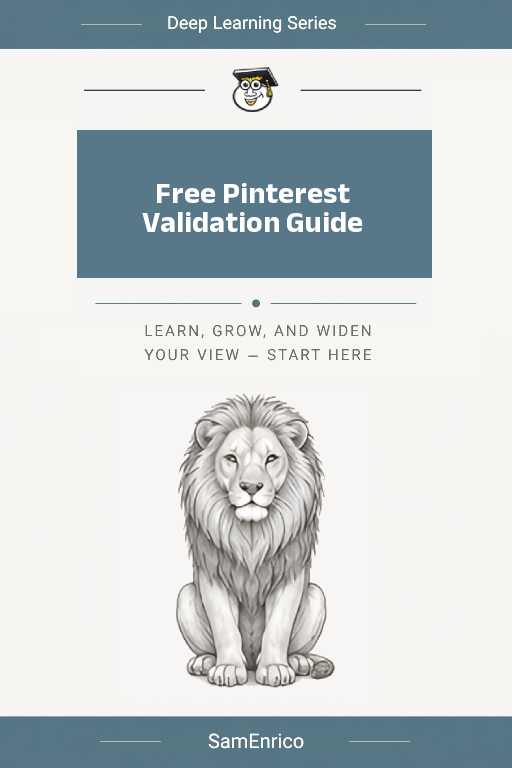
Non-FictionStartup GuideLean Methodology
Free Pinterest Validation Guide eBook
Use free Pinterest pins to validate demand. Measur
by Dortch Keith
Use free Pinterest pins to validate demand. Measure saves and clicks.
Formats
Free sample
Chapter 1: The Prediction Machine--–- Most entrepreneurs discover they have built the wrong product in one of two ways. The first is slow and expensive: they spend six months developing a course, an app, or a physical product, launch it to crickets, and quietly wonder where they went wrong. The second is fast and humiliating: they run a Facebook ad to a landing page, watch a hundred people click and zero people buy, and realize their brilliant idea was only brilliant to them. Both paths share the same root problem. They asked the market nothing before demanding everything.This book exists because there is a third way.
It costs nothing. It takes three days. And it uses a platform that most entrepreneurs dismiss as a place for wedding planning and cookie recipes. That platform is Pinterest, and it is the most underrated demand-validation tool on the planet.The argument I am about to make will sound, at first, like exaggeration. I assure you it is not.
Pinterest is not a social media platform. It is a visual search engine where users explicitly declare their future intentions. When someone types "how to propagate a monstera" into Google, they are often confused or stuck. When the same person types "monstera propagation station ideas" into Pinterest, they are planning a purchase. They are gathering options.
They are saving ideas for later. That "saving for later" is the most commercially valuable click on the internet, and almost no one is using it to validate product demand before building.I have watched solo creators spend three thousand dollars on a Shopify store, two thousand on inventory, and five hundred on ads only to discover that exactly zero people wanted their "innovative" collapsible water bottle. I have also watched a different kind of creator spend zero dollars, publish five simple Pins over seventy-two hours, and learn that eight thousand people would save a "quiet luxury capsule wardrobe checklist." That creator built a seven-dollar PDF and made fourteen thousand dollars in ninety days. The only difference was the order of operations. The first group built first and asked questions later.
The second group asked questions first, using free Pinterest Pins as their survey.This chapter will teach you why Pinterest is a prediction machine, why most entrepreneurs ignore it, and how a single Pin correctly forecasted a global fashion trend six months before anyone else noticed.The $100,000 Mistake Most Entrepreneurs Make Let me describe a scene that happens somewhere in the world every single day. A well-intentioned entrepreneur wakes up with what feels like a brilliant idea. They notice that their friends struggle with meal planning, or they realize that no one has made a good organizer for the junk drawer, or they read a tweet about a "gap in the market." Excited, they open Canva, design a logo, buy a domain, set up a Shopify store, order samples from a supplier on Alibaba, and launch two weeks later with a hundred dollars in Facebook ads.The results are almost always the same. A few clicks. Zero sales.
A slow, sinking feeling that they have wasted time and money.The problem is not the idea. The problem is not even the execution. The problem is the sequence. They built a solution before validating that the problem was real, urgent, and widespread. They mistook their own excitement for market demand.
And they paid the price.Traditional market research methods are either too slow, too expensive, or too biased. Surveys ask people what they think they will do, which is famously different from what they actually do. Focus groups cost thousands of dollars and attract professional participants who will tell you anything for a free lunch. Google Keyword Planner shows you what people are searching for right now, but by the time a keyword is popular on Google, the trend has often peaked.What entrepreneurs need is a way to observe real behavior, not stated intent. They need a way to see what people are doing—what they are saving, what they are clicking, what they are planning for next month or next season.
And they need to see it for free, without running ads, without building a website, and without followers.That is exactly what Pinterest provides.Why Pinterest is a Prediction Machine, Not a Social Network The most important distinction you will read in this entire book is this: Pinterest is not social media. It is a visual search engine.On Instagram, users scroll passively. They are not looking for anything specific. They are killing time. The algorithm feeds them content based on what their friends liked, not necessarily what they want.
On Facebook, users are distracted by drama, news, and photos of their cousin's baby. On Tik Tok, users are chasing dopamine, not solutions.On Pinterest, users arrive with intent. They type specific phrases into the search bar. They browse by category. They are actively looking for ideas, instructions, products, and inspiration.
And crucially, they save what they find to boards with names like "Dream Wedding," "Kitchen Remodel 2026," "Gift Ideas for Dad," and "Summer Capsule Wardrobe."These board names are purchase declarations. When someone saves a Pin to a board called "Shopping List," they are telling Pinterest—and anyone paying attention—that they intend to buy something similar in the near future. When they save to "DIY Home Projects," they are telling you they plan to tackle that project themselves, which means they might buy tools, materials, or a detailed guide.This is predictive data. And it is free.Google Trends is reactive. It tells you what people are searching for after a need has already become urgent.
Pinterest is predictive. It tells you what people are planning to need. The gap between the two is typically three to six months. That gap is where fortunes are made.Let me give you a concrete example. In August 2022, a digital marketer named Sarah noticed that her Pinterest search for "quiet luxury outfit ideas" returned hundreds of fresh Pins with thousands of Saves each.
She had never heard the term "quiet luxury" before. Google Trends showed it as flat—virtually no search volume. But Pinterest users were already planning their fall and winter wardrobes around neutral tones, high-quality fabrics, and understated elegance.Sarah created a single Pin: "The Ultimate Quiet Luxury Capsule Wardrobe (Neutral Tones Only)." She designed it in Canva in twenty minutes. She published it to her Ghost Account (which you will learn to build in Chapter 2) with no website link attached. Within thirty days, that Pin had received fifteen thousand Saves.She had validated demand.
She had not built a product yet.Over the next thirty days, she created a twelve-page spreadsheet workbook: "The Quiet Luxury Capsule Wardrobe Planner." It included a shopping list template, a color palette guide, a budget tracker, and a thirty-day outfit planner. She sold it for twenty-nine dollars. She used the same Pin (now with a link to her waitlist) to drive traffic. She made over forty thousand dollars in the first quarter of 2023.By the time "quiet luxury" became a trending topic on Google in February 2023, Sarah had already captured the early adopters. The mainstream trend was her exit…
This is the end of the free sample. Get the eBook to keep going. Buy now
About this book
Details
- Author
- Dortch Keith
- Publisher
- SamEnrico
- Language
- English
- Genre
- Non-Fiction, Startup Guide, Lean Methodology
- Released
- 2026-06-01
- Pages (approx.)
- 123
- Available as
- eBook, Audiobook

Read better in the ZLOADR app
Your eBooks on your phone or tablet. Sign in with your SamEnrico account and start reading.
More by Dortch Keith
 Envy Research ReviewDortch Keith$11.99
 The Pet Loss Rainbow Bridge GuideDortch Keith$11.99
 Claims Examiner BurnoutDortch Keith$11.99
 TM for Exam PerformanceDortch Keith$11.99
 The Affirmation Audio GuideDortch Keith$11.99
 Lancelot and Elaine: The Swan Knight's Forbidden VowsDortch Keith$11.99
 Understanding Thyroid Hormone Plasma Membrane Transport DefectDortch Keith$17.99
 Chile Invoice Factoring GuideDortch Keith$12.99
 Security Software EngineerDortch Keith$11.99
 How to Become a Lease-out WorkerDortch Keith$11.99
You may also like
 Hong Kong Handover 1997Dunn Johnnie$11.99
 Zumba For Postnatal Recovery CourseNeal Christian$11.99
 Zumba for BeginnersLadner Nikia$11.99
 YouTube Comment Mining GuideHumes Pandora$12.99
 Worry Box MeditationCarlin Rudy$11.99
 Workplace Stress MeditationNguyen Lynn$11.99
 Workplace Stress and Sleep RepairHawley Ivory$11.99
 Workplace Perfectionism CureDelaney Jeffry$11.99
 Workplace Injustice Anger GuideWallen Isabelle$11.99
 Work Addiction and Burnout LinkGreenwood Ester$11.99
 Women in Yoga and WellnessBeattie Galina$11.99
 Women in Stand Up ComedyChun Evangeline$11.99