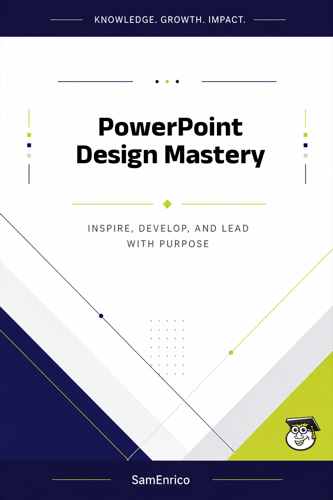
About this book
Free sample
Chapter 1: The Invisible Saboteur--If you open a Figma file and feel a flicker of embarrassment before anyone even comments on the design itself, you already know what this chapter is about. That flicker is not about your taste in color palettes or your mastery of typography. It is about the quiet, creeping chaos of your layers panel, the inconsistent grid that betrays you on every breakpoint, and the sinking realization that your beautiful work is trapped inside a file so disorganized that no recruiter, client, or collaborator would ever have the patience to find it.The messy Figma file is the invisible saboteur of great design. It does not announce itself. It does not generate error messages or crash your computer.
Instead, it works slowly, insidiously, convincing viewers that your thinking is as scattered as your layers, your process as chaotic as your page names, and your professionalism as questionable as your unnamed frames. And the cruelest part? Most designers never realize the sabotage is happening. They polish their pixels, perfect their prototypes, and then wonder why their showcase feels flat, why recruiters click away, why clients seem confused.This chapter is your intervention. Before we draw a single vector or animate a single micro-interaction, we are going to fix the foundation.
By the time you finish these pages, you will understand the single most important distinction in showcase design: the difference between a Development File and a Presentation File. You will learn to configure a blank canvas so that every layer, every page, and every grid serves your story rather than fighting against it. And you will never again open a Figma file with that flicker of embarrassment.The Two-File Lie You Have Been Told Most designers operate under a well-intentioned but disastrous assumption: the file you build in is the file you show off in. This is a lie, and it is costing you opportunities.Think about how you work. You start with exploration—wild colors, experimental layouts, ten versions of the same button.
Your layers accumulate names like "Rectangle 47," "Group 132," and the ever-mysterious "Frame 1." You duplicate components while testing variations…
This is the end of the free sample. Get the eBook to keep going. Buy now
Contents
- Chapter 1
- Chapter 2
- Chapter 3
- Chapter 4
- Chapter 5
- Chapter 6
- Chapter 7
- Chapter 8
- Chapter 9
- Chapter 10
- Chapter 11
- Chapter 12
Details
- Author
- Conley Candis
- Publisher
- SamEnrico
- Language
- English
- Genre
- Non-Fiction, Self-Help / Design
- Released
- 2026-06-09
- Pages (approx.)
- 121
- Available as
- eBook, Audiobook

Read better in the ZLOADR app
Your eBooks on your phone or tablet. Sign in with your SamEnrico account and start reading.
More by Conley Candis
 The Bike Shop FixerConley Candis$11.99
 Revitalizing Neighborhood GuideConley Candis$11.99
 Mindfulness for Musicians GuideConley Candis$11.99
 Mindful Breathing for Stressed ParentsConley Candis$11.99
 Design Thinking For ConsultingConley Candis$11.99
 C Corp Accounting GuideConley Candis$11.99
 CBT For DepressionConley Candis$11.99
 The Maestro's Cure: Beethoven and the Symphony of SurvivalConley Candis$11.99
 The Red Dawn of Khalkhin Gol: Zhukov vs. Japan's Elite (1939)Conley Candis$11.99
 Mastering The Art of Nova ScrimiaConley Candis$11.99
 How to Produce Surgical Needles and SuturesConley Candis$11.99
 A Collector's Handbook to the Fiat 124 Abarth RallyeConley Candis$11.99