
Non-FictionSelf-HelpResilience
Failure Reframing for Self Doubt eBook
Teaches readers to reinterpret mistakes as learnin
Teaches readers to reinterpret mistakes as learning opportunities rather than evidence of fraudulence.
Formats
Free sample
Chapter 1: The Success Paradox...--–- The email arrived at 11:47 PM on a Tuesday. Sarah, a 34-year-old senior director at a tech firm, had just closed her third major deal of the quarter. Her team had celebrated. Her boss had sent public congratulations. Her bonus was now guaranteed.
And yet, sitting alone in her home office, she typed into her journal: “I feel like they’re going to find out any day now. I don’t actually know what I’m doing. This was all luck.”Sarah is not an imposter. She is not a fraud. She is not secretly incompetent.
She is, by every objective measure, a high performer. And she is suffering from what this book will call The Success Paradox: the more successful you become, the more likely you are to feel like a fraud.This chapter will dismantle the psychological machinery that creates this paradox. You will learn why high achievers systematically misattribute their wins to luck and their losses to incompetence. You will be introduced to The Cycle of Secrecy—the corrosive belief that you are the only one struggling while everyone else has it figured out. And you will begin the process of separating the feeling of fraudulence from the fact of competence.But first, we must confront an uncomfortable truth: most books about impostor syndrome try to “cure” you by boosting your confidence.
They tell you to “believe in yourself” and “fake it till you make it.” This approach fails because it denies the reality of self-doubt. You cannot affirm your way out of a pattern recognition problem.Self-doubt, as you will learn in this chapter, is not evidence of inadequacy. It is evidence of something else entirely—something that, once understood, becomes your greatest asset.The Anatomy of the Success Paradox Let us begin with a simple question: who is more likely to experience impostor syndrome—a struggling student or a tenured professor?If you answered the student, you would be wrong. Decades of research, beginning with the pioneering work of Dr. Pauline Clance and Dr.
Suzanne Imes in 1978, have shown that impostor syndrome disproportionately affects high achievers. The very people who have the most external evidence of their competence are the ones most likely to feel like frauds.Why? Because high achievers have what psychologists call attributional asymmetry. When they succeed, they attribute the outcome to external, unstable factors: luck, timing, help from others, or the task being “too easy.” When they fail, they attribute the outcome to internal, stable factors: lack of intelligence, incompetence, or not belonging in the first place.Consider the following data points drawn from studies of medical students, Fortune 500 executives, and academic researchers:70% of people will experience impostor phenomenon at least once in their careers, according to a meta-analysis published in the International Journal of Behavioral Science.The rates are highest among first-generation professionals, underrepresented minorities, and high-achieving women—but no group is immune.Impostor syndrome is positively correlated with intelligence and educational attainment. The smarter you are, the more likely you are to doubt yourself.This is the Success Paradox in its pure form: objective success and subjective self-doubt are not opposites; they are often companions.Let us return to Sarah.
When I asked her to list the factors that led to her three major deals, she said: “The market was favorable. My team did the heavy lifting. My boss gave me a warm lead. I got lucky with the timing.”When I asked her to list the factors that could have caused her to fail, she said: “If I had messed up the presentation, it would have been because I didn’t prepare enough. If I had lost the deal, it would have been because I’m not actually good at sales.
If my team had turned on me, it would have been because I’m not a real leader.”Notice the asymmetry. Success belongs to the world. Failure belongs to her.This asymmetry is not a character flaw. It is a learned cognitive pattern, reinforced by cultural messages about what “talent” looks like and what “effort” means. And like any learned pattern, it can be unlearned—but only after you recognize it.The Myth of the Natural Genius Why do high achievers develop attributional asymmetry?
The answer lies in a toxic cultural myth that this book will call The Natural Genius Fallacy.The Natural Genius Fallacy is the belief that true competence looks effortless. According to this myth, if you are genuinely good at something, it should come naturally. You should not have to struggle, ask for help, or practice extensively. The moment you encounter difficulty, the myth whispers, you have revealed yourself as a fraud.This myth is reinforced everywhere. Think about the cultural narratives surrounding Steve Jobs, Albert Einstein, or Mozart.
We tell stories of sudden inspiration, innate talent, and solitary genius. We rarely tell stories of thousands of hours of invisible struggle, public failure, and iterative improvement—because those stories are less glamorous.The problem is that the Natural Genius Fallacy creates a double bind for high achievers. If you succeed easily, you attribute it to the task being too easy (and therefore meaningless). If you struggle, you take it as evidence of fraudulence. There is no scenario in which you can feel genuinely competent.Dr.
Carol Dweck’s research on mindset, which we will explore more deeply in Chapter 2, offers a crucial insight here. People who hold a fixed mindset believe that intelligence and talent are static traits. They seek tasks that confirm their innate ability and avoid tasks that might reveal limitations. People who hold a growth mindset believe that abilities can be developed through effort and learning. They seek challenges as opportunities to grow.The Natural Genius Fallacy is a fixed mindset trap.
It tells you that if you have to work hard, you are not a natural. But the evidence from every domain of expertise tells a different story.Consider the research of Dr. Anders Ericsson, whose work on “deliberate practice” inspired the so-called 10,000-hour rule. Ericsson studied violinists at Berlin’s Academy of Music. The faculty had identified which students had the potential for world-class careers.
Those students had not practiced less than their peers. They had practiced more—much more. By age 20, the elite performers had accumulated an average of 10,000 hours of practice, compared to 4,000 hours for the less accomplished students.The natural geniuses were not the ones who found it easy. They were the ones who tolerated more difficulty, for longer.This chapter’s first reframe, then, is this: Difficulty is not a red flag. It is a green light.
When you encounter struggle, you are not revealing fraudulence. You are entering the zone where growth happens.The Cycle of Secrecy: How Isolation Feeds Doubt If the Natural Genius Fallacy were merely an individual belief, it would be manageable. But it is amplified by a social dynamic that this book will call The Cycle of Secrecy.The Cycle of Secrecy works like this:You experience self-doubt or struggle privately.You observe your colleagues, who appear calm and competent.You conclude that you are the only one struggling.You hide your doubt to avoid exposure.Your colleagues, who are hiding their…
This is the end of the free sample. Get the eBook to keep going. Buy now
About this book
Details
- Author
- Barfield Kristal
- Publisher
- SamEnrico
- Language
- English
- Genre
- Non-Fiction, Self-Help, Resilience
- Released
- 2026-06-06
- Pages (approx.)
- 150
- Available as
- eBook, Audiobook

Read better in the ZLOADR app
Your eBooks on your phone or tablet. Sign in with your SamEnrico account and start reading.
More by Barfield Kristal
 TM Addiction RecoveryBarfield Kristal$11.99
 Emotional Intelligence for WomenBarfield Kristal$11.99
 Async Internal Wiki Governance BriefBarfield Kristal$11.99
 MAT in Prison Settings GuideBarfield Kristal$11.99
 The Forgotten Fossils of the Silk Road: Uncovering Asia's Hidden AncestorsBarfield Kristal$11.99
 The Lighthouse Keeper's Last Stand: The Untold Story of the 1977 Fastnet StormBarfield Kristal$11.99
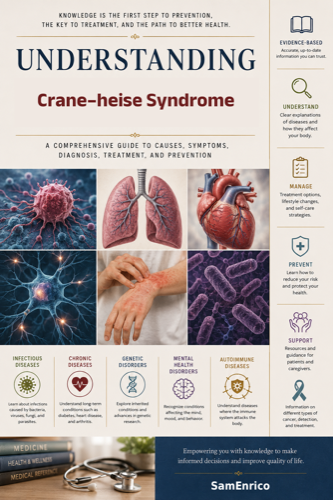 Understanding Crane–heise SyndromeBarfield Kristal$17.99
 Customer Loyalty Free GuideBarfield Kristal$12.99
 Cotenancy Clause COVID GuideBarfield Kristal$12.99
 Ergonomic Assessment (Basic Workstation)Barfield Kristal$11.99
 How to Start a Breading Rolls or Mills Business (Beginners Guide)Barfield Kristal$11.99
You may also like
 Hong Kong Handover 1997Dunn Johnnie$11.99
 Zumba For Postnatal Recovery CourseNeal Christian$11.99
 Zumba for BeginnersLadner Nikia$11.99
 YouTube Comment Mining GuideHumes Pandora$12.99
 Worry Box MeditationCarlin Rudy$11.99
 Workplace Stress MeditationNguyen Lynn$11.99
 Workplace Stress and Sleep RepairHawley Ivory$11.99
 Workplace Perfectionism CureDelaney Jeffry$11.99
 Workplace Injustice Anger GuideWallen Isabelle$11.99
 Work Addiction and Burnout LinkGreenwood Ester$11.99
 Women in Yoga and WellnessBeattie Galina$11.99
 Women in Stand Up ComedyChun Evangeline$11.99