
Non-FictionInformativeEducational
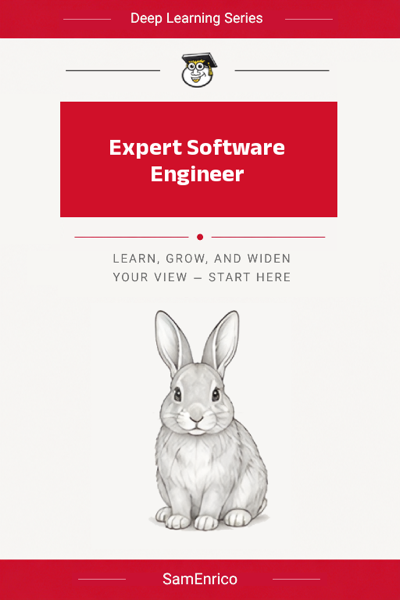
Expert Software Engineer eBook
A Coursebook on Expert Software Engineer
by Gagne Minna
A Coursebook on Expert Software Engineer
Formats
Free sample
Chapter 1: You Break It, You Own It–- The notification arrived at 11:47 PM on a Tuesday. Marcus was halfway through a bowl of cereal, still in his work-from-home hoodie, when his phone buzzed with the distinctive alarm of Pager Duty. He nearly choked. Not because it was late—he was used to late—but because he recognized the service name. Payments.
The company’s most critical, most regulated, most terrifying system had just crashed.Marcus had been a software engineer for four years. He could solve any Leet Code hard in under twenty minutes. He knew three programming languages fluently and could fake his way through two more. His Git Hub graph was a solid emerald green. By every measurable metric, he was a successful engineer.But as he frantically ssh’d into the production server, his hands shaking, he realized something terrible: he had no idea what was wrong.
He had written the payments module six months ago. It was clever. It used a Singleton for the transaction manager (so there would be exactly one instance, which seemed smart at the time). It had a factory for payment processors. It was, he had thought, a masterpiece of object-oriented design.Now it was failing, and he didn’t know why.The logs showed a cascade of null pointer exceptions, but the line numbers didn’t match his current codebase.
He had deployed a “quick fix” earlier that day—a one-line change to the retry logic—and he had done it without running the full test suite because the suite took twenty-seven minutes and his manager was asking for status updates.At 1:15 AM, Marcus found the culprit. A duplicated validation rule. He had written the same regular expression in three different places: one in the API gateway, one in the transaction processor, and one in the notification service. He had updated two of them. The third one, buried in a utility class he forgot existed, was still using the old pattern.
It rejected valid payments. Customers saw “Transaction Declined.” Support tickets flooded in. The on-call rotation, which included Marcus, had been paged four times before he even woke up.By the time he fixed it, rolled back, and verified the system, it was 4:30 AM. He had to be in a sprint planning meeting at 9.Marcus closed his laptop and stared at the ceiling. He was good at coding.
But he was not, he realized, an expert. And he had no idea how to become one.The Hidden Cost of "It Works"The story above is fictional, but it happens thousands of times every day in software companies around the world. The engineer is not lazy or stupid. They are often talented, hardworking, and genuinely invested in shipping good code. But they are missing something fundamental: a shift in mindset from “does it work right now?” to “will it work, and will my team be able to maintain it, six months from now?”This chapter is about that shift.
It is not about syntax, algorithms, or data structures. You already know those things, or you can learn them from a thousand other books. This chapter is about attitude—the baseline philosophy that separates a journeyman coder from an expert software engineer.The expert’s mindset can be summarized in a single sentence, which will serve as the thesis for this entire book:“Every line of code you write is a liability until proven otherwise.”This sounds harsh, even cynical. But it is not. It is pragmatic.
It means that code is not an asset to be hoarded. It is a cost to be managed. Every line of code must justify its existence by being clear, testable, replaceable, and—most importantly—necessary.In this chapter, we will explore three principles that form the foundation of the expert mindset. These principles come from decades of accumulated wisdom in the software industry, synthesized from books like The Pragmatic Programmer, Clean Code, and Working Effectively with Legacy Code. They are:The DRY Principle (Don’t Repeat Yourself) – Knowledge must have a single, unambiguous representation.Orthogonality – Changes to one component should not cause rippling side effects.Tracer Bullets – Validate assumptions with a working end-to-end skeleton before adding details.But we will also learn the most important skill of all: context-awareness.
Knowing when to violate these principles is just as important as knowing when to apply them.Let us begin.Principle 1: The DRY Principle (Don't Repeat Yourself)What It Is The DRY principle, popularized by Andy Hunt and Dave Thomas in The Pragmatic Programmer, states: “Every piece of knowledge must have a single, unambiguous, authoritative representation within a system.”In plain English: do not write the same logic twice. If you find yourself copying and pasting code, or writing the same validation rule in three different places, or re-implementing the same algorithm in two different modules, you are violating DRY. And you are creating a future bug.The story of Marcus and the payments system is a classic DRY violation. He had a validation rule—a regular expression that checked whether a credit card number was formatted correctly—duplicated across three services. When the rule changed (because the payment processor updated its requirements), he updated two instances and missed the third.
The system became inconsistent. Payments failed.If Marcus had extracted that validation rule into a single shared library, or better yet, into a dedicated validation service, the update would have happened in one place. The bug would never have existed.Why Engineers Violate DRY (Even When They Know Better)There are five common reasons engineers repeat themselves, and recognizing them is the first step to stopping:1. Time pressure. “I know this is duplicated, but I just need to ship this feature by Friday.
I’ll refactor it later.” (Spoiler: later never comes.)2. Unfamiliarity with the codebase. “I don’t know if there’s already a function that does this, and I’m afraid to break something if I try to find it.”3. Performance superstition. “Calling a function has overhead.
I’ll just inline the logic for speed.” (This is almost never the bottleneck.)4. Fear of abstraction. “If I extract this into a shared function, then changes to that function will affect all callers. What if I break something?” (This is a legitimate concern, which is why tests exist.)5. Simple laziness or oversight.
“Copy-paste is faster than thinking about the right abstraction.”The expert engineer recognizes these traps and actively works against them. The first step is the “Rule of Three,” a heuristic introduced in the original DRY literature: do something once, it is fine. Do it twice, make a note of the duplication. Do it a third time, refactor it into a shared abstraction.The Expert Technique: The Abstraction Audit Before you write a new function or copy a line of code, ask yourself three questions:Has this logic been written elsewhere in the codebase? Use your IDE’s search features.
Look for similar patterns, not just identical strings.If this logic changes in the future, how many places will need to change? If the answer is more than one, you need a single source of truth.Does the duplication serve a purpose? Sometimes duplication is intentional. For example…
This is the end of the free sample. Get the eBook to keep going. Buy now
About this book
Details
- Author
- Gagne Minna
- Publisher
- SamEnrico
- Language
- English
- Genre
- Non-Fiction, Informative, Educational
- Released
- 2026-06-02
- Pages (approx.)
- 132
- Available as
- eBook, Audiobook

Read better in the ZLOADR app
Your eBooks on your phone or tablet. Sign in with your SamEnrico account and start reading.
More by Gagne Minna
 Adaptor Gestures RecognitionGagne Minna$11.99
 Chewing Gum Wrapper AdsGagne Minna$11.99
 Gacy MDL DiagnosisGagne Minna$11.99
 Cold Turkey Nicotine WithdrawalGagne Minna$11.99
 The Sun King's Grand Design: Versailles and the Birth of Modern FranceGagne Minna$11.99
 AI Quality Assurance for TranslationGagne Minna$12.99
 Learn to Play the SornaGagne Minna$11.99
 How to Start a Carpet Shampoo Appliance (not Domestic Electric) Business (Beginners Guide)Gagne Minna$11.99
You may also like
 Hong Kong Handover 1997Dunn Johnnie$11.99
 Zumba For Postnatal Recovery CourseNeal Christian$11.99
 Zumba for BeginnersLadner Nikia$11.99
 YouTube Comment Mining GuideHumes Pandora$12.99
 Worry Box MeditationCarlin Rudy$11.99
 Workplace Stress MeditationNguyen Lynn$11.99
 Workplace Stress and Sleep RepairHawley Ivory$11.99
 Workplace Perfectionism CureDelaney Jeffry$11.99
 Workplace Injustice Anger GuideWallen Isabelle$11.99
 Work Addiction and Burnout LinkGreenwood Ester$11.99
 Women in Yoga and WellnessBeattie Galina$11.99
 Women in Stand Up ComedyChun Evangeline$11.99