
Non-FictionHealth & WellnessAthletic Health
Exercise Induced Menstrual Changes eBook
Manage heavy training's effect on cycles, identify
Manage heavy training's effect on cycles, identify RED-S, and adjust intensity to restore periods.
Formats
Free sample
Chapter 1: The Metabolic Ledger...--–- Every morning before sunrise, Sarah laced up her running shoes. She was twenty-four years old, 8 percent body fat, and logging seventy miles a week. Her coach called her “disciplined.” Her teammates called her “inspiring.” Her sports dietitian—the third one in two years—said she was “the cleanest eater on the team.” Sarah hadn’t had a period in eleven months, and she told herself this was a victory. She was leaner, faster, and more controlled than ever. Then she stepped off a curb.
Just a curb. Six inches. And her tibia snapped like a dry twig.The orthopedic surgeon said, “Your bones look like a sixty-five-year-old’s.” The endocrinologist said, “Your hormones are postmenopausal.” And the sports psychologist said something Sarah would never forget: “You don’t have an eating disorder. You have a disorder of excellence.”This book is not for people who want to stop training. It is for people who want to stop breaking.Sarah’s story is not rare.
It is not extreme. It is the quiet epidemic sweeping through high school cross-country teams, collegiate rowing clubs, Cross Fit boxes, and recreational marathon training groups. Thousands of female athletes lose their periods every year and are told—by coaches, by parents, by well-meaning internet forums—that it is “normal” for serious athletes. It is not normal. It is a warning light.
And like most warning lights, it illuminates long before the engine seizes.To understand why Sarah’s body stopped menstruating—and why that missing period was connected to a bone that snapped from a six-inch curb—we must first understand a concept that almost no athlete is taught: the metabolic cost of being female.The Price of Hormones Every month, if she is healthy, a female athlete’s body performs an extraordinary metabolic feat. It builds a uterine lining. It matures a follicle. It releases an egg. It produces a surge of progesterone to support a potential pregnancy.
And when no pregnancy occurs, it sheds that lining and starts the process all over again. This cycle is not free. It has a calorie price tag.Producing estrogen and progesterone requires raw materials: cholesterol, amino acids, and a steady supply of energy. Synthesizing these hormones and maintaining a monthly ovulatory cycle burns roughly two hundred to four hundred additional calories per day above basal metabolic rate, depending on the phase of the cycle. That is the equivalent of an extra meal every single day—just to run a reproductive system that most athletes are not even trying to use for reproduction.Think of it this way.
Your body operates a hierarchy of needs. At the very top—the non-negotiable, life-sustaining functions—are your brain and your heart. Below that comes muscle contraction, because if you cannot move, you cannot find food or escape danger. Below that comes immune function, because an infection can kill you. Below that comes bone remodeling, because broken bones take you out of the survival game.
And at the very bottom of the hierarchy—the first to be sacrificed when times are lean—is reproduction.Your body does not know you are training for a marathon. It does not know you have a race next month. It knows only that you are expending tremendous amounts of energy and taking in what may or may not be enough fuel. And when it detects a mismatch—when energy availability drops below a certain threshold—it makes a cold, calculated decision: shut down the most expensive, least immediately necessary system first.That system is your menstrual cycle.The Three Zones of Energy Availability Sports scientists have a term for this mismatch. They call it Energy Availability, or EA, and they measure it with a simple formula:EA = (Energy Intake – Exercise Energy Expenditure) ÷ Kilograms of Fat-Free Mass Let us translate that from math into English.
Energy Availability is the number of calories left over for your body to run all of its basic functions—breathing, digesting, repairing cells, building bone, making hormones—after you have subtracted the calories you burned during exercise. If you eat 2,500 calories in a day and burn 800 calories running, you have 1,700 calories remaining for everything else. Divide that by your fat-free mass (your body weight minus your fat stores), and you get your EA.Based on decades of research, including the International Olympic Committee’s RED-S consensus statements, we can divide Energy Availability into three distinct zones.The Red Zone is anything below 30 calories per kilogram of fat-free mass per day. In this zone, your body believes it is starving. It shuts down reproduction entirely.
Amenorrhea—the complete absence of menstruation—is the expected outcome. Bone density begins to drop at alarming rates. Immune function deteriorates. Muscle repair slows to a crawl. This is where Sarah lived for eleven months.
She did not know it. Her coach did not know it. But her body knew.The Yellow Zone is between 30 and 45 calories per kilogram of fat-free mass per day. This is the gray zone that most athletes never hear about. In the Yellow Zone, you may still get a period—but it will be a compromised period.
You might have luteal phase defects, where the second half of your cycle is too short to support progesterone production. You might have anovulatory cycles, where you bleed but do not actually ovulate. You might have a short follicular phase, where high cortisol suppresses the hormones needed to mature an egg. You might feel “fine” most days, but you will catch every cold that goes around the team. Your nails may become brittle.
Your hands and feet may run cold. You may feel a persistent flatness or pessimism in training that you cannot quite explain.The Green Zone is above 45 calories per kilogram of fat-free mass per day. This is the zone of cycle health. In this zone, your body has enough energy to run all of its systems—including the expensive reproductive system. You ovulate regularly.
You build bone density. You repair muscle efficiently. You wake up feeling rested. Your mood is stable. And paradoxically, you perform better than you ever did in the Red or Yellow Zones, because your hormones are working for you rather than against you.Most competitive female athletes reading this book will discover that they are living in the Yellow Zone.
Some will discover they have been in the Red Zone for months or years. Almost none will have heard of Energy Availability before. That is not your failure. It is the failure of a sports system that has historically been designed by and for male bodies.Why Male Physiology Misled Us For decades, sports nutrition was built on research conducted almost exclusively on young men. The assumption—usually unstated but always present—was that female bodies were simply smaller versions of male bodies, with a few inconvenient hormonal fluctuations that could be ignored or suppressed with birth control pills.That assumption was catastrophically wrong.Male bodies produce testosterone, which is synthesized from cholesterol but requires relatively little ongoing caloric investment to maintain.
Male bodies do not ovulate. They do not build and shed a uterine lining every month. They do not experience…
This is the end of the free sample. Get the eBook to keep going. Buy now
About this book
Details
- Author
- Valencia Marnie
- Publisher
- SamEnrico
- Language
- English
- Genre
- Non-Fiction, Health & Wellness, Athletic Health
- Released
- 2026-06-07
- Pages (approx.)
- 126
- Available as
- eBook, Audiobook

Read better in the ZLOADR app
Your eBooks on your phone or tablet. Sign in with your SamEnrico account and start reading.
More by Valencia Marnie
 Masturbation Compulsion Recovery GuideValencia Marnie$11.99
 Remote Decision Making ProcessValencia Marnie$11.99
 The MBSR for Cancer SupportValencia Marnie$11.99
 The Unseen Brushstrokes: How Yayoi Kusama Defied the Art World with Dots and InfinityValencia Marnie$11.99
 Dream Rehearsal for Insomnia PTSDValencia Marnie$11.99
 Pixel Pioneers: The Untold Battle of the 8-Bit RevolutionValencia Marnie$11.99
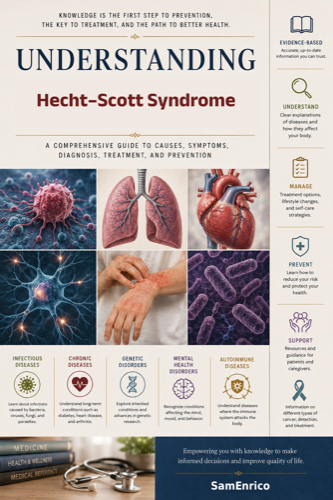 Understanding Hecht–Scott SyndromeValencia Marnie$17.99
 Student Visa Success For Dubai GuideValencia Marnie$12.99
 Africa Renewable Energy OutlookValencia Marnie$12.99
 CuratorValencia Marnie$11.99
 How to Start a Ceiling Coverings Made of Plastic Business (Beginners Guide)Valencia Marnie$11.99
You may also like
 Hong Kong Handover 1997Dunn Johnnie$11.99
 Zumba For Postnatal Recovery CourseNeal Christian$11.99
 Zumba for BeginnersLadner Nikia$11.99
 YouTube Comment Mining GuideHumes Pandora$12.99
 Worry Box MeditationCarlin Rudy$11.99
 Workplace Stress MeditationNguyen Lynn$11.99
 Workplace Stress and Sleep RepairHawley Ivory$11.99
 Workplace Perfectionism CureDelaney Jeffry$11.99
 Workplace Injustice Anger GuideWallen Isabelle$11.99
 Work Addiction and Burnout LinkGreenwood Ester$11.99
 Women in Yoga and WellnessBeattie Galina$11.99
 Women in Stand Up ComedyChun Evangeline$11.99