
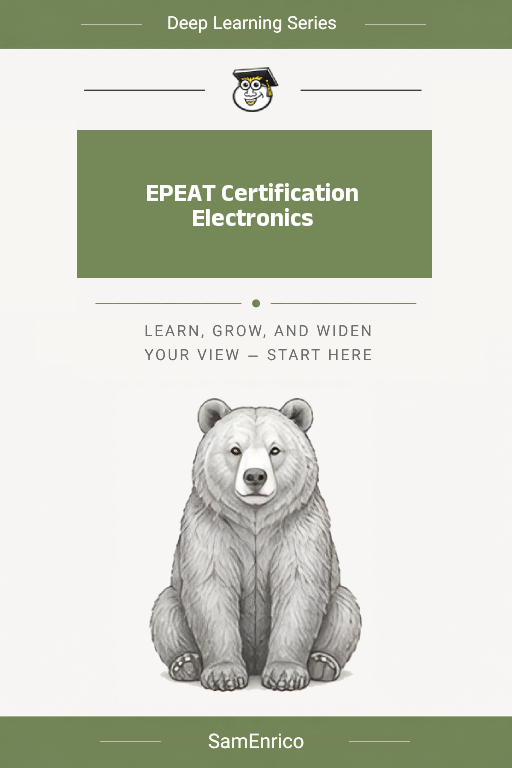
Non-FictionBusiness BriefEPEAT
EPEAT Certification Electronics Audiobook
Certify sustainable electronics under EPEAT for US
by Platt Zita
Certify sustainable electronics under EPEAT for US government and corporate procurement.
Formats
Free sample
Chapter 1: The $50 Billion Blindspot--The average American office worker sits within three feet of a ticking time bomb. It is not a faulty electrical outlet or an expired fire extinguisher. It is the sleek, silent laptop plugged into the docking station on their desk, or the monitor displaying their spreadsheets, or the smartphone buzzing with meeting reminders. To the untrained eye, these devices represent productivity and connectivity. To a growing cadre of federal procurement officers, corporate sustainability directors, and forensic accountants, they represent something far more alarming: a $50 billion blindspot in the US economy.This blindspot has a name, though most people have never heard it.
It is called EPEAT, and the quiet irony of the twenty-first century is that while billions of dollars flow through government and corporate purchasing departments every year, a staggering portion of that money is being spent in direct violation of federal law, corporate ESG pledges, and basic principles of fiscal responsibility. The devices that power modern life are, in many cases, actively undermining the climate goals, human rights standards, and financial interests of the very organizations that buy them. And the single most powerful tool to stop this dysfunction has been sitting in plain sight, ignored, misunderstood, or actively circumvented for nearly two decades.This book exists because that era of willful ignorance must end.The story of how the United States government accidentally created the world's most rigorous electronics sustainability standard—and then largely forgot to enforce it—begins not with an environmental advocacy group or a tech industry task force, but with a statute passed in 1976. The Resource Conservation and Recovery Act was never intended to regulate laptops. It was aimed at toxic waste dumps and industrial pollution.
Yet buried within its text was a principle that would eventually give birth to EPEAT: the idea that the federal government, as the world's largest single purchaser of goods and services, has a moral and legal obligation to buy things that do not destroy the planet.Fast forward to 2006. A coalition of forward-thinking procurement officials, environmental scientists, and electronics manufacturers launched the Electronic Product Environmental Assessment Tool, known by its acronym EPEAT. The concept was elegantly simple. Instead of requiring every government agency and corporate buyer to become experts in toxic chemicals, carbon accounting, and supply chain ethics, EPEAT would create a single, unified standard. Manufacturers would submit their products for independent verification.
Products that met the criteria would be listed on a public registry. Procurement officers could simply specify "EPEAT-registered" in their…
This is the end of the free sample. Get the Audiobook to keep going. Buy now
About this book
Details
- Author
- Platt Zita
- Publisher
- SamEnrico
- Language
- English
- Genre
- Non-Fiction, Business Brief, EPEAT
- Released
- 2026-06-01
- Pages (approx.)
- 129
- Available as
- eBook, Audiobook

Listen in the VoxFlicks app
Audiobooks and audio dramas wherever you go. Sign in with your SamEnrico account and press play.
More by Platt Zita
 Gambling Addiction And Traumatic Brain InjuryPlatt Zita$11.99
 Project Accounting For ConsultantsPlatt Zita$11.99
 Design Thinking For PublishingPlatt Zita$11.99
 Long Lost Siblings StoryPlatt Zita$11.99
 Alcoholism and Chronic Pain RecoveryPlatt Zita$11.99
 Couple Therapy OptionsPlatt Zita$11.99
 Workplace Dysthymia GuidePlatt Zita$11.99
 Psoriasis and Food AddictionPlatt Zita$11.99
 Isandlwana: The Day the Zulu Spears Broke the British EmpirePlatt Zita$11.99
 The Lionesses of Meroë: Queens Who Ruled the Kushite EmpirePlatt Zita$11.99
 How to Start a Engineering Brick Business (Beginners Guide)Platt Zita$11.99
 A Collector's Handbook to the Dellow VPlatt Zita$11.99
You may also like
 Hong Kong Handover 1997Dunn Johnnie$11.99
 Zumba For Postnatal Recovery CourseNeal Christian$11.99
 Zumba for BeginnersLadner Nikia$11.99
 YouTube Comment Mining GuideHumes Pandora$12.99
 Worry Box MeditationCarlin Rudy$11.99
 Workplace Stress MeditationNguyen Lynn$11.99
 Workplace Stress and Sleep RepairHawley Ivory$11.99
 Workplace Perfectionism CureDelaney Jeffry$11.99
 Workplace Injustice Anger GuideWallen Isabelle$11.99
 Work Addiction and Burnout LinkGreenwood Ester$11.99
 Women in Yoga and WellnessBeattie Galina$11.99
 Women in Stand Up ComedyChun Evangeline$11.99