
Non-FictionInformativeEducational
Environmental Chemist eBook
A Coursebook on Environmental Chemist
A Coursebook on Environmental Chemist
Formats
Free sample
Chapter 1: The Invisible Crisis...--–- Imagine holding a glass of water. It looks clear. It smells like nothing. The label on the bottle might show a mountain spring or a glacier. You assume it is pure.
You assume the chemist has already checked. But the most dangerous pollutants are not the ones you can see. They are the ones that exist at concentrations so low—parts per billion, parts per trillion—that your senses cannot detect them. And yet, at those vanishingly small concentrations, they can disrupt hormones, cause cancer decades later, or persist in your bloodstream for your entire lifetime. This is the invisible crisis that environmental chemistry exists to address.
Before you can solve a problem, you have to know it is there. Before you can know it is there, you need a chemical framework to understand where pollutants come from, where they go, and why they matter. That is what this book provides.This is not a book about general chemistry. You will not find a detailed derivation of the Schrödinger equation or a hundred pages of organic reaction mechanisms. This is also not a book about ecology.
You will not spend weeks memorizing the names of endangered birds or the details of food web dynamics. Instead, this book sits at the intersection of pure chemistry and the real world. It asks: When we release a chemical into the environment—deliberately as a pesticide or accidentally as an industrial spill—what happens to it? Does it degrade? Does it travel?
Does it accumulate in living tissue? And most importantly, how do we measure all of this with enough precision to make regulatory decisions that affect millions of people?The answer requires a new way of thinking about the planet. Most people see the world in terms of landscapes: forests, oceans, cities, farms. An environmental chemist sees the world in terms of five interconnected spheres. The hydrosphere is all the water on Earth—oceans, lakes, rivers, groundwater, even the water vapor in the air.
The atmosphere is the envelope of gases surrounding the planet, from the air in your lungs to the ozone layer forty kilometers overhead. The geosphere is the solid Earth—the rocks, soils, and sediments that form the ground beneath your feet. The biosphere is all living things, from bacteria in the deep ocean to the trees in your backyard to you. And finally, the anthrosphere is the human-built world: your house, the factory down the road, the highway, the sewer system, the farm with its fertilizers and pesticides. These spheres are not separate.
They leak into each other constantly. Pollution is simply a chemical moving from one sphere to another faster than natural processes can handle it.Consider a farmer spraying a pesticide on a cornfield. The pesticide starts in the anthrosphere (the farmer's sprayer). Some of it lands on plants and soil (geosphere and biosphere). Rain washes some into a stream (hydrosphere).
Some evaporates into the air (atmosphere). And some of that evaporated pesticide travels hundreds of kilometers before falling back to Earth in rain, landing on a forest far from any farm. This is why environmental chemistry cannot be studied in a test tube alone. You have to follow the chemical across all five spheres. This book is organized around that principle.Before we dive into the chemistry of water, air, and soil—which we will do in the coming chapters—we need to establish the most important shift in thinking that has occurred in environmental science over the past two decades.
It is the recognition that we have entered a new geological epoch. Geologists divide Earth's 4.5-billion-year history into eras, periods, and epochs based on the rocks and fossils being deposited at the time. For the past twelve thousand years, we have been in the Holocene epoch—a relatively stable, warm period that allowed agriculture and civilization to develop. But around the middle of the twentieth century, something changed. Human activity began leaving a permanent, global-scale signature in the geological record.
The atmospheric concentration of carbon dioxide, which had fluctuated within a narrow range for millennia, began rising sharply. Radioactive isotopes from nuclear weapons testing appeared in sediments worldwide. Synthetic nitrogen fertilizers, plastics, and aluminum all left their marks. And so, many scientists now argue that we have left the Holocene and entered a new epoch: the Anthropocene—the age of humans.What does the Anthropocene mean for an environmental chemist? It means you can no longer assume a "natural background" for most pollutants.
There is no pristine baseline anymore. The Arctic ice contains microplastics. The deepest ocean trenches have elevated mercury levels. Even the air in Antarctica carries traces of pesticides from farms thousands of kilometers away. The question is no longer, "Is this chemical present?" The question is, "How much is present, and is that amount harmful?" This shifts the burden of proof.
In the old paradigm, you assumed a chemical was safe until proven dangerous. But as we have learned from disasters like the widespread use of lead in gasoline and paint, that assumption can poison millions of people before the evidence catches up. The new paradigm—the Precautionary Principle—says that when an activity raises threats of harm to human health or the environment, precautionary measures should be taken even if some cause-and-effect relationships are not fully established scientifically. This principle has become foundational in environmental regulation around the world.To understand why this shift matters, we need to look at a real example. There is no better case study for the challenges of 21st-century environmental chemistry than a family of chemicals you have probably never heard of but almost certainly have in your blood right now.
They are called per- and polyfluoroalkyl substances—PFAS for short.At first glance, PFAS seem like miracle chemicals. They have a carbon-fluorine bond, and the carbon-fluorine bond is one of the strongest in organic chemistry. The bond dissociation energy is about 485 kilojoules per mole. To put that in perspective, a typical carbon-hydrogen bond is about 410 k J/mol, and a carbon-carbon bond is about 350 k J/mol. That carbon-fluorine bond is so strong that PFAS do not break down in the environment.
They do not hydrolyze in water. They do not photolyze in sunlight. They do not biodegrade. They are called "forever chemicals" for a reason. If you release a PFAS molecule into the environment today, it will still be there in its original form a hundred years from now.
A thousand years from now. Possibly longer than any human institution has ever lasted.That chemical stability is precisely what made PFAS so valuable to industry. Manufacturers used them to make non-stick pans (Teflon was the brand name for one PFAS compound called PFOA, or perfluorooctanoic acid). They used them to make waterproof clothing (Gore-Tex relies on a PFAS called PTFE, polytetrafluoroethylene). They used them in firefighting foams (AFFF, aqueous film-forming foam) that could smother jet fuel fires on military bases and airports.
They used them in food packaging—pizza boxes, fast-food wrappers, microwave popcorn bags—to repel grease and oil. They used them in carpets, upholstery, and cosmetics. For decades, the industry produced and released these chemicals with little…
This is the end of the free sample. Get the eBook to keep going. Buy now
About this book
Details
- Author
- Singleton Clinton
- Publisher
- SamEnrico
- Language
- English
- Genre
- Non-Fiction, Informative, Educational
- Released
- 2026-05-07
- Pages (approx.)
- 155
- Available as
- eBook, Audiobook

Read better in the ZLOADR app
Your eBooks on your phone or tablet. Sign in with your SamEnrico account and start reading.
More by Singleton Clinton
 Zen Kinhin Walking PracticeSingleton Clinton$11.99
 Self Talk For Love RelationshipsSingleton Clinton$11.99
 TTC With One Fallopian TubeSingleton Clinton$11.99
 Nightmare Processing for DivorceSingleton Clinton$11.99
 Evening Walking MeditationSingleton Clinton$11.99
 Fela Kuti’s Legacy: The Afrobeat Revolution That Shook the WorldSingleton Clinton$11.99
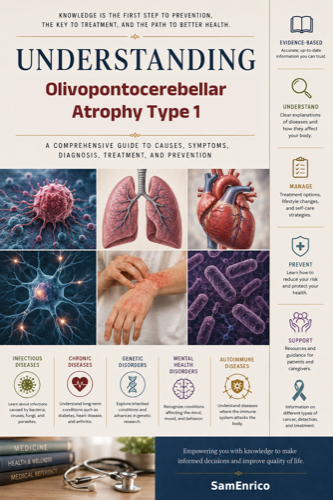 Understanding Olivopontocerebellar Atrophy Type 1Singleton Clinton$17.99
 Danaher SWOT LibrarySingleton Clinton$12.99
 Qualcomm Remote Internship SecretsSingleton Clinton$12.99
 How to Start a Pesticide and Other Agricultural Chemical Manufacturing BusinessSingleton Clinton$11.99
You may also like
 Hong Kong Handover 1997Dunn Johnnie$11.99
 Zumba For Postnatal Recovery CourseNeal Christian$11.99
 Zumba for BeginnersLadner Nikia$11.99
 YouTube Comment Mining GuideHumes Pandora$12.99
 Worry Box MeditationCarlin Rudy$11.99
 Workplace Stress MeditationNguyen Lynn$11.99
 Workplace Stress and Sleep RepairHawley Ivory$11.99
 Workplace Perfectionism CureDelaney Jeffry$11.99
 Workplace Injustice Anger GuideWallen Isabelle$11.99
 Work Addiction and Burnout LinkGreenwood Ester$11.99
 Women in Yoga and WellnessBeattie Galina$11.99
 Women in Stand Up ComedyChun Evangeline$11.99