
Non-FictionHealth & WellnessGastroenterology
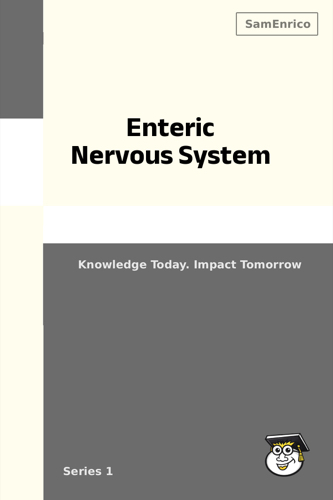
Enteric Nervous System eBook
Reveals the second brain in the gut with 500 milli
Reveals the second brain in the gut with 500 million neurons.
Formats
Free sample
Chapter 1: The Gut's Secret...--The first time I truly understood that my gut had a mind of its own, I was standing backstage at a sold-out theater, moments before giving a keynote speech to two thousand people. My hands were steady. My breathing was measured. I had rehearsed my opening lines twenty-seven times. By every rational measure, I was prepared.
Yet my stomach was churning as if I had swallowed a nest of angry hornets.For years, I dismissed this as simple nerves—a quirk of biology, an inconvenience of being human. But that evening, something shifted in my understanding. I realized that my gut was not merely reacting to my anxiety. It was producing something. It was generating sensations, chemicals, and signals that my brain could not control, no matter how deeply I breathed or how confidently I smiled.
My skull brain was calm. My gut brain was in open rebellion.That experience launched me on a journey that would upend everything I thought I knew about my own body. And what I discovered is this: you have two brains. One sits inside your skull, wrapped in bone and mystery. The other lies coiled within your digestive tract, a vast network of 500 million neurons that operates with stunning independence.
The second brain—formally known as the enteric nervous system—is not a metaphor. It is not a poetic fancy. It is a biological reality, hidden in plain sight for centuries, dismissed by medical science as a simple relay station, and only now emerging as one of the most exciting frontiers in human health.This book is the story of that second brain. It is a story of scientific arrogance and heretical discovery. It is a story of patients who were told their suffering was imaginary—until the science caught up and proved them right.
And it is a story with profound implications for how you eat, how you feel, how you think, and how you might prevent diseases ranging from anxiety to Parkinson's.But before we can understand where the second brain is taking us, we must first understand how we lost it in the first place. How did a 500-million-neuron network—more neurons than the entire spinal cord—remain virtually ignored by modern medicine for over a century? The answer is a tale of scientific hubris, accidental discoveries, and a few stubborn rebels who refused to accept that the gut was just a simple tube.The Ancient Intuition That We Forgot Long before microscopes and neurotransmitters, humans knew something was happening in their guts. The evidence is woven into our language. We speak of "gut feelings" and "gut instincts." We say we have "butterflies in our stomach" when we are nervous.
We describe a difficult decision as something we need to "stomach." We accuse cowards of having "no guts." These are not random metaphors. They are linguistic fossils, preserving an ancient intuition that the abdomen is a seat of emotion, intuition, and even courage.The ancient Greeks took this intuition seriously. Aristotle, who dissected countless animals in his pursuit of biological understanding, noted that the intestines were rich with nerves—far more than seemed necessary for a simple digestive tube. He speculated that the gut might play a role in generating emotions and desires. Hippocrates, the father of Western medicine, famously declared that "all disease begins in the gut." While he meant this largely in terms of digestion and humoral balance, the statement now appears eerily prescient.The Romans, too, understood something about the gut's emotional life.
The philosopher Cicero wrote of "the stomach's voice" and observed that fear and excitement manifest in the abdomen before anywhere else. Galen, the most influential physician of antiquity, conducted experiments on animals that demonstrated the gut could move and react even after the spinal cord was severed—suggesting, to his credit, that some form of local intelligence resided in the intestinal walls.For nearly two thousand years, this intuitive understanding persisted. Physicians and philosophers accepted that the gut was not merely a mechanical tube but a living, feeling, reactive organ. Then came the Scientific Revolution, and with it, a narrow vision of what counted as legitimate biology.The Great Betrayal: How Medicine Forgot the Gut The 17th and 18th centuries brought extraordinary advances in anatomy. René Descartes imagined the body as a machine—a beautiful, intricate clockwork of pumps and levers.
The intestines, in this mechanical view, were simply pipes. Food went in. Waste came out. Muscles squeezed. Valves opened.
No intelligence was required. No second brain was necessary.This mechanical philosophy found its perfect expression in the work of 19th-century physiologists who systematically dismantled the ancient intuition. If you cut the vagus nerve—the long cable running from brainstem to abdomen—the gut still moved. But these scientists interpreted that finding not as evidence of local intelligence, but as proof of primitive, automatic reflexes, no more sophisticated than a knee jerk. The gut's nerves, they argued, were nothing more than a simple relay network, carrying signals from the brain and executing orders like obedient servants.The most influential voice in this reductionist campaign was the great Russian physiologist Ivan Pavlov.
Famous for his work on conditioned reflexes in dogs, Pavlov viewed the gut as a collection of straightforward neural circuits. He believed that the brain, via the vagus nerve, was the true master of digestion. The gut's own nerves—what we now call the enteric nervous system—were, in his estimation, merely a peripheral distribution system, like telephone wires connecting a central switchboard to distant receivers.Pavlov's authority carried enormous weight. By the early 20th century, the dominant view in medicine and physiology was settled: the gut was a simple, brainless tube. Its nerves were trivial.
Its complexity was an illusion. And anyone who suggested otherwise was indulging in romantic nonsense.The Age of the Vagus Nerve: A Century of Missed Opportunities For the next fifty years, research on the gut focused almost entirely on the vagus nerve. Scientists mapped its branches. They stimulated it with electricity. They cut it in animals and observed the consequences.
They developed a detailed understanding of how the brain, via the vagus, could accelerate or slow digestion, trigger acid secretion, and modulate motility.All of this work was valuable. The vagus nerve is genuinely important. But in their enthusiasm for this central highway, researchers largely ignored the vast neural network sitting right beneath their instruments—the enteric nervous system, with its 500 million neurons, its complex reflex circuits, and its remarkable autonomy.The consequences of this neglect were not merely academic. Patients with mysterious gut disorders—symptoms that did not fit neat diagnostic categories—were routinely dismissed. If the gut was just a simple tube controlled by the brain, then gut symptoms without visible structural damage must be psychological.
"It's all in your head" became the default explanation for millions of people suffering from abdominal pain, bloating, diarrhea, and constipation that defied conventional explanation.The term "irritable bowel syndrome" or IBS, when it emerged in the mid-20th century, was essentially a wastebasket diagnosis. Doctors meant: we see no tumor, no inflammation, no obstruction, so your symptoms must be caused by stress or emotional problems. Patients were…
This is the end of the free sample. Get the eBook to keep going. Buy now
About this book
Details
- Author
- Connell Collette
- Publisher
- SamEnrico
- Language
- English
- Genre
- Non-Fiction, Health & Wellness, Gastroenterology
- Released
- 2026-06-07
- Pages (approx.)
- 156
- Available as
- eBook, Audiobook

Read better in the ZLOADR app
Your eBooks on your phone or tablet. Sign in with your SamEnrico account and start reading.
More by Connell Collette
 The Sharice Davids StoryConnell Collette$11.99
 Morning Email Batching GuideConnell Collette$11.99
 Alcoholism and Grief DrinkingConnell Collette$11.99
 Implementation Intentions GuideConnell Collette$11.99
 Senses Master GuideConnell Collette$11.99
 Self Talk For Difficult PeopleConnell Collette$11.99
 Adult Day Care GuideConnell Collette$11.99
 The Last Stand of the Pirate QueenConnell Collette$11.99
 The Amber Road: Dutch Merchants and the Birth of Global TradeConnell Collette$11.99
 The Essential Guide to PsychedelicConnell Collette$11.99
 How to Produce RefrigeratorsConnell Collette$11.99
 How to Produce Alkyd Primer Exterior PaintConnell Collette$11.99
You may also like
 Hong Kong Handover 1997Dunn Johnnie$11.99
 Zumba For Postnatal Recovery CourseNeal Christian$11.99
 Zumba for BeginnersLadner Nikia$11.99
 YouTube Comment Mining GuideHumes Pandora$12.99
 Worry Box MeditationCarlin Rudy$11.99
 Workplace Stress MeditationNguyen Lynn$11.99
 Workplace Stress and Sleep RepairHawley Ivory$11.99
 Workplace Perfectionism CureDelaney Jeffry$11.99
 Workplace Injustice Anger GuideWallen Isabelle$11.99
 Work Addiction and Burnout LinkGreenwood Ester$11.99
 Women in Yoga and WellnessBeattie Galina$11.99
 Women in Stand Up ComedyChun Evangeline$11.99