
Non-FictionSelf-HelpPeer Support
Drug Dependency Support Groups eBook
Find NA, AA, and SMART Recovery meetings.
Find NA, AA, and SMART Recovery meetings.
Formats
Free sample
Chapter 1: The Paradox Chair--–- The first time someone suggests you go to a meeting, you will feel two things simultaneously: relief that there is a map, and panic that there are three different maps, none of which agree on where you are standing.You have just been discharged from a detox facility, or you have woken up on a bathroom floor for the last time, or a judge has given you an ultimatum, or your spouse has handed you an overnight bag and a phone number written on a grocery receipt. Someone—a counselor, a friend, a parole officer, a stranger on the internet—says the same four words you will hear a hundred times in the coming weeks: You need to find a meeting.And then the silence lands.Because no one tells you which meeting. No one explains the difference between Alcoholics Anonymous and Narcotics Anonymous, or why one uses chips and the other uses key tags, or what SMART Recovery even stands for. You open a browser and type "recovery meetings near me" and suddenly you are staring at a list of acronyms: AA, NA, CA, HA, MA, DRA, SMART, Life Ring, Refuge Recovery. There are churches and community centers and Zoom links and phone numbers.
There are open meetings and closed meetings and step studies and speaker meetings and book studies and men’s meetings and women’s meetings and LGBTQ+ meetings and secular meetings and young people’s meetings. Someone online says AA saved their life. Someone else says AA is a cult. A third person says SMART is the only evidence-based option. A fourth says SMART has no community.You have not even walked through a single doorway yet, and you are already exhausted.This is the paradox of choice in early recovery.
When you are most fragile, most confused, most likely to talk yourself out of anything that requires effort, the recovery world presents you with an overwhelming menu of options and expects you to order correctly. The implicit message—unintentional but real—is that you should already know which fellowship fits you. But you do not. You cannot. And that is not a failure of your will or intelligence.
It is a structural failure of how recovery information is delivered.The Unspoken Truth at the Center of This Book Let me tell you what most recovery books will not admit: there is no objective best fellowship. There is only the fellowship that works for you, at this specific moment in your life, with your particular constellation of trauma, beliefs, social needs, and brain chemistry. And the only way to discover that fellowship is to try them. But trying them requires showing up. And showing up requires reducing the anxiety of the unknown to a manageable level.This book exists to reduce that anxiety.Every chapter that follows is a practical, tactical guide to walking into rooms—physical or virtual—where strangers talk about the worst things they have ever done and the best things they have ever become.
But before we get to locators and jargon and sponsorship and the ninety-day plan, we need to address the question that keeps most people from ever attending their first meeting:Which one do I choose?The honest answer is that you do not need to choose yet. You need to explore. And exploration is not the same as shopping.A Critical Distinction You Will Return to Again and Again Throughout this book, I will use two phrases that sound similar but mean radically different things. I want you to hold them in your mind as we go forward, because they will appear in nearly every chapter, and understanding the difference may be the single most useful tool I can give you.Exploration is the act of attending different meetings across different fellowships with the specific, time-limited goal of finding a fit. An explorer says: I will attend ten meetings across the next thirty days.
They may be AA, NA, SMART, or any combination. At the end of thirty days, I will choose one fellowship as my primary and commit to it for ninety days. Exploration is strategic. It has a beginning, a middle, and an end. It is not indecision; it is data collection.Meeting shopping is the act of using fellowship differences as an excuse to never commit.
A shopper says: This AA meeting mentioned God too much, so I will try NA. This NA meeting felt too intense, so I will try SMART. This SMART meeting used worksheets, which feel like homework, so I will go back to AA. The shopper is always moving, always finding a flaw, always keeping one foot out the door. The shopper never stays long enough to be uncomfortable, and therefore never stays long enough to heal.Exploration is courage.
Shopping is avoidance. This book will teach you how to explore honestly. It will also teach you how to recognize when you have slipped from exploration into shopping—and how to correct course.Why Three Major Options? A Brief Historical Reality Check Before we compare AA, NA, and SMART Recovery, you need to understand why these three dominate the conversation while dozens of other fellowships exist in the margins.Alcoholics Anonymous appeared in 1935. It was the first successful recovery fellowship in Western history, and its twelve-step model became the template for virtually everything that followed.
For nearly two decades, AA was the only game in town. If you had a drinking problem, you went to AA. If you had a drug problem, you were often told to attend AA anyway and substitute the word "alcohol" with "drugs." Many people did exactly that. Many of them got sober. But many also felt like visitors in someone else's house.Narcotics Anonymous formally split from AA in 1953.
The founders believed that drug addiction carried a different social stigma and a different psychological profile than alcoholism. They wanted a fellowship where a person who used heroin and a person who used cocaine and a person who used methamphetamine could sit in the same room without pretending they were alcoholics. NA kept the twelve steps and the twelve traditions, but changed the language, the literature, and the culture. Today, NA is the second-largest twelve-step fellowship in the world.SMART Recovery emerged in 1994 as a direct challenge to the twelve-step model. Its founders were psychologists and addiction researchers who believed that the disease model and spiritual framework of AA/NA were not supported by evidence.
They built a program based on Rational Emotive Behavior Therapy (REBT) and cognitive-behavioral principles. No steps, no sponsor, no higher power, no lifelong disease label. SMART positioned itself as the scientific alternative to what its founders called "the cultish elements of twelve-step."These three fellowships now represent the vast majority of recovery meetings in the English-speaking world. AA has approximately 2 million members globally. NA has approximately 70,000 weekly meetings in over 140 countries.
SMART Recovery has approximately 3,000 weekly meetings and a rapidly growing online presence.But size does not equal superiority. Each fellowship has strengths and blind spots. Each has saved lives and, if we are honest, each has also failed people who deserved better. Your job is not…
This is the end of the free sample. Get the eBook to keep going. Buy now
About this book
Details
- Author
- Fountain Kristan
- Publisher
- SamEnrico
- Language
- English
- Genre
- Non-Fiction, Self-Help, Peer Support
- Released
- 2026-06-08
- Pages (approx.)
- 137
- Available as
- eBook, Audiobook

Read better in the ZLOADR app
Your eBooks on your phone or tablet. Sign in with your SamEnrico account and start reading.
More by Fountain Kristan
 Evening Wind Down Meditation KitFountain Kristan$11.99
 Mindfulness Meditation for LonelinessFountain Kristan$11.99
 16S Sequencing InterpretationFountain Kristan$11.99
 The Reverse Loci TechniqueFountain Kristan$11.99
 Neuropathic Pain TherapyFountain Kristan$11.99
 Belgium Remote Tax GuideFountain Kristan$11.99
 Student Loci Palace ConstructionFountain Kristan$11.99
 Bipolar Advance Directive GuideFountain Kristan$11.99
 The Great Crypto Comeback: How a Fallen Empire Rose from the AshesFountain Kristan$11.99
 The Oracle’s Dilemma: Pythia’s Lost PropheciesFountain Kristan$11.99
 The Druid's Shadow: A Spy Among the Fair FolkFountain Kristan$11.99
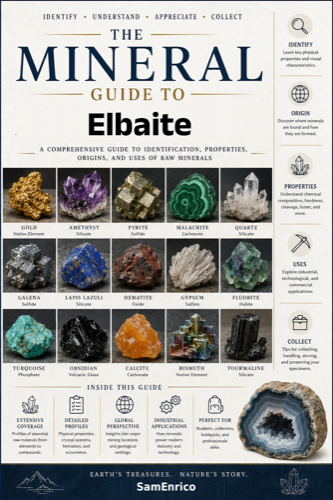 The Mineral Guide to ElbaiteFountain Kristan$11.99
You may also like
 Hong Kong Handover 1997Dunn Johnnie$11.99
 Zumba For Postnatal Recovery CourseNeal Christian$11.99
 Zumba for BeginnersLadner Nikia$11.99
 YouTube Comment Mining GuideHumes Pandora$12.99
 Worry Box MeditationCarlin Rudy$11.99
 Workplace Stress MeditationNguyen Lynn$11.99
 Workplace Stress and Sleep RepairHawley Ivory$11.99
 Workplace Perfectionism CureDelaney Jeffry$11.99
 Workplace Injustice Anger GuideWallen Isabelle$11.99
 Work Addiction and Burnout LinkGreenwood Ester$11.99
 Women in Yoga and WellnessBeattie Galina$11.99
 Women in Stand Up ComedyChun Evangeline$11.99